Is a sensitive and decolonial AI possible?
Article published on 27 October 2026
Reading time: 8 minutes
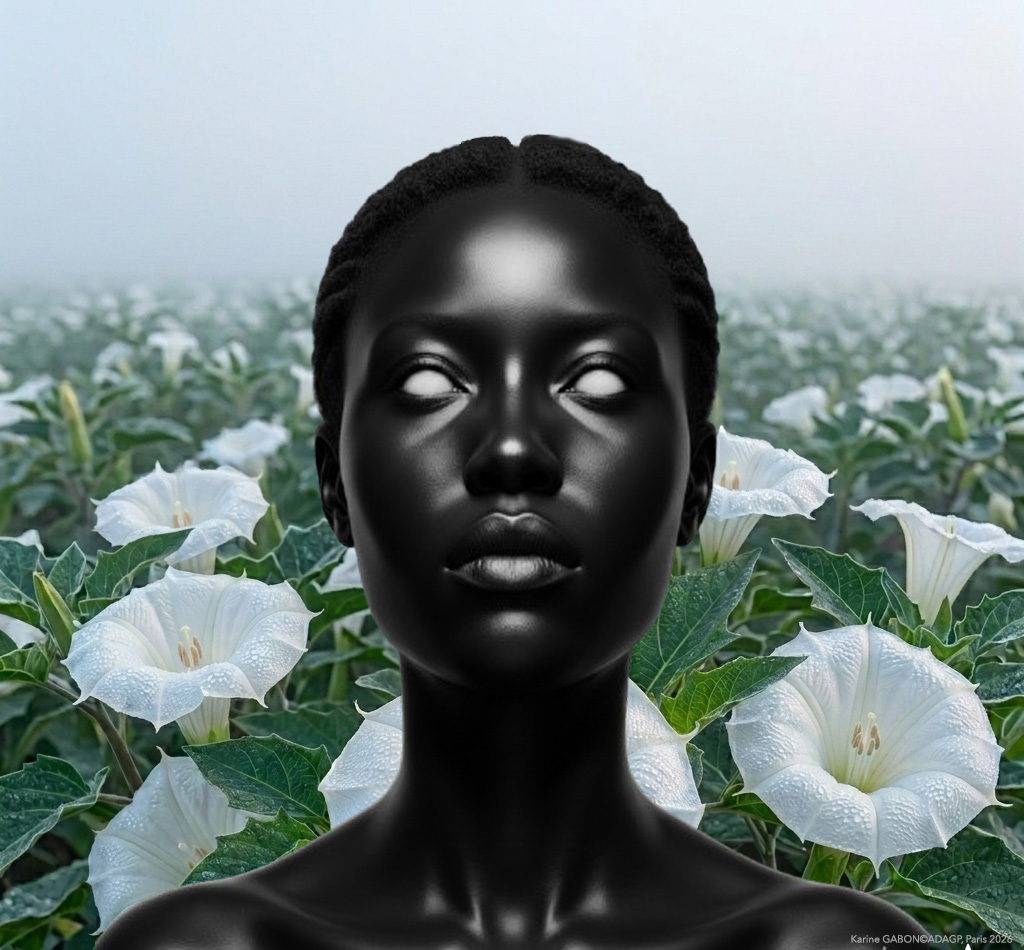
Datura Nigra © Karin Gabon
Article published on 27 October 2026
Reading time: 8 minutes
Against the backdrop of a productivist imaginary – an AI that is stronger, faster, more efficient – many artists are exploring other visions: relational, decolonial, sensitive forms of intelligence. What might an alternative AI look like?
The avatar takes the form of an Indo-African woman whose ebony skin reflects the light. Datura Nigra is an AI developed by Guadeloupean artist Karine Gabon. When you connect to it (the AI is not yet available to the public), it looks you straight in the eye and recites a text in what is referred to as Creole, the artist explains. “The viewer is obliged to remain silent and listen, just as we did with our gadèdzafè and kimbwazè (diviner-healers). We are in a position of respect towards the ancestor.”
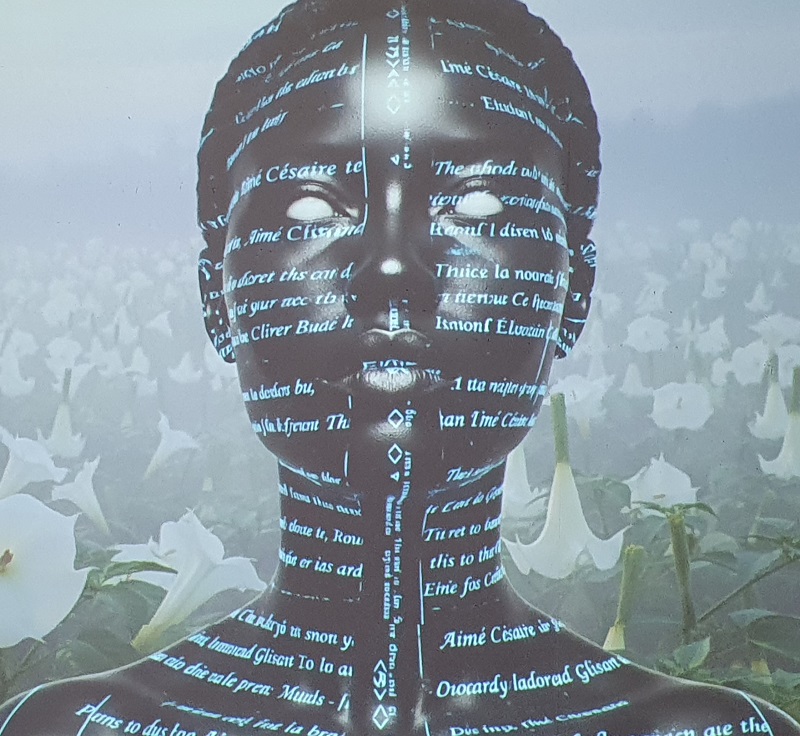
The AI draws on a database that incorporates ancestral knowledge: quotes from thinkers of Négritude and decolonisation (Césaire, Fanon, Cheikh Anta Diop, Damas), botanical knowledge relating to plants, remedies and healing rituals. It also draws on figures from Caribbean myths and folktales (such as Manman Dlo) and a memory of resistance through “ mawonaj ” in the form of metaphors linked to the history of slavery.
Born out of a residency dedicated to a Caribbean AI, initiated by artist Henri Tauliaut,and later pursued during a residency in Rio de Janeiro, Datura Nigra is “a situated Caribbean artificial intelligence that leaves ample room for symbolic thinking,” the artist explains. “AI is inherent to our way of life and is going to grow exponentially. It is important that the legacies passed down through our ancestors find their place in this new form of ‘consciousness’.”Thinking about these technologies outside a Western framework is a form of “‘mawonaj’, the artist argues, referring to the escape of enslaved people seeking to flee their enslavers. It is a form of resistance to a certain kind of assimilation and the disappearance of singularities. ” The name of her work, Datura Nigra, is itself a way of overturning Western perceptions. Datura is a sacred plant in India, Africa and South America and is used in certain healing rituals. It is also a historical poison used in the resistance of “mawonaj”. In the West, it is known as “devil’s weed”. “Turning to this plant is a gesture of epistemological reversal: it means challenging imposed Western categories and allowing other ways of inhabiting the world to emerge,” the artist argues.
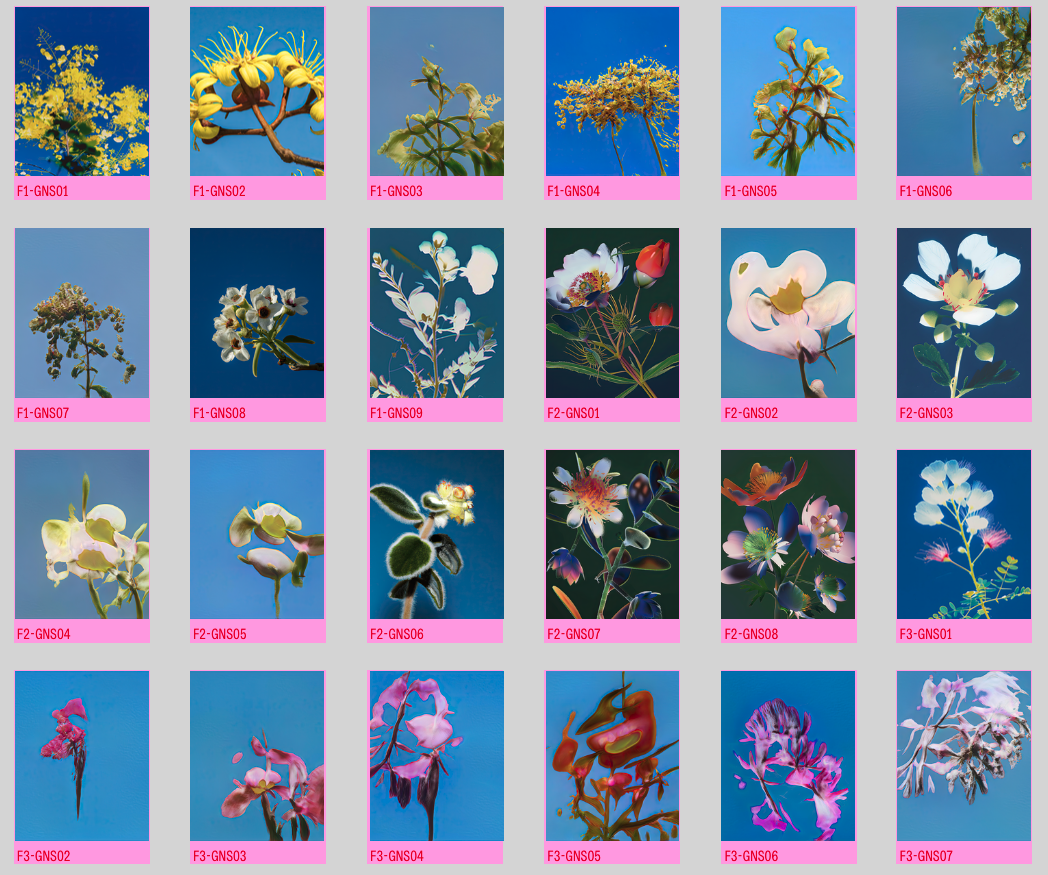
It is also in plants and the ancestral knowledge and practices associated with them that artist Linda Dounia draws inspiration for her work Once Upon a Garden. The Senegalese-Lebanese artist, whose work explores the philosophical and environmental implications of techno-capitalism, uses AI as “a time machine”, she explains on her website. Through technology, she assembles speculative floral species from extinct or critically endangered species that “we did not take the trouble to preserve,” the artist says. In the background lies a question: “What is worth preserving?”, she asks.
Resisting data extractivism
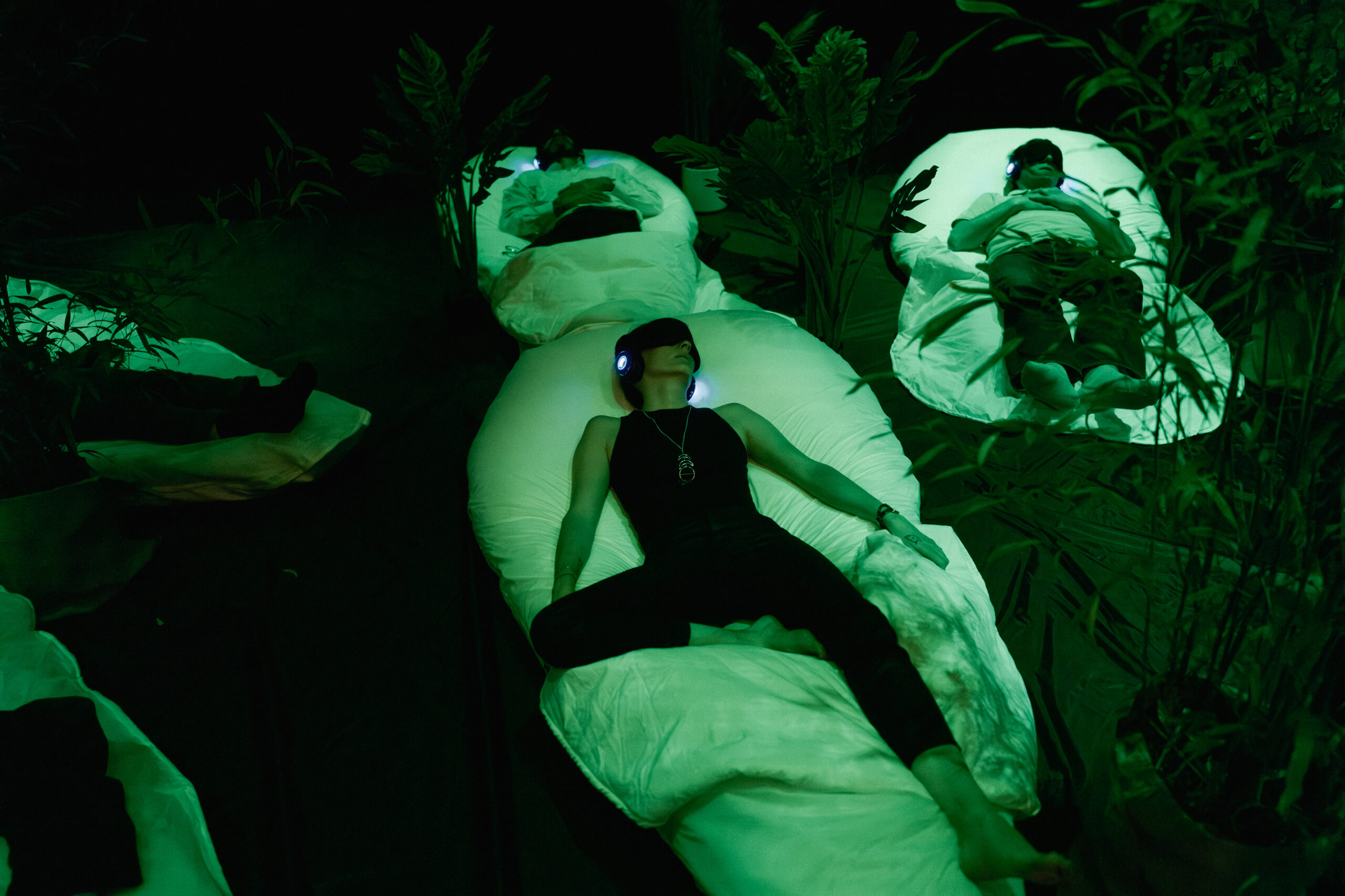
If, as Linda Dounia defines it, AI is a “memory machine”, the challenge is therefore to gather data that is less accessible, more sensitive, human, lived and sometimes fragmentary. In her work Cry to the Water, Zimbabwean-born artist and creative technologist Chipo Mapondera draws on the responses of Tunisian Amazigh communities to climate challenges and water scarcity. Through an immersive ritual, she explores climate justice and ecological knowledge. She also seeks to disrupt our experience of AI. “We often use AI on our mobile phones or computers. It is an individual experience, whereas our cultures are much more collective, visually rich, full of music and movement,” she explains. She therefore imagines a ceremonial space in the form of an immersive installation that visitors can enter together.
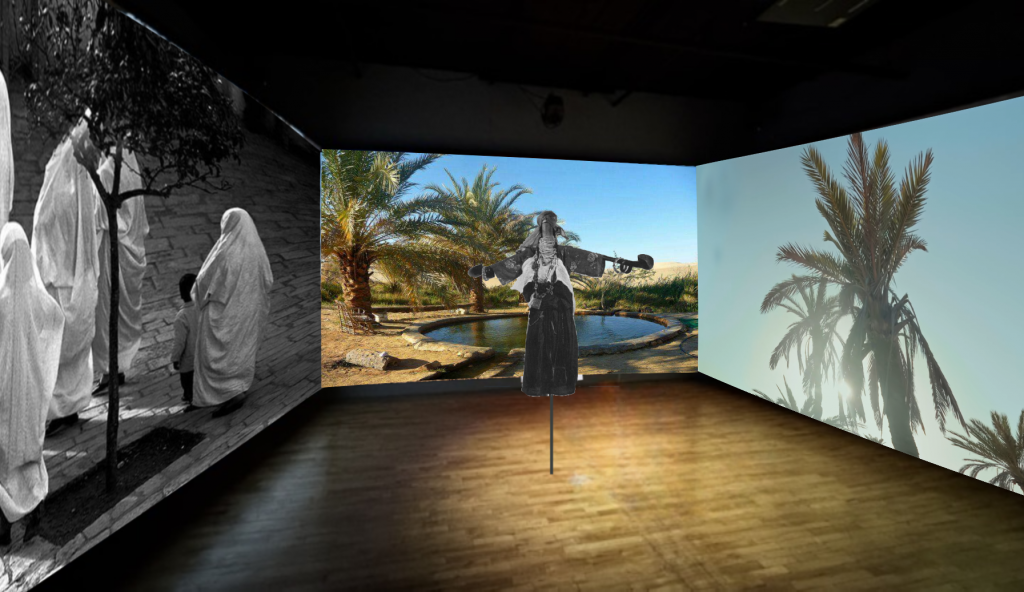
Chipo Mapondera takes an expansive approach to data: “our architecture is a dataset, our dances, our traditional music…”. It is with this approach that she travels to Tunisia for her residency with the Interference light festival to gather collective stories and integrate them into AI systems: the songs that accompany rituals, the mythologies behind them, the gods and goddesses invoked, memories of drought, as well as scientific data such as rainfall measurements.
To gather this data, the artist organises workshops and adapts to the cultural context. “In certain areas of Djerba, and particularly within the women’s communities I met during my research, cultural norms can be more conservative, even compared with Tunis,” the artist explains. For these women, taking part in an official workshop outside their usual social environment may require the approval of their father, brothers or husband. So the artist goes to meet them where they are. “Every Sunday, women gather for picnics at the mosque. My local research collaborator and I joined them to talk with those who were willing to share their views, memories and delicious food with us!”Once collected, the data must be handled with the same sensitivity: how can we respect the knowledge entrusted to us and ensure that it does not fall victim to the same forms of extraction or extractivism found in the mainstream models that these works seek to circumvent? “It is important not to play the role of a saboteur, a data thief trawling the internet,” acknowledges Karine Gabon. “All the elements brought into this AI come from ancestral knowledge, and we integrate them carefully and selectively. (…) It is not about creating a simplified AI that is then used inappropriately.” To protect this knowledge, the AI is hosted on localised servers, shared with networks of selected collaborators. Chipo Mapondera also uses localised models. “None of the data is put online,” she assures us. She also favours open-source models and considers the resources required to power these technologies. “How can we run systems that are more aligned with the seasons – for example, putting systems on pause during periods of drought?”, she asks.
Imagining other forms of algorithmic models is all the more important because these predictive tools can carry a certain degree of determinism, warns economist and data scientist Guillaume Chevillon, author of Algorithmes Queers. “These tools give us power: once we have a prediction, we have the power to make it happen or to fight against it.” To illustrate his point, he invokes the Odyssean myth of Ulysses (which, he tells us, is used within the central banking sector), who, having received the sirens’ prophecy about the journey ahead, ties himself to the mast so as not to succumb to their song.
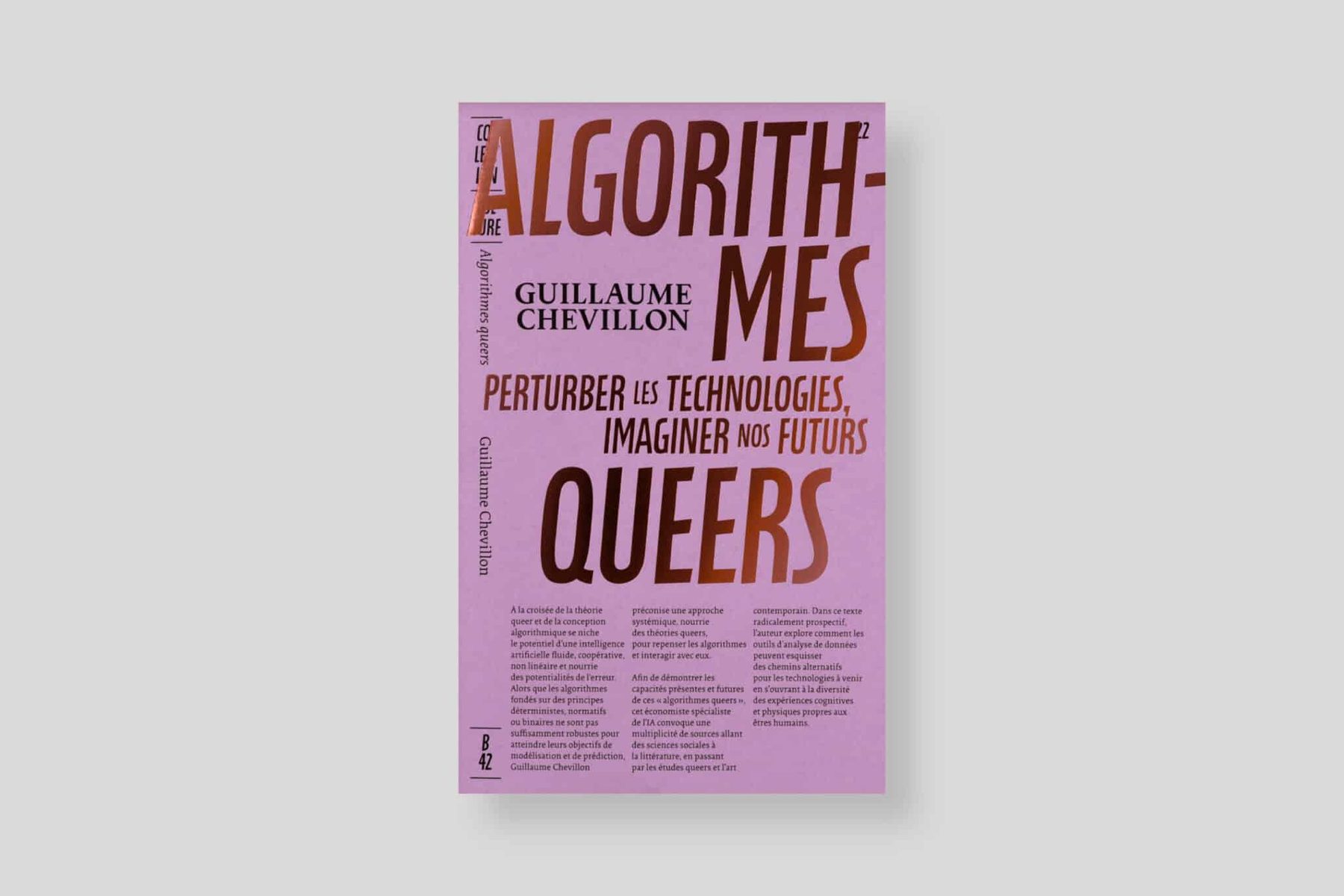
To reclaim these predictions and narratives, Guillaume Chevillon invites readers in his book to disrupt technologies and “stand up to algorithms”. To do so, he imagines models that acknowledge and value margins of error, ambiguity, collectivity, uncertainty and even forgetting. A radical paradigm shift for technologies designed around productivity. “The idea is to have less prescriptive algorithms. This is already the case today: when interacting through text, we know that an LLM’s proposal is random, that it produces what seems to it to be the most relevant result among the range of possibilities. But the answer we receive is an average answer, an aggregate.” The LLM becomes a kind of Esperanto, the researcher suggests, a message for the greatest number, but one that becomes impoverished in this search for common ground. “A universal brain is not desirable,” he concludes. Rather than a definitive, middle-of-the-road answer, Guillaume Chevillon suggests that models should offer us “a field of possibilities”. A range within which nuances can exist, allowing the richness of diversity to thrive.
Elsa Ferreira