A Decade of AI: How Artists See the Evolution of the Technology
Article published on 3 September 2026
Reading time: 7 minutes
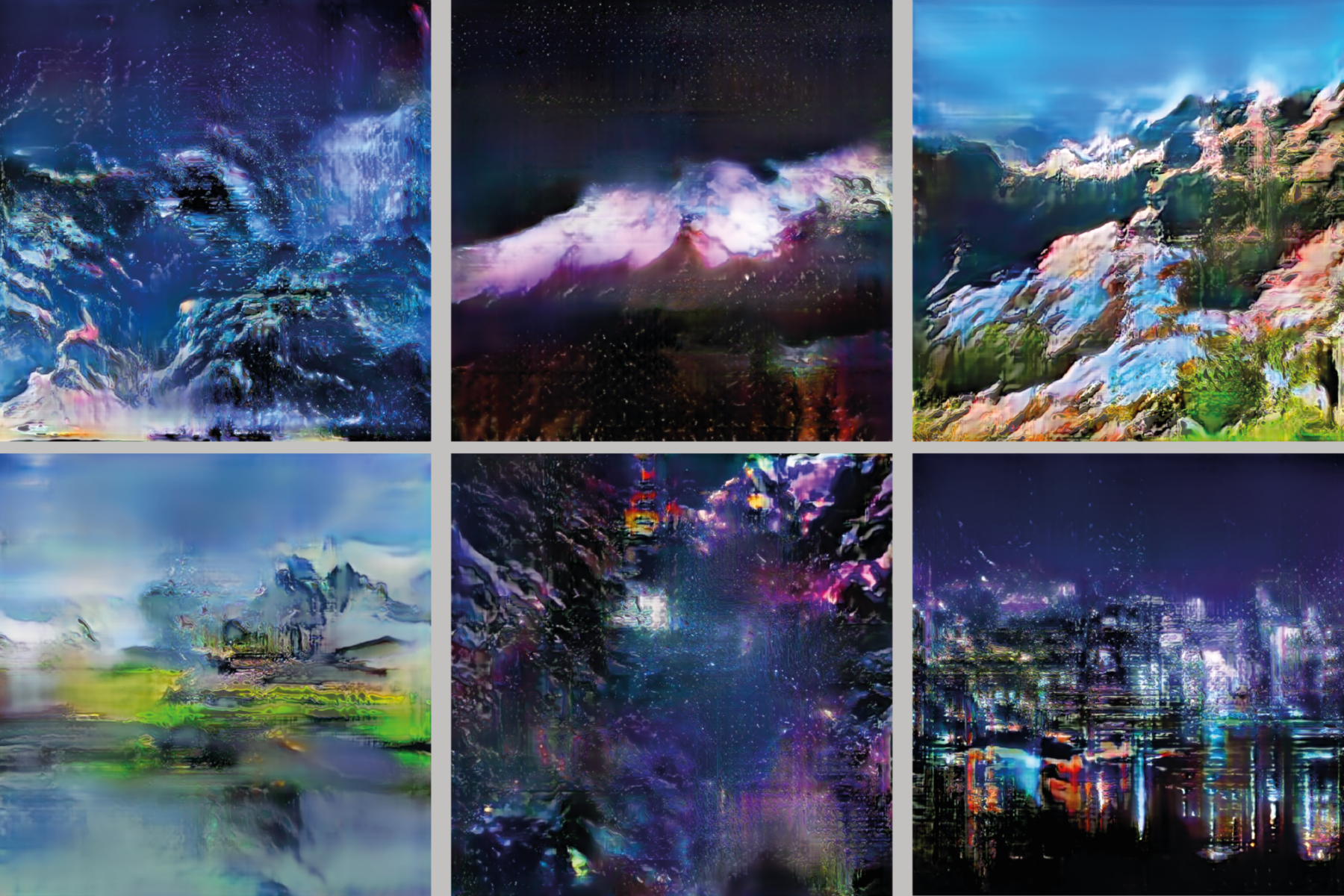
Atay Ilgun - Realiti
Article published on 3 September 2026
Reading time: 7 minutes
A group of roughly thirty pioneering artists took part in a study conducted by researchers from several European universities. The goal was to give a voice to artists who have been working with AI for nearly a decade in order to understand how their practices, imaginaries, and ethical positions have evolved alongside the rise of generative AI. We spoke with Téo Sanchez, a researcher at the University of Munich and co-author of the study.
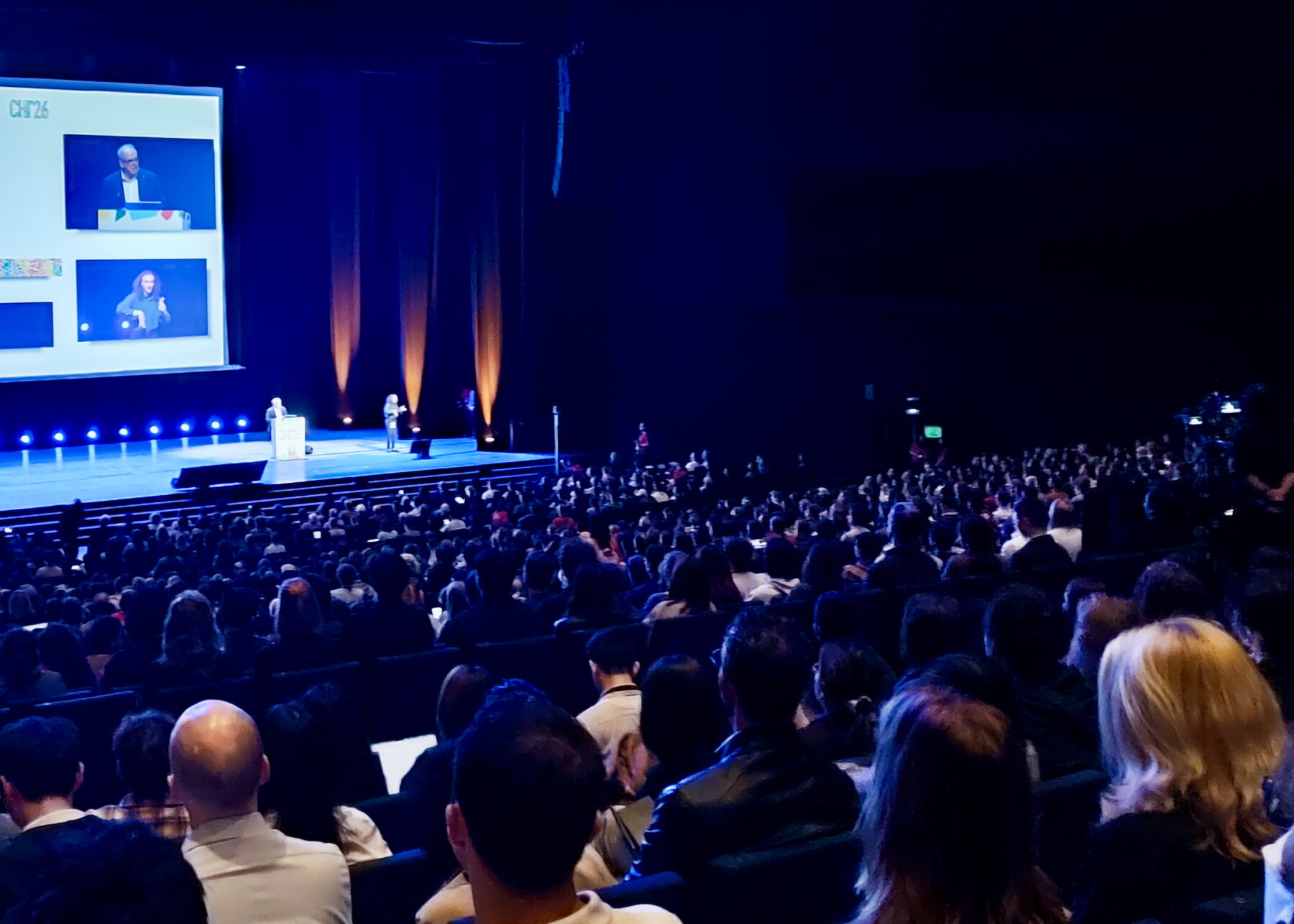
In technology, the perception of time seems to accelerate constantly. Within just a few months, new tools emerge and transform creative practices, to the point where it can be difficult to remember a world without generative AI. Yet artificial intelligence has a much longer history in the arts. Long before Gemini or Nano Banana, artists were already experimenting with neural networks, training their own models, and repurposing the earliest AI systems. Their perspective now offers valuable hindsight on the direction these technologies have taken. That is precisely the ambition of Artists on a Decade of AI Evolution, a study conducted by researchers from Ludwig Maximilian University of Munich, Hochschule München University of Applied Sciences, Sorbonne Université, the University of Nottingham, and the University of the Arts London. “We wanted to understand how artists who had been working with these technologies before they became mainstream experienced the rise of consumer-facing generative AI, the ethical tensions it raises, and the ways it has transformed their artistic practices,” explains Téo Sanchez. “The idea was to develop a longitudinal perspective spanning ten years.” Published as part of the CHI 2026 conference on Human Factors in Computing Systems, the study is based on approximately thirty in-depth interviews with international artists working across new media, visual arts, live performance, music, design, and poetry.
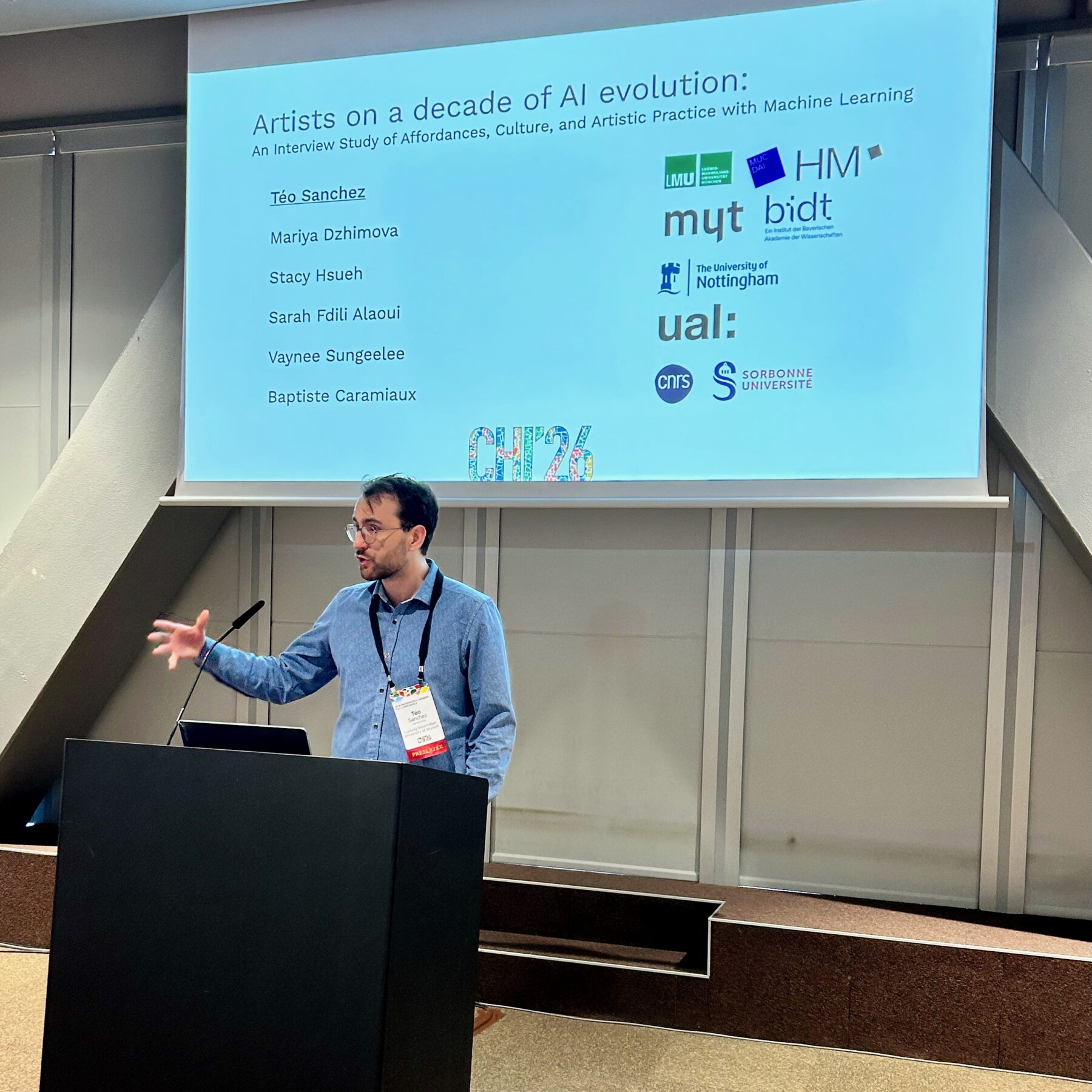
The researchers—Téo Sanchez, Mariya Dzhimova, Stacy Hsueh, Sarah Fdili Alaoui, Vaynee Sungeelee, and Baptiste Caramiaux—first identified more than 120 artists who had incorporated AI into their practice before 2020, well before the emergence of large language models. “We also needed to clarify what we meant by AI,” Téo Sanchez explains. “In this study, we’re primarily referring to practices involving deep learning and contemporary neural networks.”
Thirty artists ultimately agreed to participate in the interviews. The group includes both internationally recognized figures and lesser-known practitioners. Among them are poet and researcher Alison Parrish, choreographer Mariel Pettee, and visual artists Vadim Epstein, Terence Broad and Atay Ilgun. On the French side, the study also features Hugo Caselles-Dupré, a member of the Obvious collective, which gained international attention in the mid-2010s following the sale of Portrait of Edmond de Belamy at Christie’s in 2018. Rather than relying on a standardized questionnaire, the study seeks to understand artists’ lived experiences, contradictions, and individual trajectories in response to the rapid evolution of AI tools.
The artists interviewed confirm what many observers of the tech world have long suspected: a major turning point occurred at the beginning of the 2020s. The arrival of multimodal models marked a decisive break. “After 2020, CLIP emerged, introducing image generation guided by natural language,” explains Téo Sanchez. “Before prompts, artists mainly manipulated abstract parameters or intervened directly in the architectures of the models.” Then came ChatGPT, Stable Diffusion, Midjourney, and a proliferation of models accessible to the general public. This democratization profoundly transformed not only the way these technologies are used, but also artists’ aesthetic relationship with them.
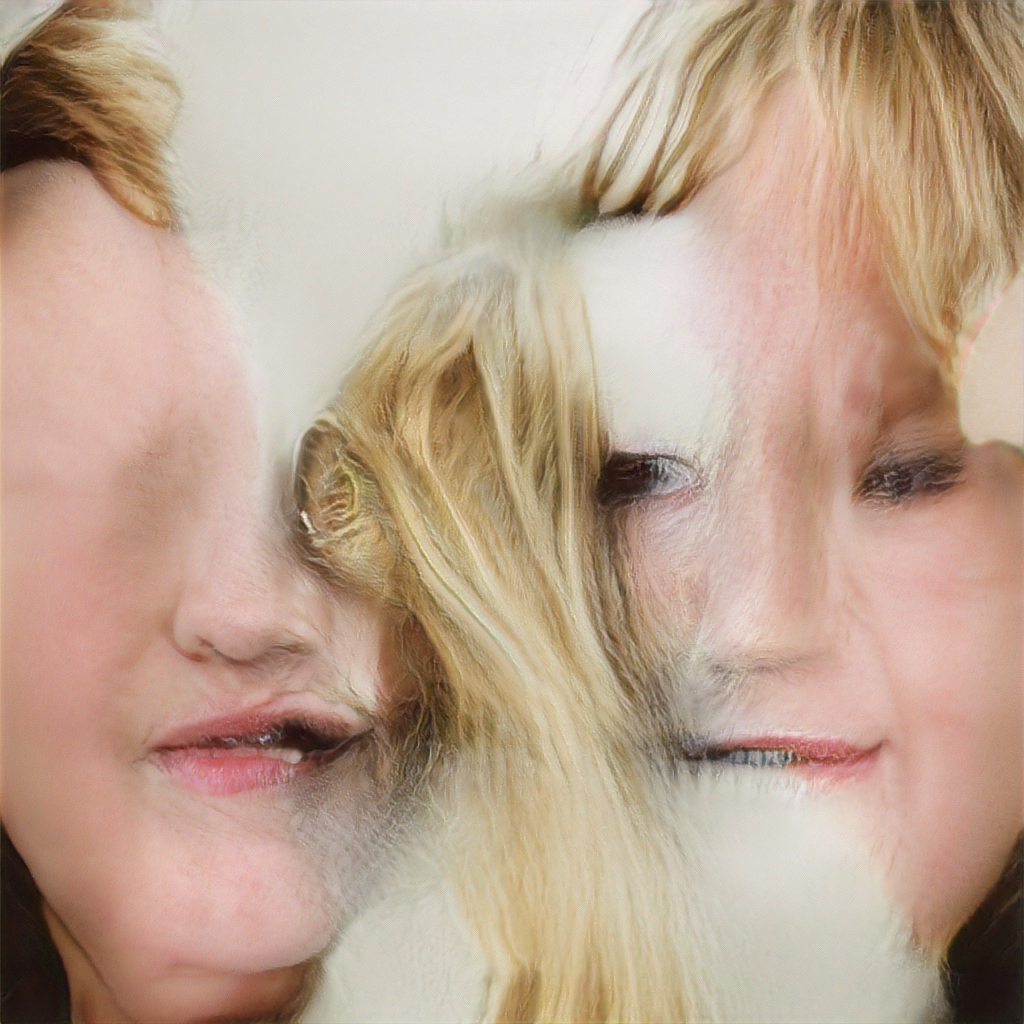
Some of the artists interviewed describe a growing sense of disillusionment. While major tech companies promise an unprecedented expansion of creativity, several artists instead observe an increasing standardization of visual forms. “Many believe that large-scale models actually reduce aesthetic possibilities,” the researcher summarizes. “These systems tend to converge toward photorealistic imagery and produce increasingly predictable results.” Early GANs, despite their imperfections, generated artifacts, glitches, and unexpected forms that fueled artistic experimentation. More recent models, by contrast, are perceived as more closed and less malleable. “Artists used to be able to train their models locally, intervene within the neural layers, and repurpose the underlying processes. Today, those models are encapsulated within highly locked-down platforms.” The study also highlights the cultural impact of the massive circulation of AI-generated images. As these images increasingly flood social media, some artists observe the emergence of an omnipresent AI aesthetic that has become difficult to escape when attempting to explore alternative visual territories.
On the ethical front, opinions diverge sharply. Several of the artists interviewed criticize the extractive nature of today’s large AI models, pointing both to their environmental footprint and their social impact, given that these systems are trained on massive datasets collected without explicit consent. “Some believe these models are inherently problematic from both an ecological and a moral standpoint,” explains Téo Sanchez. “For them, the primary responsibility lies with the companies developing these systems.” Others, by contrast, argue that responsibility depends above all on how the tools are used. A third group fully acknowledges the ethical tensions surrounding these technologies but admits that their creative potential often outweighs those concerns.
For some artists, these tensions have led to a genuine disenchantment. Several now express a desire to distance themselves from generative AI altogether. “Everything this technology does, I no longer want to do,” one participant quoted in the study told Téo Sanchez. Others, however, are returning to more modest and more malleable technologies, such as Small Language Models (see Creative AI: Greener Alternatives Do Exist) or earlier systems like DeepDream. For them, this offers a way to recover a more hands-on, experimental relationship with the machine. The study ultimately identifies three broad trajectories among the artists interviewed: abandoning AI and its relentless technological race; continuing to explore the latest models; or deepening existing practices by working with familiar—often older—models.
Finally, the study highlights a profound shift in how the public perceives AI-generated art. The debate is no longer simply divided between supporters and critics of artificial intelligence. It now extends to the very legitimacy of artists themselves. “Many describe feeling a new pressure to justify their artistic approach,” notes Téo Sanchez. “There is a widespread assumption that it’s somehow too easy.” This is paradoxical, given that these practices often involve complex, labor-intensive, and highly technical processes. Several artists explain that they now feel compelled to describe their working methods in detail in order to dispel the notion that their work amounts to little more than writing a few prompts.
This growing skepticism may well foreshadow one of the major challenges of the years ahead: the increasing need to make creative processes more transparent while strengthening arts education and cultural mediation around digital technologies. The challenge is all the more pressing given that these forms of public engagement are among those most threatened by ongoing budget cuts.
Adrien Cornelissen