Solarpunk, futuristic visions that stand against dystopia
Article published on 8 October 2026
Reading time: 12 minutes
Le Clair Obscur - Sleep for Earth
Article published on 8 October 2026
Reading time: 12 minutes
As humanity’s future remains uncertain, some creative visions are opening up possibilities for futures compatible with ecological balance. They are gathering under an informal banner: solarpunk. A kind of antithesis to cyberpunk’s dystopian outlook, this movement is being enriched by digital culture artists and their reflections. An introduction.
You’re probably familiar with the term cyberpunk, given its cultural reach into speculative fiction and cinema (Philip K. Dick or Blade Runner), but the solarpunk art movement may be less familiar. When imagining possible futures, artists have often responded to growing technological excess and environmental apocalypse with a critical, dystopian vision of what lies ahead. This bleak scenario has prompted a newer generation of creators to propose “counter-narratives” guided by a form of positive utopianism, offering different ways of seeing the world. Solarpunk emerged as an artistic movement imagining a future more compatible with ecological balance.
Concerned with environmental issues as well as ethical and social questions, particularly the fight against discrimination, solarpunk is far from a structured movement. Its first mention is thought to date back to a 2008 blog post titled “From Steampunk to Solarpunk,” a reference to another retrofuturist movement with a distinctive Victorian aesthetic: steampunk. As Camilla Colombo, from the Belgian research and curation platform OHME, explains: “Solarpunk is less an established artistic network than a cultural and speculative movement that imagines ecologically harmonious futures shaped by communities.” She adds: “There is no central organization. It is more a collection of shared practices, values, and imaginaries, found in literature, art, design, activism, and architecture. Artists and collectives identify with it to varying degrees, often without belonging to any specific organization.” In practice, references to this artistic movement are found mainly in recent literature, including Becky Chambers’s Monk and Robot series and Nina Munteanu’s A Diary in the Age of Water. More recently, solarpunk-inspired worlds have also appeared in video games such as Solarpunk and, even more famously, Terra Nil.
The solarpunk “manifesto” is relatively recent and was itself developed collectively and iteratively. Its first English-language version, published on a blog in 2014, has been revised several times since, notably by writers such as Adam Flynn. It sets out a vision of the future based on sustainability, social justice, decentralization, and a harmonious relationship between humans, technology, and nature. These principles are echoed across key websites and initiatives, including Solarpunk Conference / Solarpunks Blog, Permacomputing, Collapse OS, Low Tech Magazine, and Public Domain Books to Restart Computer Technologies. As the French-language version of the manifesto, Solarpunk: A Solarpunk Manifesto, illustrates, solarpunk is as much a philosophical outlook as an activist one. It states that “the essence of solarpunk is a vision of the future that embodies the best of what humanity can achieve: a post-scarcity, post-hierarchy, post-capitalist world where humanity sees itself as part of nature and clean energy replaces fossil fuels.” It also explains that “the ‘punk’ in solarpunk stands for rebellion, counterculture, post-capitalism, decolonialism, and enthusiasm. It means taking a different path from the conventional one, which is becoming increasingly alarming.”
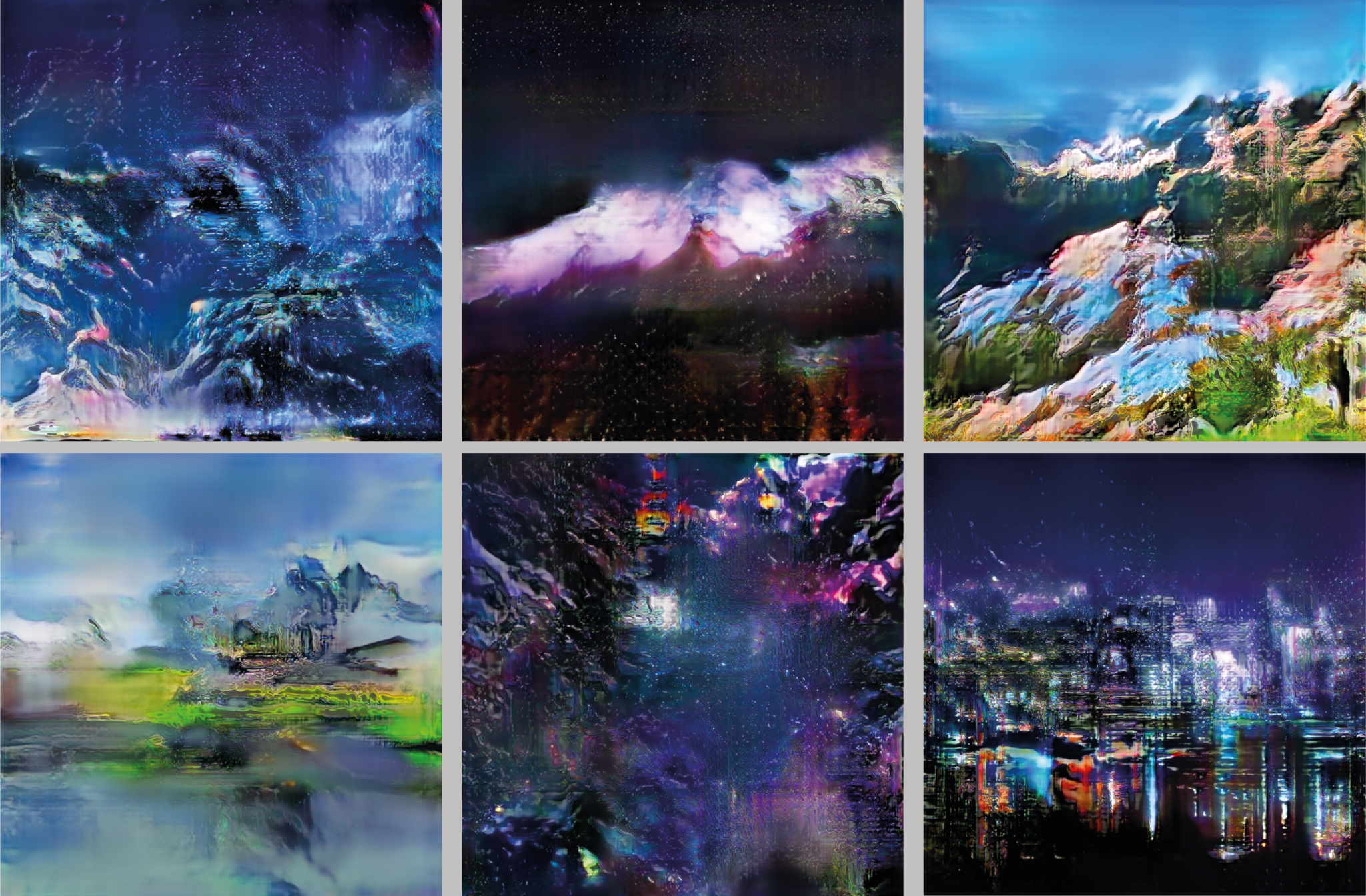
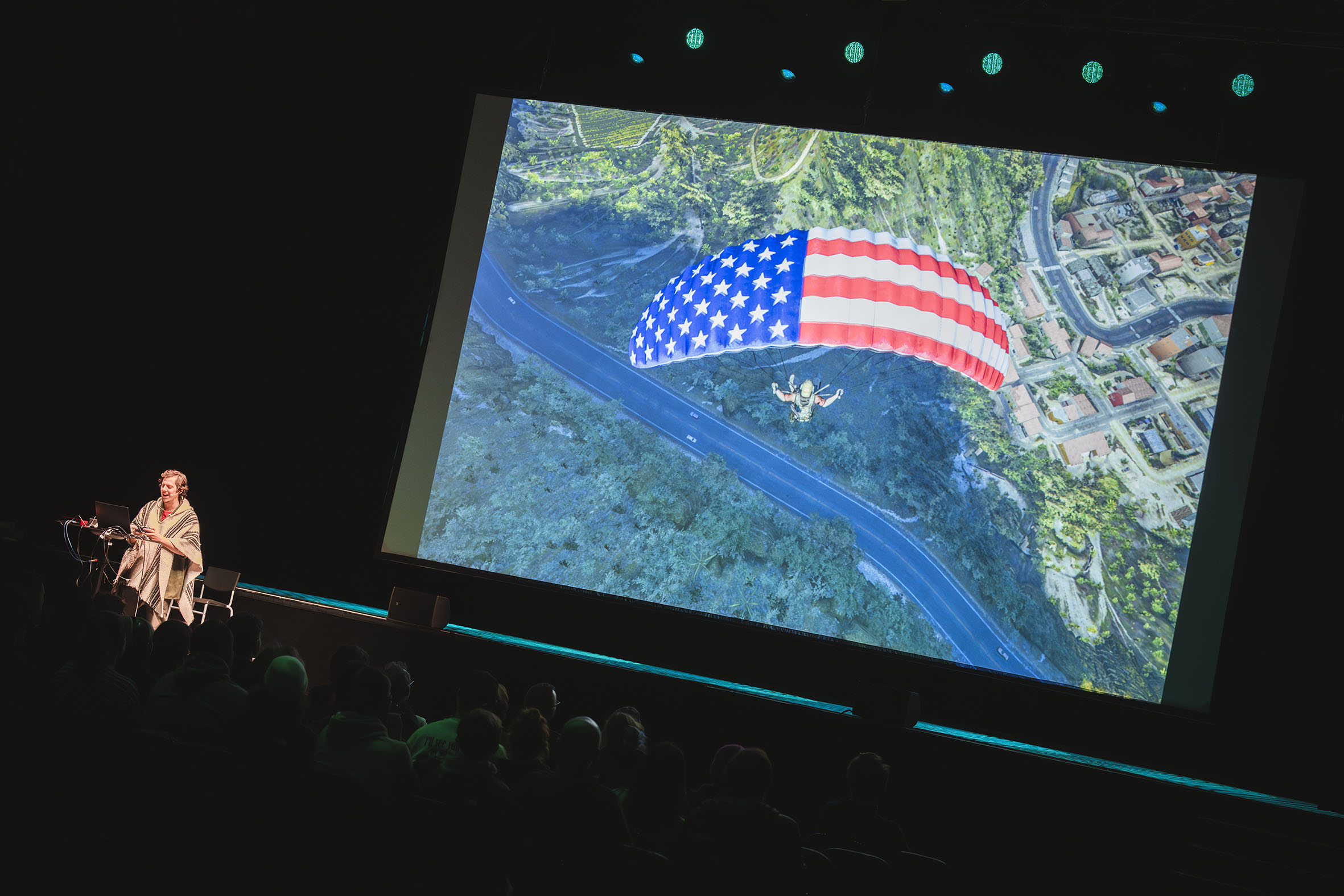
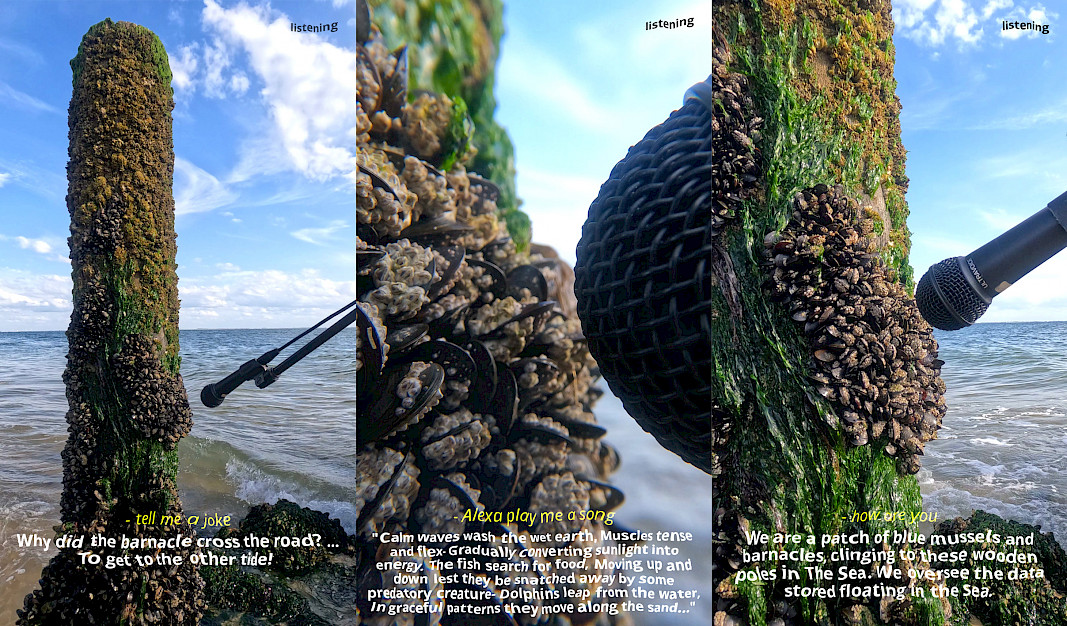
The ubiquity of digital technologies in our lives makes them a natural field of inquiry for imagining new ways of thinking about the future, particularly at the intersection of technology and sustainability. Digital culture thus offers fertile ground for exploring solarpunk imaginaries and DIY practices. This convergence of ecological concerns and technological practices can be seen in the work of numerous artists, including Juliette Bibasse and Joanie Lemercier, with their project Solar Lab.It is also evident in the work of Dutch artist Mark Ijzerman, who gives a voice to the nonhuman world, including biodiversity, aquatic systems, and living organisms, through installations and audiovisual performances grounded in rigorous fieldwork, collaborations with biologists, astronomers, and ecologists, and a practice that embodies the solarpunk ideal of technology serving as a means of listening to the living world. London-based artist and designer Chaline Bang, meanwhile, explores ways of reclaiming obsolete technologies, from old smartphones to lightweight open-source systems, to question the economic and political models that shape our relationship with digital technology. Her approach is both practical and critical, closely aligned with solarpunk’s emphasis on digital sobriety.
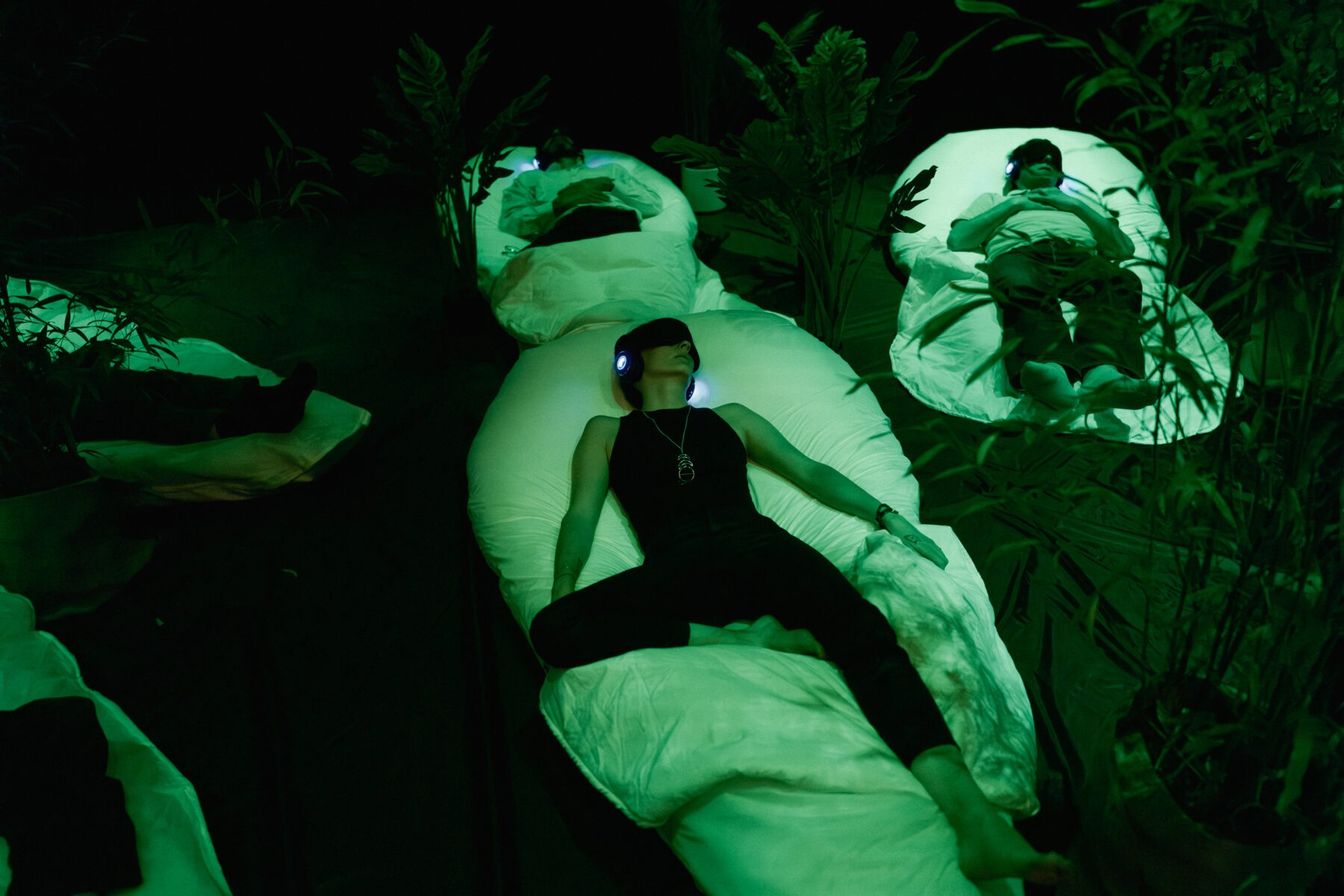
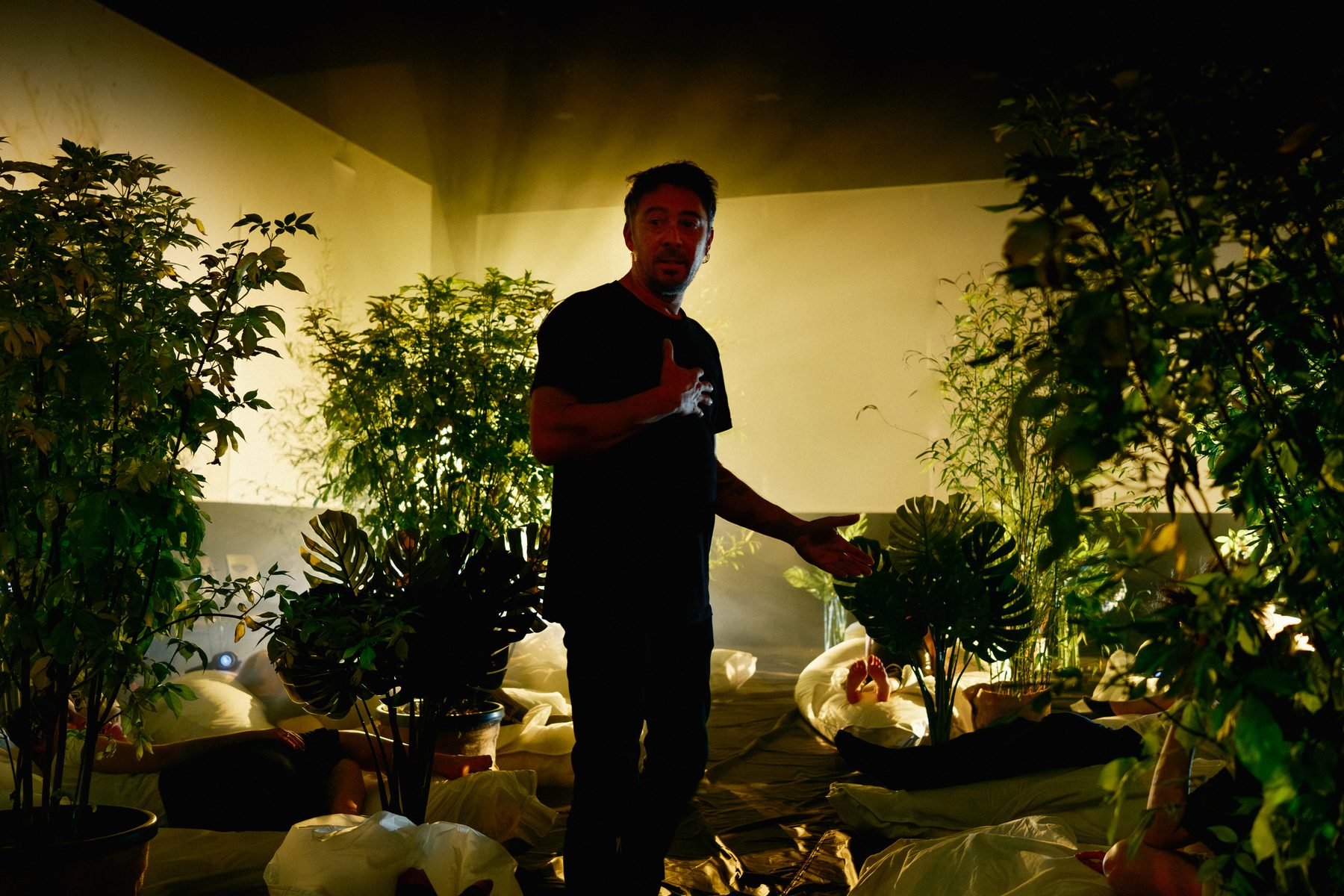
The immersive conference-performance Sleep For Earth created by director Frédéric Deslias and his company Le Clair Obscur, can be described as “ an overarching project, an open and expandable geopolitical manifesto.” Its central premise, “putting humanity into stasis to suspend our predation of resources,” suggests a blend of solarpunk principles and cyberpunk sensibilities. “Solarpunk is familiar territory for me. I’d been immersed in it since my first Miyazaki films without really being conscious of it,” says Frédéric Deslias. “But recently, Le Clair Obscur has taken an urgent ecological turn that has brought us much closer to the movement. Between climate fiction and protopias, solarpunk is not far off. I’m also very familiar with the authors published by La Volte” (editor’s note: Alain Damasio and Norbert Merjagnan). “And Sleep For Earth grew out of a close collaboration with the writer LI-CAM, whose fictional world of Écoume offers a model for a resilient society that is very much solarpunk. So Sleep For Earth is very much in tune with it, although it remains more ambiguous.” A broader direction is indeed emerging in digital art, shaped by new sensibilities such as slowness and the use of techniques that have stood the test of time or draw more heavily on non-Western traditions. One example is writer Carolyn F. Strauss’s Slow Technology Reader (A Tool for Shaping Different Structures), which explores more human-centered ways of developing technology.

To support this trend in digital art, an open call titled Solar Futures was launched in January 2026. It brings together four cultural organizations working at the intersection of art, science, and digital technology: OHME (Brussels), Electroni[k] (Rennes), iii (The Hague), and LEV Festival (Gijón), in partnership with the universities ULB and VUB. “The idea emerged from a shared conviction among the four partners: artists can play an active role in imagining desirable futures, in dialogue with scientific research and contemporary challenges,” explains Camilla Colombo. “Solarpunk became the conceptual framework because it offers both an ideological and a practical space in which to explore these questions.” Three artists were selected from 140 submissions to create new works in distinct formats, each addressing a specific theme: a physical installation exploring renewable energy and circular resources (Jin Lee); a screen-based experience focused on permacomputing and digital sobriety (David Lazar); and a live performance exploring new political and social imaginaries (Carolin Schnurrer). “These three formats and themes are not arbitrary,” Camilla Colombo emphasizes. “They reflect very different ways of imagining and representing futures through material, digital, and collective approaches.”

The most advanced of the three projects, scheduled to be presented first at the Maintenant Festival in Rennes in October 2026, is Inference_Commons by Romanian artist David Lazar. The work is conceptually rigorous, building bridges between democratic governance and digital infrastructure while reaching back to the distant tribal past of early human communities. “The work is a speculative installation built around a single question arising from my research into computing power and how it might be governed as a commons: ‘What if computing had evolved less like a cloud and more like a campfire?’” explains David Lazar. “Rather than an abstract, distant ‘cloud’ owned by someone else, I’m interested in computing as something people gather around, share, and negotiate together.” Lazar arrived at this idea by looking at human history and early forms of tribal governance, in which people gathered around fires to tell stories and deliberate. In this screen-based installation, the screens literally take the form of a campfire, positioned low to the ground in a small circle where people can sit or stand together. For David Lazar, solarpunk is therefore more than an aesthetic mood board. It offers a way to question power through energy, as well as political power itself. Who controls shared technological resources, within what limits, and how can these infrastructures be reimagined to make them sustainable, grounded in their specific contexts, and accountable to the people who depend on them?
The solarpunk movement’s informal, collective, forward-looking, and still very young nature can make it difficult for artists to identify themselves clearly with it. David Lazar does not claim membership in the solarpunk movement. He considers himself “aligned with its ethics, even if I haven’t yet adopted the full lifestyle.” Discovering solarpunk aesthetics, along with related practices such as low tech and permacomputing (see the HACNUMediaarticle), gave him “a language for something I was already moving toward: technology on a smaller scale, slower, more responsible, genuinely attentive to energy and ecology, with infrastructure that is actually designed with those concerns in mind.” As Camilla Colombo acknowledges, “There are countless artists and practitioners whose work could easily be described as solarpunk, but who have never heard the word or know nothing about the movement.”This is illustrated by this non-exhaustive survey of digital artists whose approaches align with solarpunk. “Solarpunk is not a closed label or a protected designation, and that is actually one of its strengths.” Yet solarpunk’s still-blurry boundaries could eventually have a downside. For now, its philosophy largely emerges from underground scenes, but the term could also be co-opted. Could solarpunk become another buzzword, much like its dystopian cousin cyberpunk, which eventually came to encompass and capitalize on the negative storytelling found throughout science fiction? Could it, too, be subject to a form of well-intentioned but fundamentally commercial appropriation? It is a question worth asking when architect Vincent Callebaut, who highlights the ecological ambiguities and lack of public buy-in surrounding certain mega-projects, which are difficult to reconcile with the solarpunk ethos.
While solarpunk’s ambitions seem most coherent in local, community-based projects, its challenges may also lie in finding ways to connect grassroots initiatives with digital technologies, which confront us with a systemic, hyperconnected world.
Laurent Catala