The Metaverse: A Flop Before a Comeback?
Article published on 2 June 2026
Reading time: 7 minutes
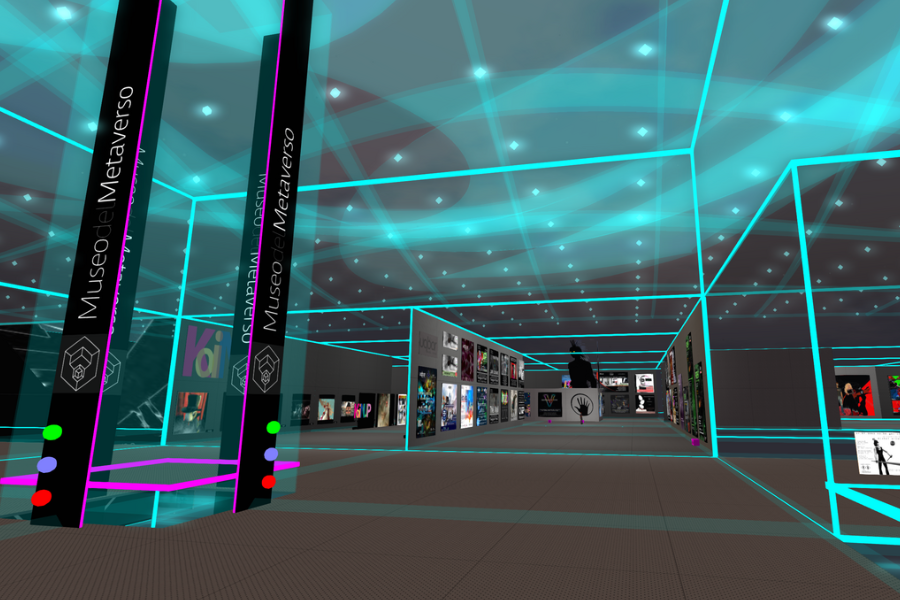
Creative Commons : New building of the Metavers Museum
Article published on 2 June 2026
Reading time: 7 minutes
The metaverse may have failed if we reduce it to the corporate strategy deployed by Meta through its Horizon Worlds platform. But that failure should not lead us to dismiss the core features of these persistent, shared virtual worlds—immersion and interaction—as anything less than foundational elements of the future. A look back at this near-flop.
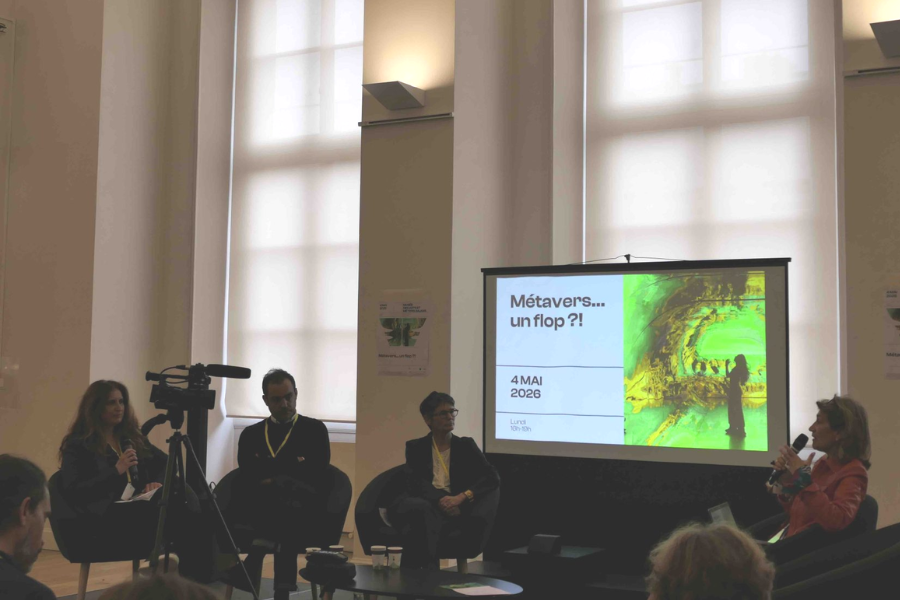
Echoing the successful exhibition Flops?! at Musée des Arts et Métiers, which explored technological projects that ended in varying degrees of failure—commercial failure, at the very least—the teams behind the Styx Project of the PEPR ICCARE program, led by researchers from Université Paris-Panthéon-Assas and Université Paris 1 Panthéon-Sorbonne in collaboration with the museum, invited the public to an “Acceleration Day” on May 4.
The event examined the supposed death of the metaverse and what it means for the next generation of virtual worlds currently in development. More specifically, it explored the potential of immersive and interactive environments, arguably the most compelling aspects of the metaverse’s original vision.

Several industry professionals took part in the discussion, including Alexandre Roux from Unframed Collection, Catherine Seys from Excurio, Élisabeth Gravil, founder of Museovation—a consultancy specializing in digital strategy for museums transitioning into virtual spaces—as well as Cécile Méadel and Jaércio Da Silva from Université Paris-Panthéon-Assas. All reflected on the “death” of the metaverse, a narrative increasingly repeated in media coverage from 2022 to today. Jaércio Da Silva revisited the origins of the metaverse and the dominant business model developed in 2021 by Meta under Mark Zuckerberg, backed by nearly $70 billion in investments—before the company ultimately abandoned the strategy to refocus on AI. “From the beginning, the metaverse existed within a socio-technological imaginary,” Da Silva explains, before that momentum turned into an industrial power grab by one of the world’s largest tech companies. The acquisition of Oculus and the creation of proprietary infrastructures for users, Élisabeth Gravil notes, reflected the desire of Big Tech to maintain control over the emerging, more community-driven dynamics of Web3.
In the end, however, the project failed for Meta, due both to structural limitations—expensive headsets and a largely unreceptive public—and because it failed to deliver on “its technological and spiritual promises,” as Da Silva summarizes. Still, he argues, “the death of the metaverse appears less like the disappearance of a technology than the reconfiguration of the project itself. We got rid of Meta—the company—but not the ethical social experience that helped dismantle a certain hegemonic narrative by redistributing its promises among other actors, other structures, and other vocabularies.” Yet Meta’s withdrawal also raises serious concerns regarding the long-term preservation of existing works. Many projects relied on technologies developed by the company and later discontinued, such as the 2024 shutdown of Meta Spark, which left more than 500,000 creators without viable alternatives.
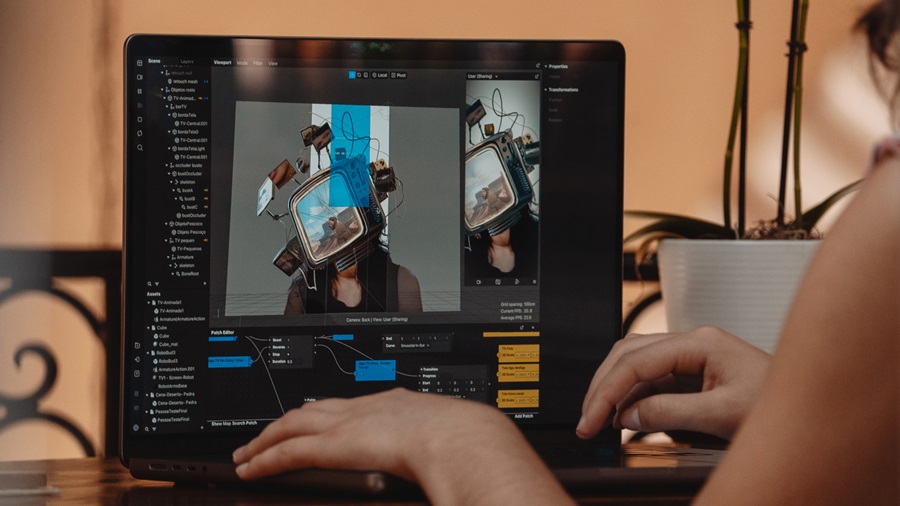
Even if the metaverse itself is considered “dead,” its two defining features—immersion and interaction—remain highly active among XR creators developing new virtual environments, particularly in the context of digital museum experiences. Élisabeth Gravil describes community-building as essential to the future of museum environments, inspired in part by the massive social ecosystems created around video games. Since the COVID crisis, museums have increasingly developed virtual visits alongside physical exhibitions, but the community dimension remains critical. In hindsight, Meta’s greatest failure may have been its inability to foster an open, dynamic, and genuinely engaging user community.
Elisabeth Gravil also points out that French museums, in particular, have too often approached virtual visits as “simple reproductions of the physical museum.” By contrast, she highlights more ambitious North American examples, especially the Boston Museum, whose virtual Mission: Mars experience attracted 7.4 million visitors through the interactive platform Roblox. For Elisabeth Gravil, AI will further expand these possibilities. “The ability to co-create and co-produce content will improve everything,” she argues, citing translation tools already integrated into platforms like Roblox, where 53 languages can be translated in real time. “There will be enormous new possibilities for museums, but it will also require responsibility. These worlds will need moderation, especially by trained curators, and we’ll need to build shared knowledge systems capable of distinguishing truth from falsehood—which also means reinventing the profession itself.”
In this context, content itself becomes central. Creative companies such as Excurio and Lucid Realities / Unframed Collection are already playing a major role in this reconfiguration. Catherine Seys reinforces the “importance of not reproducing museums identically” within virtual worlds through the XR/AR/VR experiences—what Excurio calls “immersive expeditions”—developed by the company. These include prehistoric landscapes created in partnership with the Muséum national d’Histoire naturelle and projects tied to exhibitions at Musée d’Orsay, including a reconstructed 1866 artists’ salon where AI-generated works were refined collaboratively by curators and AI systems to fit the historical setting convincingly. Alexandre Roux argues that the metaverse failed largely because “technology was sold before content was.” He emphasizes the dual role of his company—as producer through Lucid Realities and distributor through Unframed Collection—“allowing us to support projects at every level. Producers benefit from our field experience, while museums and institutions see us as solution providers.” ”
Within this ecosystem, building a sustainable economic model is crucial, especially through scalable and replicable immersive works that can circulate across venues. Catherine Seys therefore advocates for “permanent, dedicated spaces designed specifically for immersive experiences”—venues equipped with at least a hundred XR headsets to expand the Location-Based Entertainment (LBE) model. At the same time, Alexandre Roux highlights the development of a “catalog model” by Unframed Collection, including portable VR kits capable of traveling to small regional libraries and cultural centers. The goal is to make immersive works accessible nationwide at modest cost, rather than limiting them to major national museums.
Ultimately, the perspectives shared during the discussion point toward optimism: the immersive sector continues to grow despite the collapse of Meta’s heavily marketed metaverse model. “We want our immersive expeditions to become a new way of experiencing entertainment culture, much like cinema,” Catherine Seys explains, while Élisabeth Gravil already anticipates a near future in which cumbersome headsets may no longer be necessary.
Alexandre Roux also reaffirms the ambitions behind France 2030, stressing the importance of cross-disciplinary collaboration between filmmakers, musicians, architects, and other creators. “It’s not about privileging one medium over another,” he says. “It’s about using the medium best suited to the work.” He points to an upcoming film-concert project bringing together filmmaker James Cameron and singer Billie Eilish. “A work should be adaptable across multiple media. We need to break down boundaries, and that responsibility belongs to artists as much as anyone else—it can’t be left solely to engineers in Silicon Valley.”
The metaverse is dead. Long live the metaverse.
Rédaction Laurent Catala