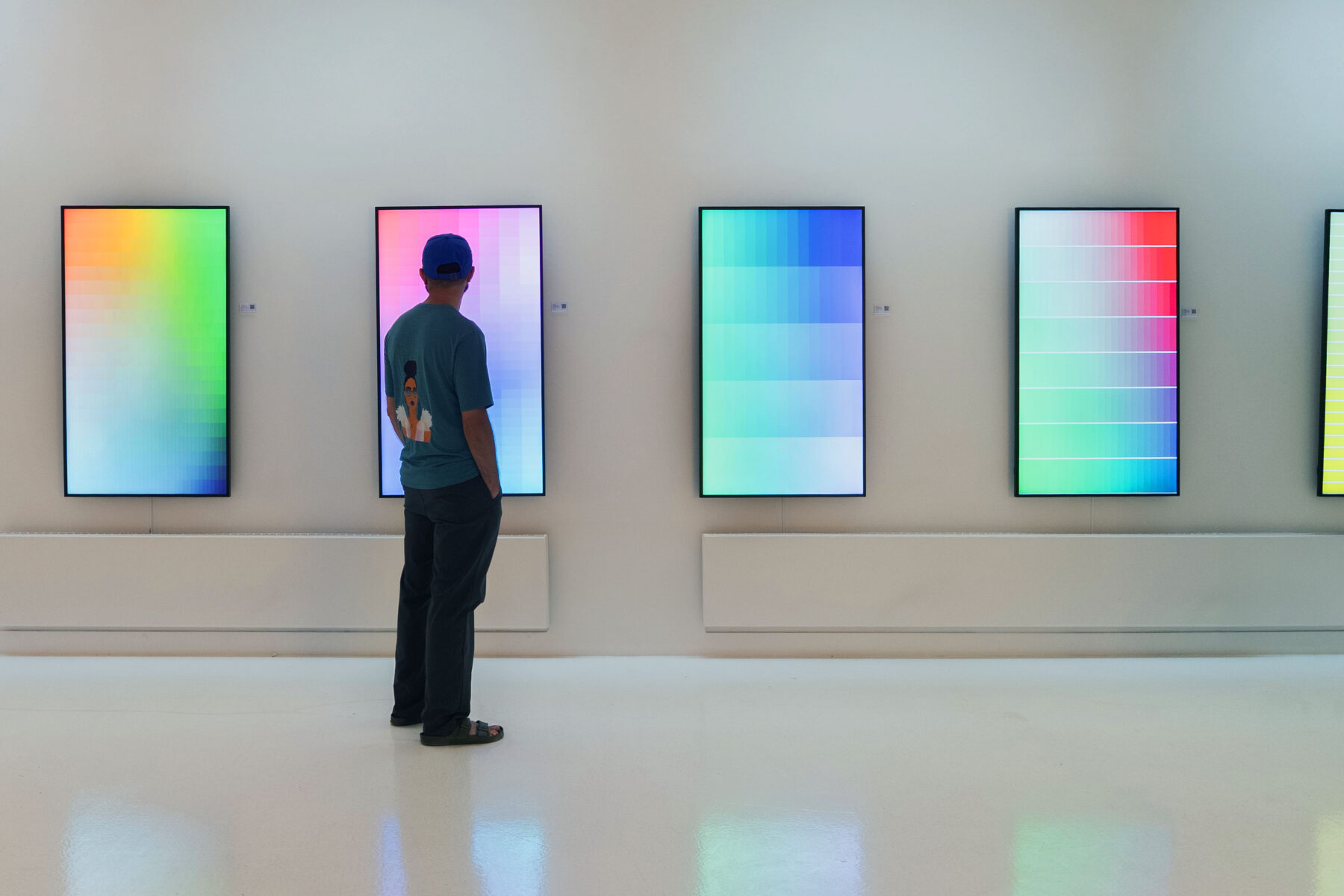
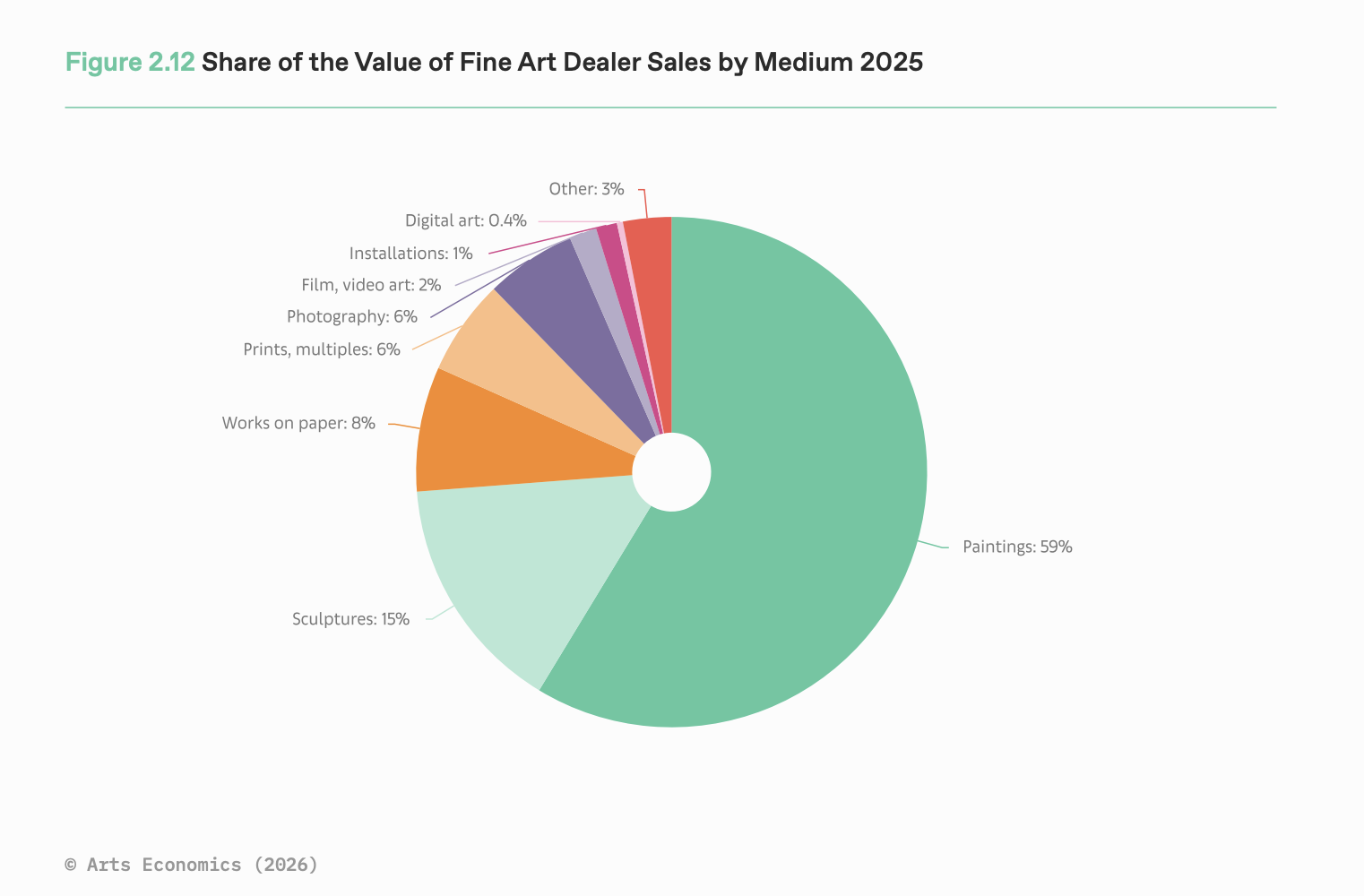
After the NFT frenzy and the downturn that followed, the digital art market is reshaping itself. Specialized galleries, hybrid collectors, tastemakers: the ecosystem is consolidating around new dynamics. What economic forces are at play? Which galleries remain active on the market? Who are today’s collectors? What are they buying? An overview of the market and its current trends.
The leading voices of the art market are unequivocal. According to the Art Basel & UBS Survey of Global Collecting 2025, digital art now occupies a central place in private collections: in 2024–2025, half of the collectors surveyed acquired a digital artwork. In just one year, the overall share of digital art in private collections more than quadrupled. But does this signal a structural shift in collectors’ behavior — and tastes? Noah Horowitz, CEO of Art Basel, certainly believes so. In December 2025, he launched “Zero 10” during Art Basel Miami Beach, a new curatorial section dedicated to digital art, later extended to the Hong Kong edition of the fair. “Zero 10 reflects a strategic conviction: digital art is no longer marginal. It is now at the very center of the evolution of art and the market in real time,” declared the influential Art Basel executive at the launch.
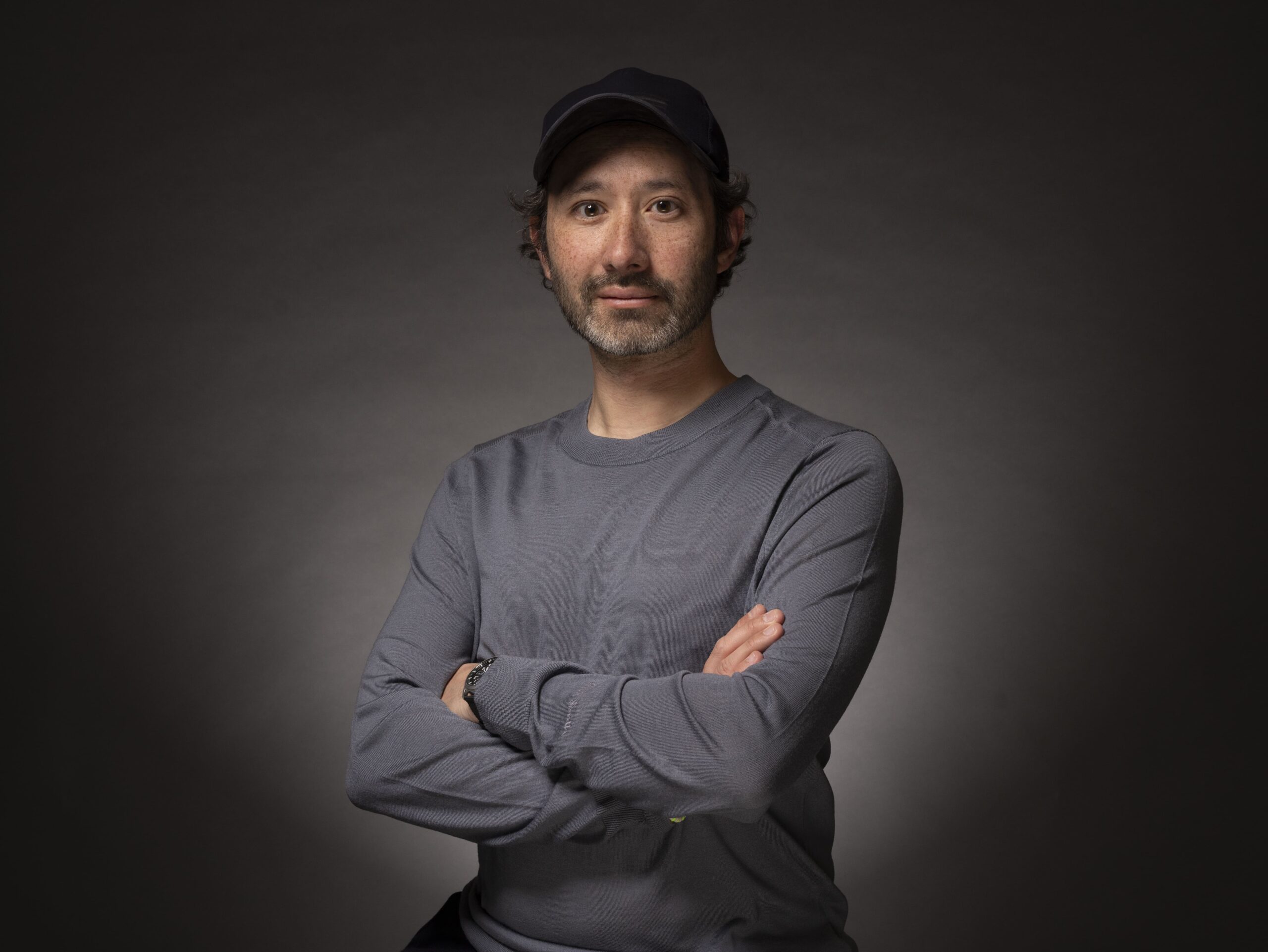
Yet the recent closure of the digital art departments at Christie’s and Sotheby’s seemed to suggest the opposite, as the NFT market collapsed after the euphoric auction spikes of 2021–2023 (Read HACNUMdia article). Christie’s thus made the “strategic decision to reformat its digital art sales,” meaning that digital works are now folded into contemporary art auctions, while the Sotheby’s Metaverse has slowed considerably, with the American auction house focusing on selective sales by major names such as Refik Anadol. “Recent history sends contradictory signals. Some major auction houses have shut down their digital art departments. But the fact that Art Basel, the world’s most influential fair, launched a fully dedicated curatorial section — first in Miami, then in Hong Kong — is a strong sign,” notes Sébastien Borget, founder of The Sandbox and the Artverse gallery, who hosted a symposium on digital creation during Art Basel Hong Kong last March. “There is obviously an economic interest, and success will ultimately be measured by commercial results,” continues the entrepreneur and collector. “But I also believe there is a genuine desire to democratize what is most experiential about digital art: installations where visitors interact with machines and leave with something tangible.”
Sébastien Borget, cofondateur de la galerie ArtVerse. Crédits ArtVerse
The Lessons of the NFT Retrenchment
To understand where the market stands today, one must look at what it failed to become. For a long time, traditional art market players relegated hybrid arts to the margins of contemporary art. And despite the emergence of online sales platforms, the structure of the so-called digital art market remains tentative. The years 2021–2022 acted as a revealing moment in negative. “At the time, everything became interconnected: major tech entrepreneurs, artists, Sotheby’s, Christie’s. In the moment, it was fascinating. As long as there was money, it was exciting. But then everything collapsed. Young artists who had suddenly been given opportunities to show and sell their work completely disappeared from the radar,” summarizes Kim Departe. “ The biggest mistake was believing that a medium had been invented, when in reality it was simply another sales tool.” For her part, Fanny Lakoubay, a collector who initiated CADAF (Crypto and Digital Art Fair), which was discontinued in 2021, and co-founder of 100 Collectors, a digital art collectors’ club, has also developed a pragmatic approach to NFTs.
What it changed, according to her, is that NFTs “helped structure the digital art market and clarify issues of provenance, traceability, and transfer.” Sébastien Borget ofArtverse expands on this analysis: “The NFT ultimately proved to be a technical tool, sometimes useful as a certificate of ownership or as a blockchain-based medium, but never an end in itself. Even artists now often prefer not to use it as a commercial argument because the term still carries heavy connotations. Digital art as a whole is broadening: generative art through code, algorithms, digital installations incorporating robotics, electronics, physical components… We are witnessing a growing search for materiality and experiential engagement.”» . ”
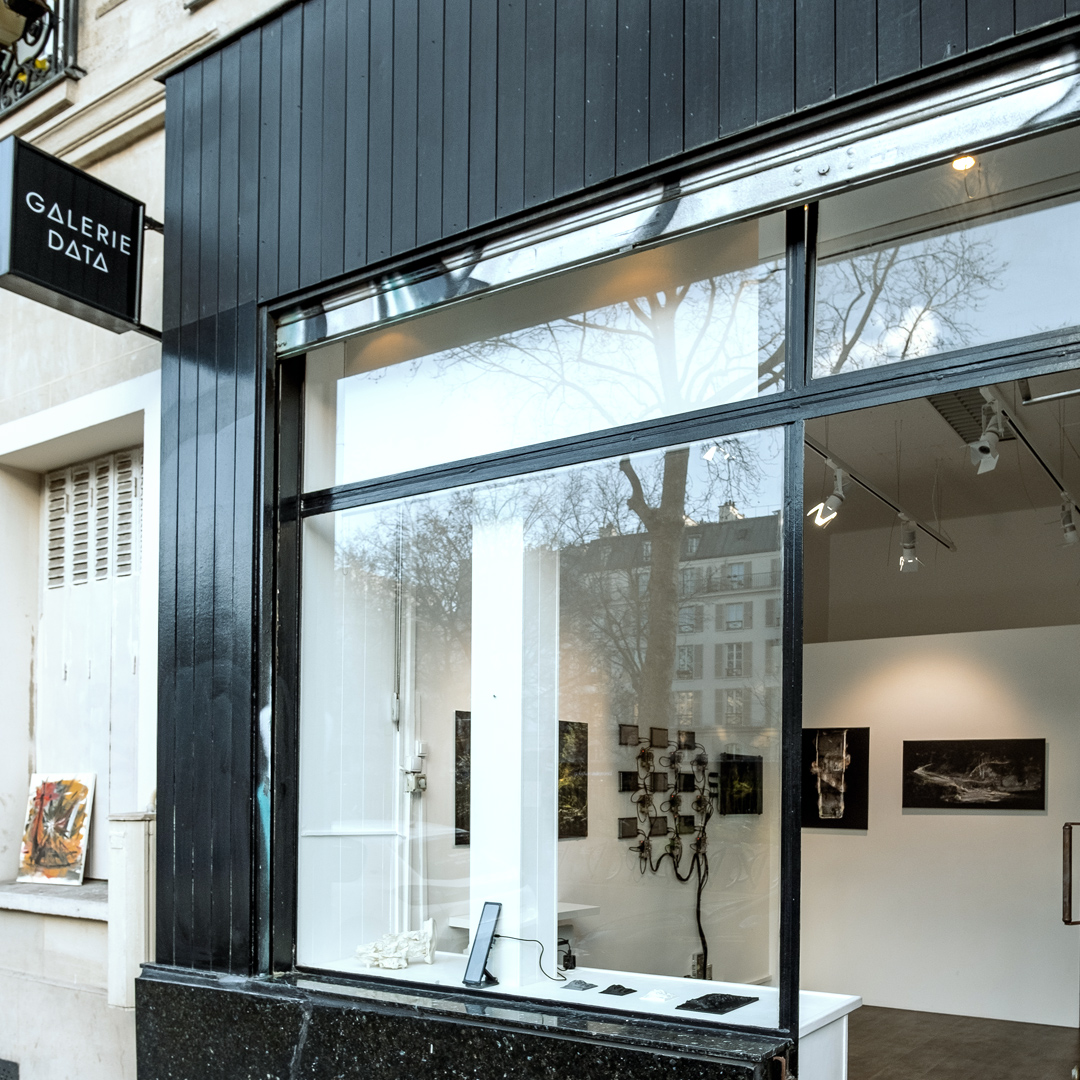
Galerie DATA
Gabrielle Debeuret, founder of the DATA gallery, drew radical conclusions from the NFT market collapse: she closed her Paris space in 2024. She points to a deeply structural issue: do digital artists really need galleries? “They can sell directly, without intermediaries. What interested them at one point about NFTs was that I brought curation, something extra. But that time is over.” According to her, galleries may need to be rethought not as sales venues but as sites of dispositifs, closer to institutional logic, where artistic recognition is built rather than transactions carried out. In other words, a laboratory-gallery where exhibitions shape careers more than they sell individual works — though the question of funding remains unresolved, as she candidly admits. Valérie Hasson-Benillouche, founder of Galerie Charlot — one of France’s oldest private galleries specializing in digital art — maintains that the contraction of the market has less to do with NFTs themselves than with the broader economic climate. “In this context, collectors retreat toward safe bets. I represent mid-career artists, ‘emerging values,’ which by definition implies a degree of risk,” explains the gallerist, who is currently exhibiting the work of Antoine Schmitt, considered a “safe bet” in digital art. All these nuanced perspectives ultimately highlight the complexity of the market and the diversity of collectors’ approaches.
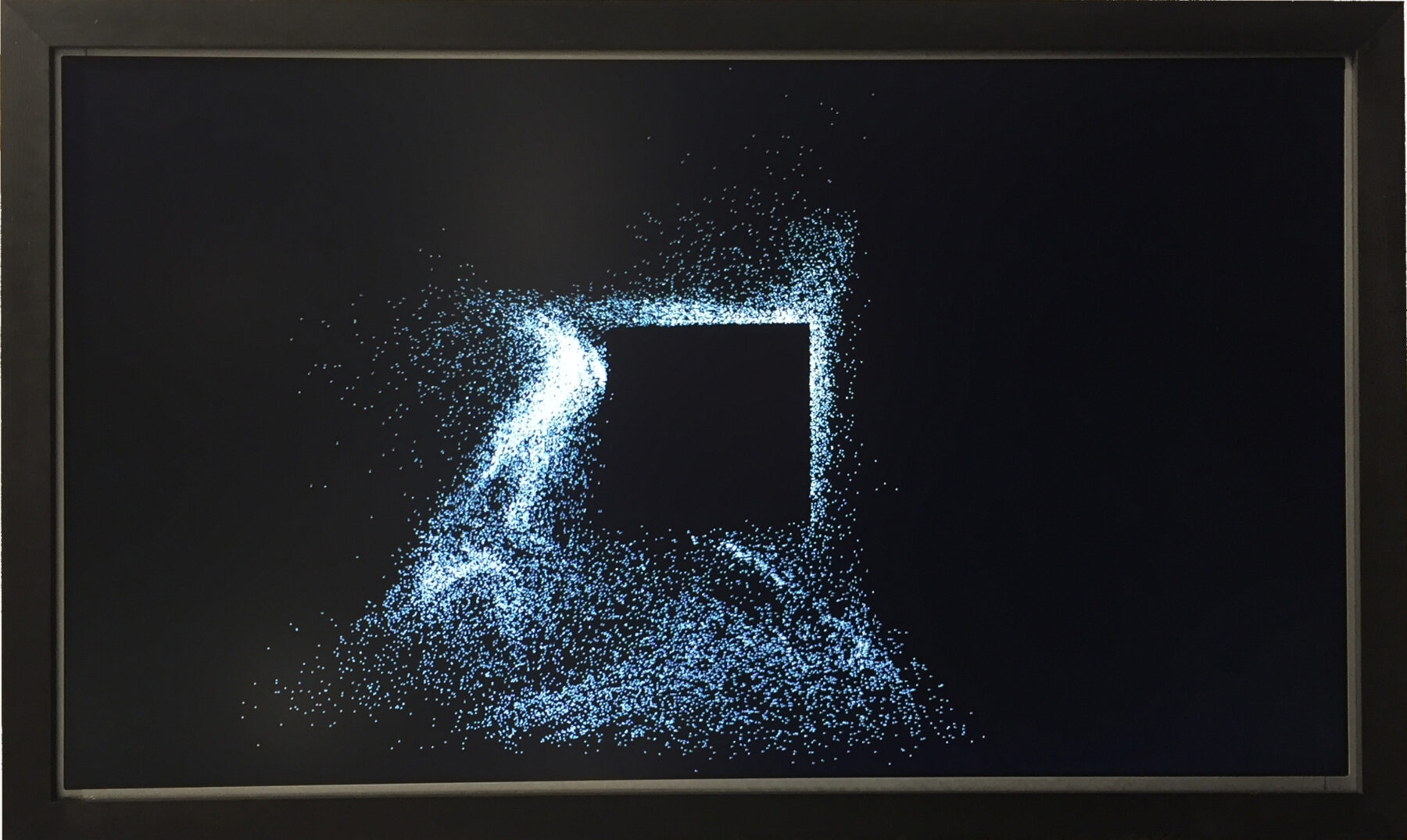
Antoine Schmitt- oeuvre generative sur ecran – Black Square
Who Buys What?
To understand who buys what today, one must trace the history — not so recent anymore — of the digital art market. Valérie Hasson-Benillouche has observed a process of sedimentation over the past fifteen years. “There have been three distinct waves of buyers,” she explains. “The first generation of collectors I welcomed when the gallery opened consisted of informed amateurs already highly active in the contemporary art market. They had established collections — paintings, photography, sculpture — and wanted to evolve them. Digital art represented a natural extension of their sensibility.” A second turning point came when institutions and foundations, driven by their acquisition committees, began questioning the future of artistic creation and the growing role of digital technologies in artistic practices. “From 2021 onward, a third wave arrived with NFTs: young investors from the crypto world, attracted first by the promise of financial return and only later, sometimes, by the artworks themselves,” she continues. For other collectors, passion for art remains intact. “I collected works by artists because I believed their artistic careers would endure over the long term: Daniel Arsham, Grégory Chatonsky, Ivona Tau, Albertine Meunier, Marine Bléhaut, Mégan Laurent…,” says Joséphine Louis, who believes the future of digital art will lie in the “duality of media,” blending fine arts and digital forms as extensions of digital conception into the physical world.
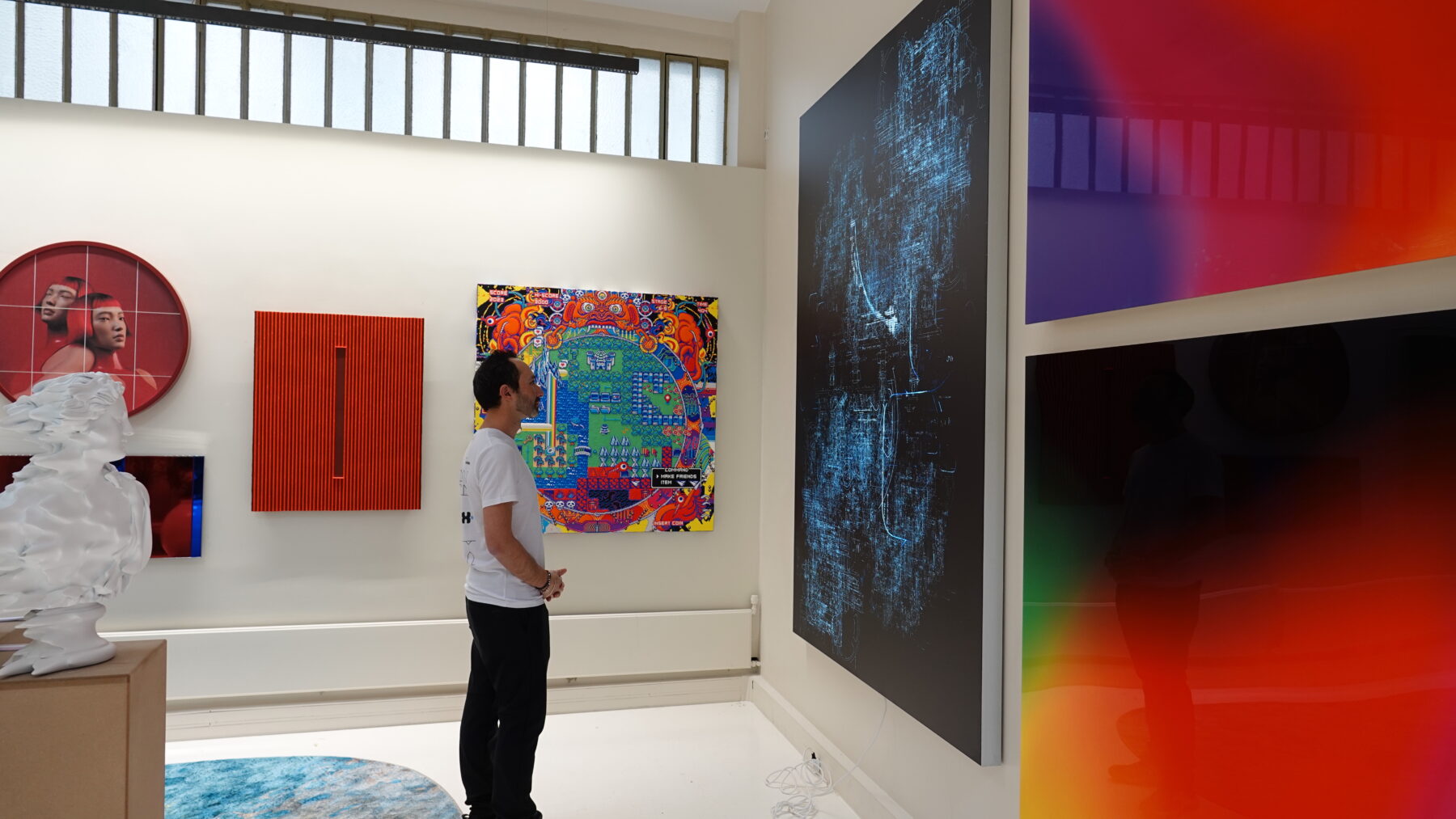
Vue de la galerie ArtVerse. Crédits ArtVerse
Immersive installations, generative art, crypto art… The galaxy of hybrid arts can bewilder buyers because of the complexity of its forms. Kim Departe maps these distinctions: “First, you need to separate several categories. There is everything physical or ‘phygital’ — halfway between physical and digital. Then there are strictly digital works delivered on USB drives through galleries. And finally there are NFTs, which are entirely digital. These typologies are handled in completely different ways.” Some highly knowledgeable collectors, she notes, simply do not want the burden of physical works, especially in Paris where space is scarce. For them, NFTs answer a practical as much as an aesthetic constraint. Others have diversified their collections to encompass every morphology of hybrid arts, such as Sébastien Borget, who came from tech and gaming, collected through blockchain platforms before investing in physical works at Perrotin and opening his own gallery space in the Marais district. “Through encounters over time, my horizons broadened, especially toward more physical, material works,” he says. Fanny Lakoubay embodies another figure of transversal collecting: she follows artists over the long term, discusses their research with them, examines their institutional contexts, “much like collecting traditional contemporary art.” In Europe, Sedition, the British platform selling limited-edition digital art, has observed a marked evolution in collector profiles: “There is a growing group of new collectors who are digital natives, comfortable with screens as a medium, but we also see more traditional collectors gradually becoming interested in digital formats, often out of curiosity or as part of a broader engagement with contemporary art,” explains Sedition coordinator Andrea Simionov.
AI revolution, really ?
Could AI artworks now become the next favorites among collectors? According to Bpifrance, the AI-generated art market is booming, with estimated annual growth of 40.5%. Its value is expected to rise from $212 million in 2022 (for comparison, the global art market was worth $67.5 billion at the time) to $5.8 billion by 2032. But what exactly do we mean by AI art? “AI opens up new possibilities for large-scale digital art creation, often through algorithms capable of replicating or transcending existing artistic styles,” states Bpifrance. Is AI merely a machine for digesting and reproducing? “This technology offers creators a new palette of expressions while expanding their audience through digital platforms,” the bank concedes. “AI is a tool that complements artistic gesture — it facilitates access to creation, but that does not make everyone an artist,” says Sébastien Borget. “The real question is: where does the artist’s mastery lie, their ability to decide and direct what the tool produces? That is where the conceptual work resides. Technology does not threaten the artist — it forces them to question their role, what they want to say, and how they want to convey it. In the end, the strength of the concept still matters most.” Traditional market operators nonetheless remain cautious. Were they burned by the NFT crash? Christie’s, for example, only held its first AI art sale in 2025 amid controversy, achieving a total of $728,784 — modest by contemporary art auction standards — while celebrating the arrival of a “new wave of collectors,” without specifying who they were. ”
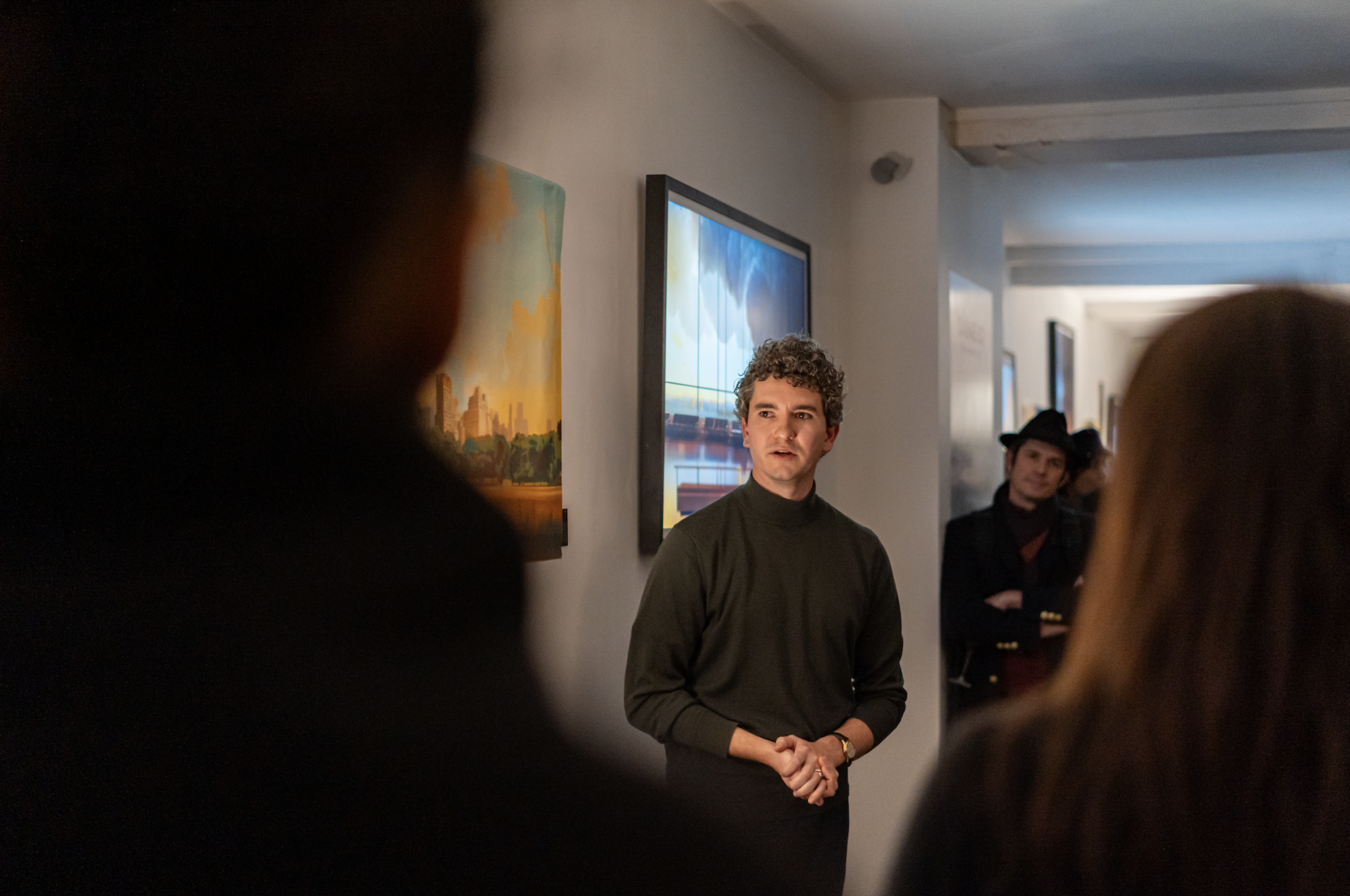
Louis-Paul Caron, artiste représenté par la galerie DANAE actuellement en résidence à la Villa Albertine (crédit Laura Zeferino)
The Gallery Ecosystem Holds Steady
The landscape now appears to be stabilizing through the consolidation of a network of specialized structures no longer driven by speculative excitement, but by curatorial conviction. In Paris, the galleries that have endured — L’Avant Galerie Vossen, Galerie Charlot, DANAE, Artverse — have done so through different strategies, all grounded in long-term commitment. DANAE has embraced pedagogy. Its formats — workshops, artist talks, roundtables — respond to a growing demand for guidance. “Collectors and institutions ask many questions, especially at the moment of acquisition,” confirms founder Rachel Chicheportiche. Artverse embodies another model: the collector-gallerist opening a space conceived as a site for exchange and discussion. “Many digital art collectors initially entered the field for financial and speculative reasons far more than from genuine interest in artists or in building lasting collections. That is why educational work is essential,” says Sébastien Borget. Fanny Lakoubay praises this exploratory work: “Discovering digital art has become easier because exhibitions in galleries such as DANAE, Artverse, or Galerie Charlot are multiplying, alongside dedicated sections at major fairs like Art Basel and Paris Photo, as well as museum exhibitions such as the AI exhibition at Jeu de Paume.”
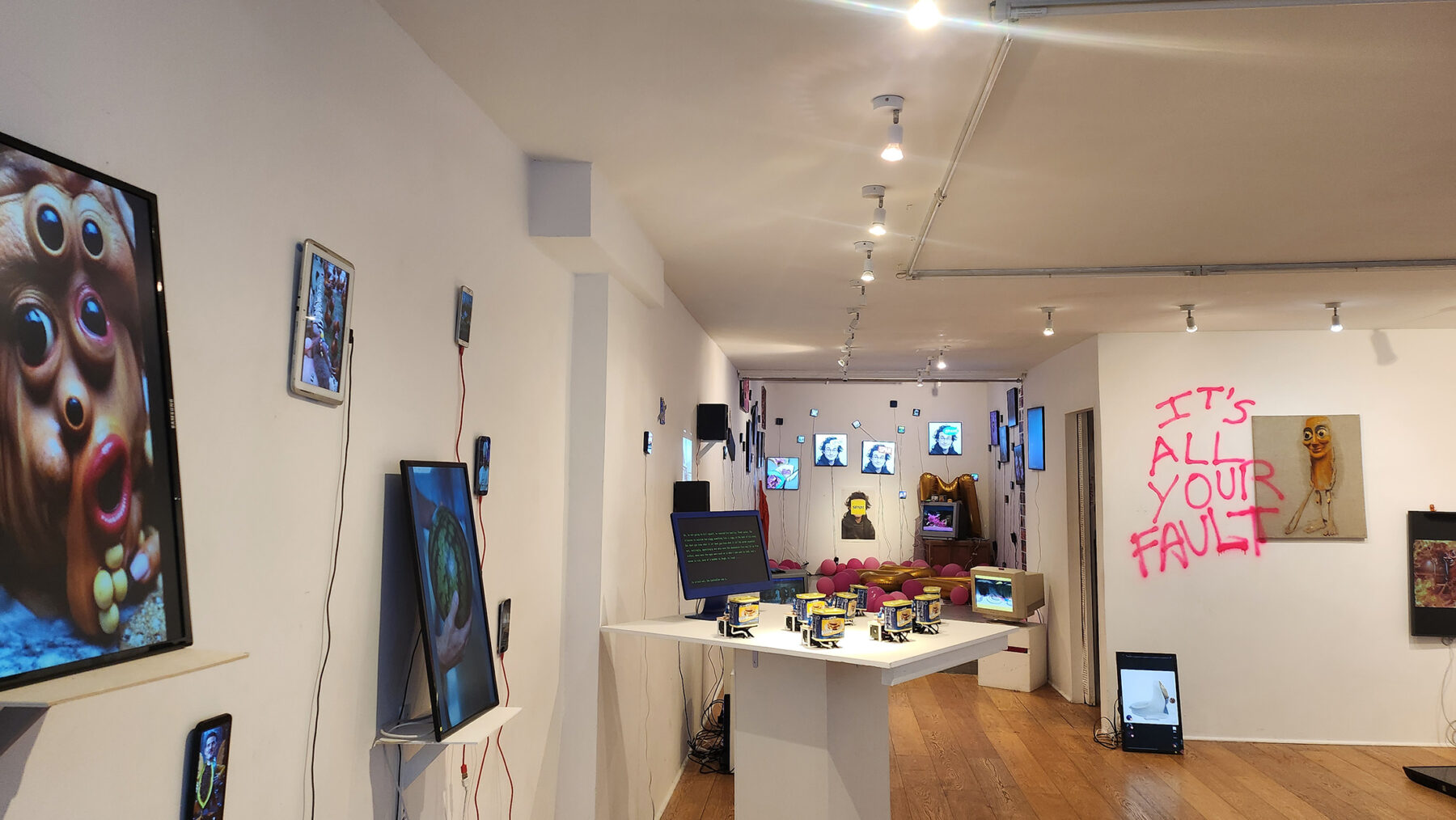
Vue de L’Avant Galerie Vossen – From Spam to Slop
What Formats Reveal About Collectors
Within this reshaping market, artwork formats are far from neutral. They structure collector profiles just as surely as prices or gallery typologies do. Several actors observe a gradual return to materiality. Kim Departe confirms the trend from the advisor’s fieldwork perspective: “We’re moving away a little from NFTs and screens, back toward physical works, robotic plotters, but with more refined finishes.” The artists she mentions — Florian Zumbrunn and William Mapan, presented at the latest Art Basel by curator Dominique Moulon — illustrate this trajectory: long independent and without gallery representation, well positioned during the crypto era, they are now attempting to establish themselves on the traditional market with works possessing physical presence. This shift also responds to a broader social demand, which Sébastien Borget frames in cultural terms: “People go out to live experiences, not simply to contemplate framed works at an opening.” Sedition confirms that the formats most appealing to collectors seeking a physical presence in space are video, generative works, and installations — “formats that particularly resonate with collectors interested in how digital art can be experienced within physical environments, not merely owned as an asset,” notes Andrea Simionov.
Conservation as a Criterion of Maturity
Within this landscape, one question emerges as a revealing sign of the market’s maturity: how does one preserve a digital artwork? How can its transmission and restoration over time be ensured? This has become a key distinction between mature collectors and impulsive buyers. Fanny Lakoubay is direct on the matter: “People sold the idea that blockchain guaranteed a form of automatic permanence. In reality, it’s far more complex. In many cases, the NFT is not the artwork itself but a token pointing to a file stored elsewhere. If that file disappears, becomes inaccessible, or was not properly archived, you can end up with a certificate without an image, without a video, without a visible work.” This issue, she says, now determines her acquisition choices: she examines the blockchain being used, the quality of the technical infrastructure, the sales platform, and the file storage method. “You have to think about provenance, but also about active conservation.” Rachel Chicheportiche, founder of DANAE, also adopts a rigorous position. She clearly distinguishes different levels of risk: “Preserving the file itself is already highly advanced. The risks are more likely to concern the display medium.” She specifies the best practices she recommends: “Properly document the artwork, preserve important files, plan updates if necessary, and use reliable storage solutions.” She also highlights blockchain’s role as a traceability tool: “it guarantees authenticity, tracks provenance, facilitates transmission over time, and serves as a tamper-proof certificate,” while recommending the addition of an external physical storage solution — a “cold wallet” — for maximum security.
Rachel Chicheportiche, la fondatrice et présidente de DANAE, une galerie parisienne hybride « où blockchain, art digital et exigence curatoriale se rencontrent ». (créditLaura Zeferino)
At Galerie Charlot, Valérie Hasson-Benillouche has implemented concrete protocols. For video works, she systematically provides backup copies. For generative artworks, “the artist delivers the source code to the buyer at the time of sale. If updates become necessary — which happens roughly every ten years — the collector hires a programmer to update the code.” She even cites the case of an artist working with generative art in Fortran, a programming language from the 1960s: “and it works perfectly. There are always solutions.” For collector Joséphine Louis, conservation is a central issue “once you realize everything is stored on IPFS, or that marketplaces can disappear.” She explains: “In general, even if a marketplace shuts down, you can still retrieve your collection on OpenSea. But that is not always the case. Edouard.com, for example, is doing incredible work with the Timeless application to ensure proper conservation of digital artworks. I know that Art Blocks collections stored fully on-chain are well preserved. Today, thanks to this tool, I know which marketplaces I should use for acquisitions or recommend to my clients.” Conservation and long-term sustainability have thus become intrinsic to the act of acquisition itself — a structuring shift. Institutions are beginning to acknowledge this reality: the French Ministry of Culture devoted its 2025 professional conservation-restoration days to digital issues, while Le Fresnoy in Tourcoing has integrated these questions into its curriculum.
Between market experimentation, individual experiences, and empirical observations, exchanges between collectors (such as Sylvain Lévy, Fanny Lakoubay, Ronnie K. Pirovino, and Wiyu Wahono) and art market professionals are more necessary than ever. These discussions aim to better understand the sector’s key challenges: the influence of private collectors on market development; the integration of digital art into established collections; the secondary market for digital works; the role of intermediaries; and exhibition-related constraints. A sign that the legitimization of hybrid forms of art within the mechanisms of the art market is no longer a question to be asked.