Designing experiences that move us, measuring how they affect us, and asking who might exploit this data in the future… Last October, an acceleration day for the COMET project (PEPR ICCARE) brought together researchers, artists and cultural professionals to discuss the emotional dimensions of immersive experiences.
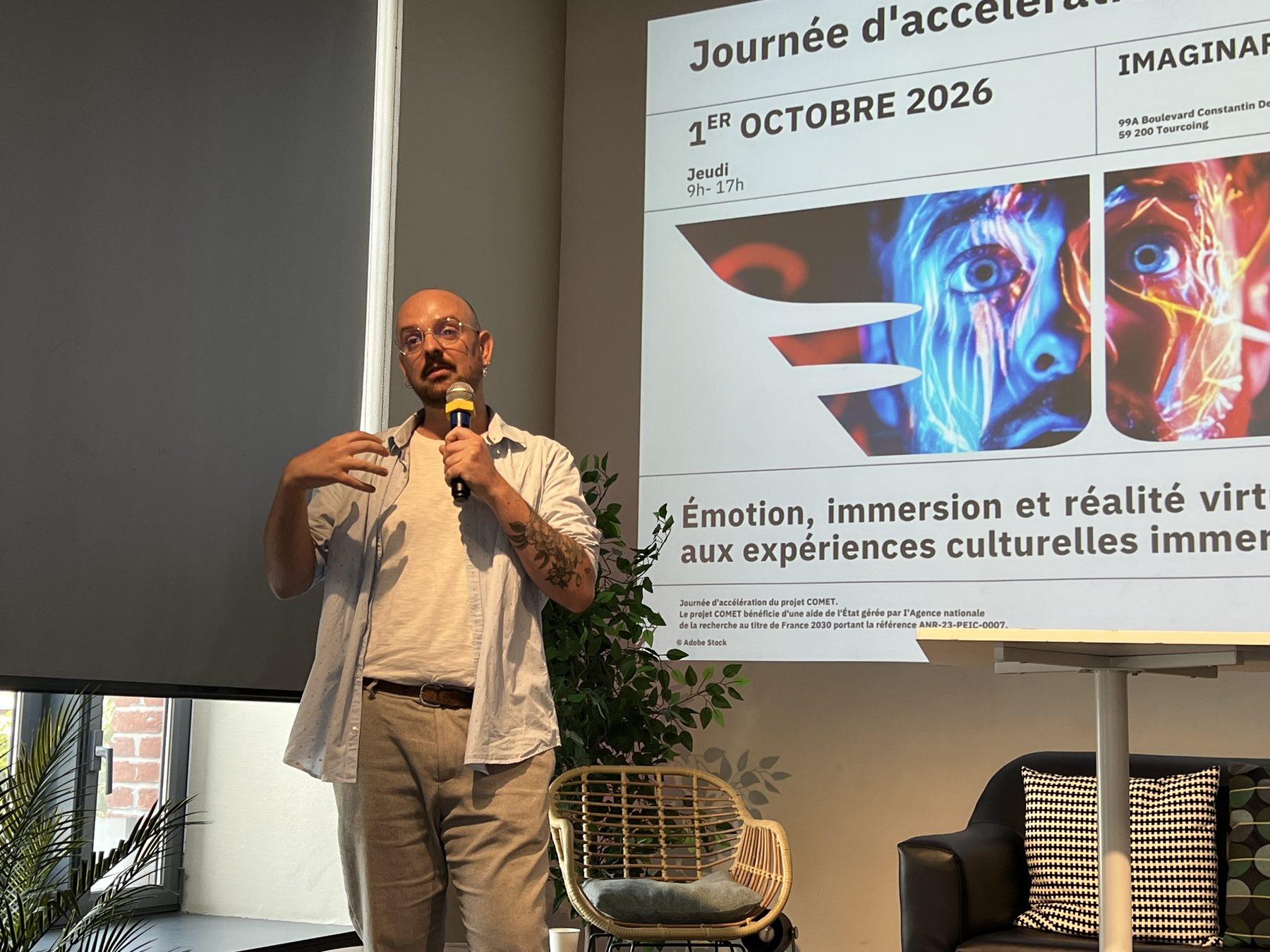
“Prehistoric men and women were the ones who invented the image.” The words are spoken between two 3D views of the Font-de-Gaume cave in Dordogne. Marc Martinez reminds us of something obvious: long before headsets and sensors, images have always had the power to move us. The question is what immersive technologies have changed. This was precisely the purpose of the acceleration day for the COMET project, part of PEPR ICCARE (see our article Creating the conditions for a genuine encounter). At the Imaginarium in Tourcoing, ten presentations explored the emotional power of immersive technologies and a major challenge: how can it actually be assessed?
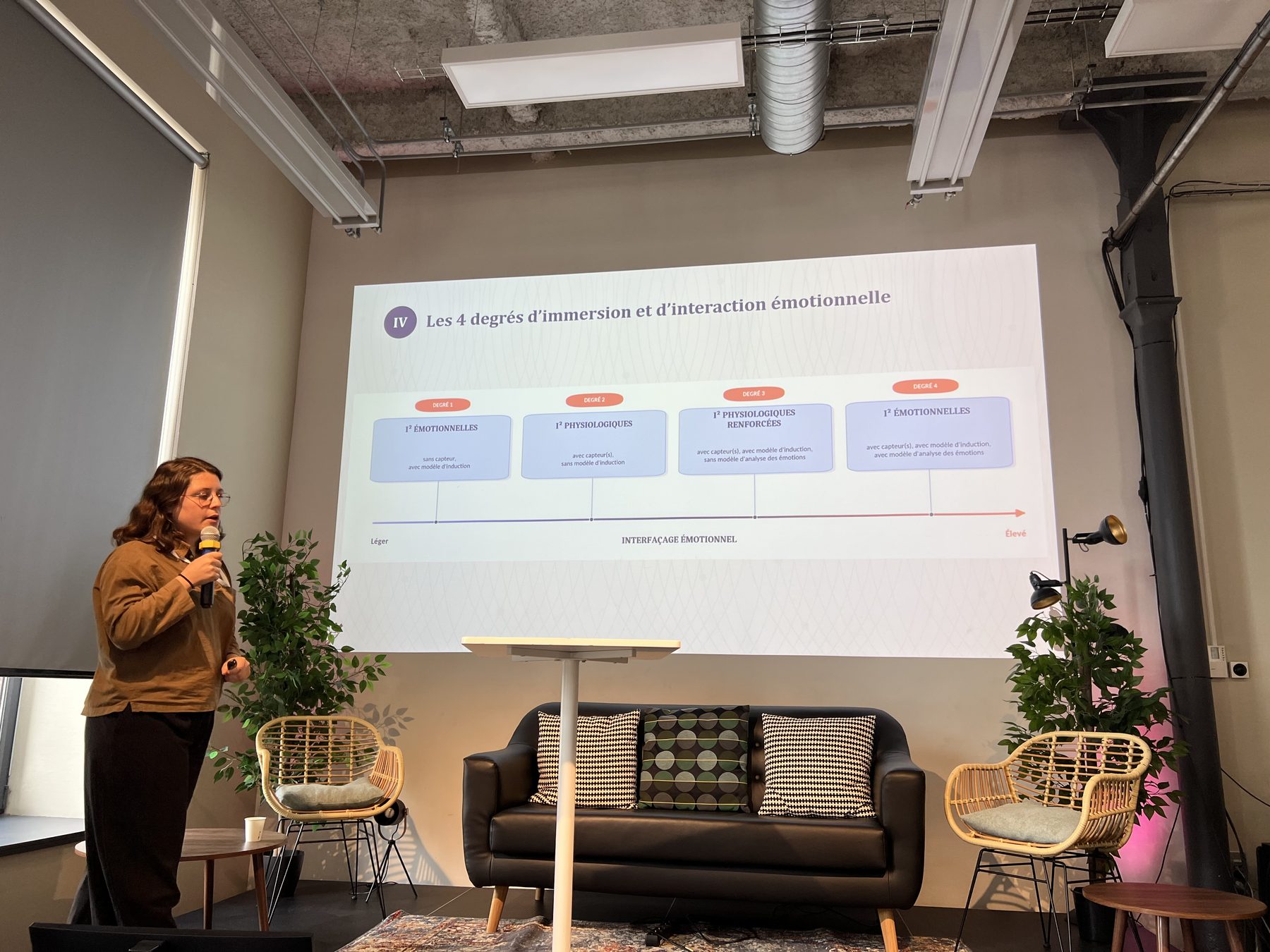
Julien Lomet – Photo Romain Astouric
Memory and emotion
The initiatives presented that day illustrate the diversity of experiences that fall under the umbrella of immersive technologies. A remote guided tour of the Font-de-Gaume cave, for example, offers an immersive experience of a site with very limited access. The tour is projected onto a large screen and operated by a guide: the virtual space is not freely accessible but explored with someone accompanying visitors.“This mediation format allows us to reach specific audiences, such as people in nursing homes, as well as new audiences. It also fully supports our public service mission of making heritage accessible to as many people as possible,” explains Morgane Estavoyerof the Centre des monuments nationaux. With Marc MartinezTogether with Marc Martinez, administrator of the prehistoric sites in the Vézère Valley, she described how the team adapted the experience to the specific needs of remote mediation: real-time 3D, a dynamic map, a sense of scale, and access to otherwise inaccessible areas. The experience first works on atmosphere, with the sound of footsteps or water dripping. But its main strength lies elsewhere. It allows visitors to interact with certain paintings in ways only digital technology can offer: overlays bring out figures that are difficult to distinguish with the naked eye, and archival photographs can be called up. The aim is to move people by revealing what would otherwise escape them.
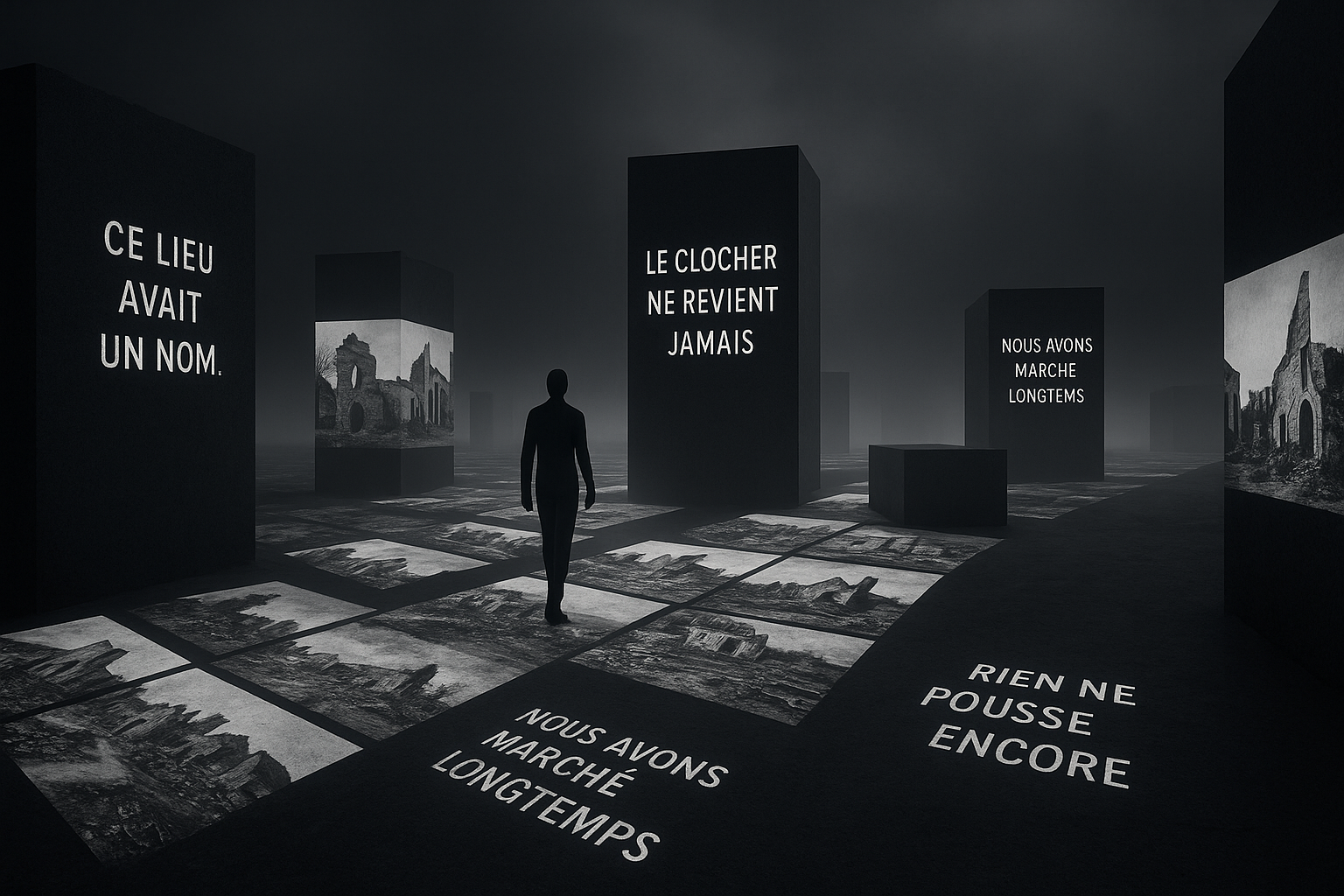
The same idea runs through the presentation by Christophe Cellier of the Campus des métiers et des qualifications d’excellence image et design Hauts-de-France. He introduced Fay, Flug, Frégicourt…, villages that disappeared from the Somme, a project developed by students in the graphic design program at Lycée Édouard Branly in Amiens. It explores villages destroyed during the First World War, including Frégicourt, which was completely wiped off the map. The starting points are modest: family postcards, testimonies and sketchbooks. “The main material in this project is absence,” he explains. Hence a clear approach: “not a reconstruction, but an evocation.” Created in the New Atlantis metaverse, the result “is not simply a slideshow, but a space to be experienced,” says Christophe Cellier. Immersion serves less to show what once existed than to make people feel what is missing.
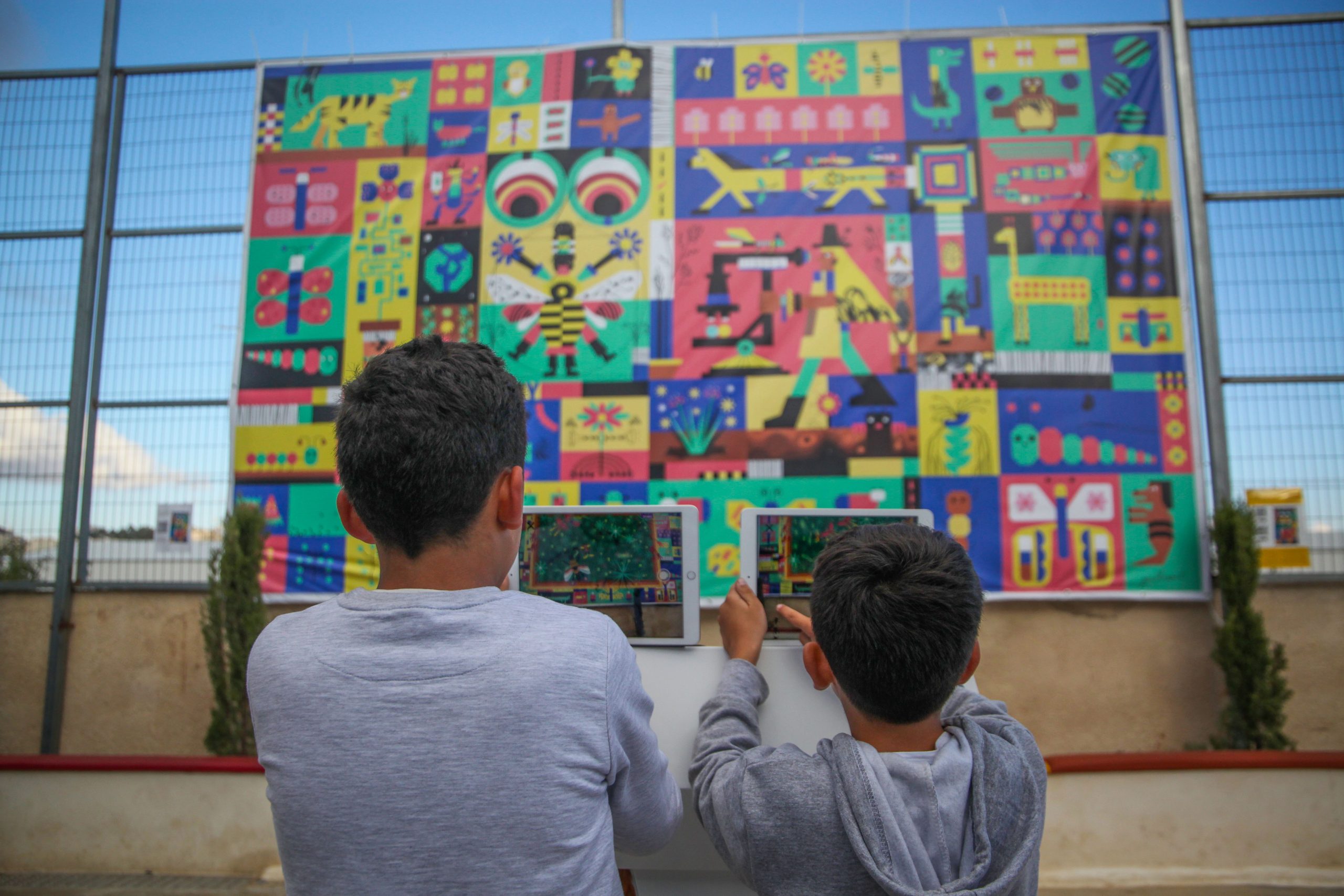
Fay, Flug, Frégicourt…, villages disparus de la Somme
Care and emotion
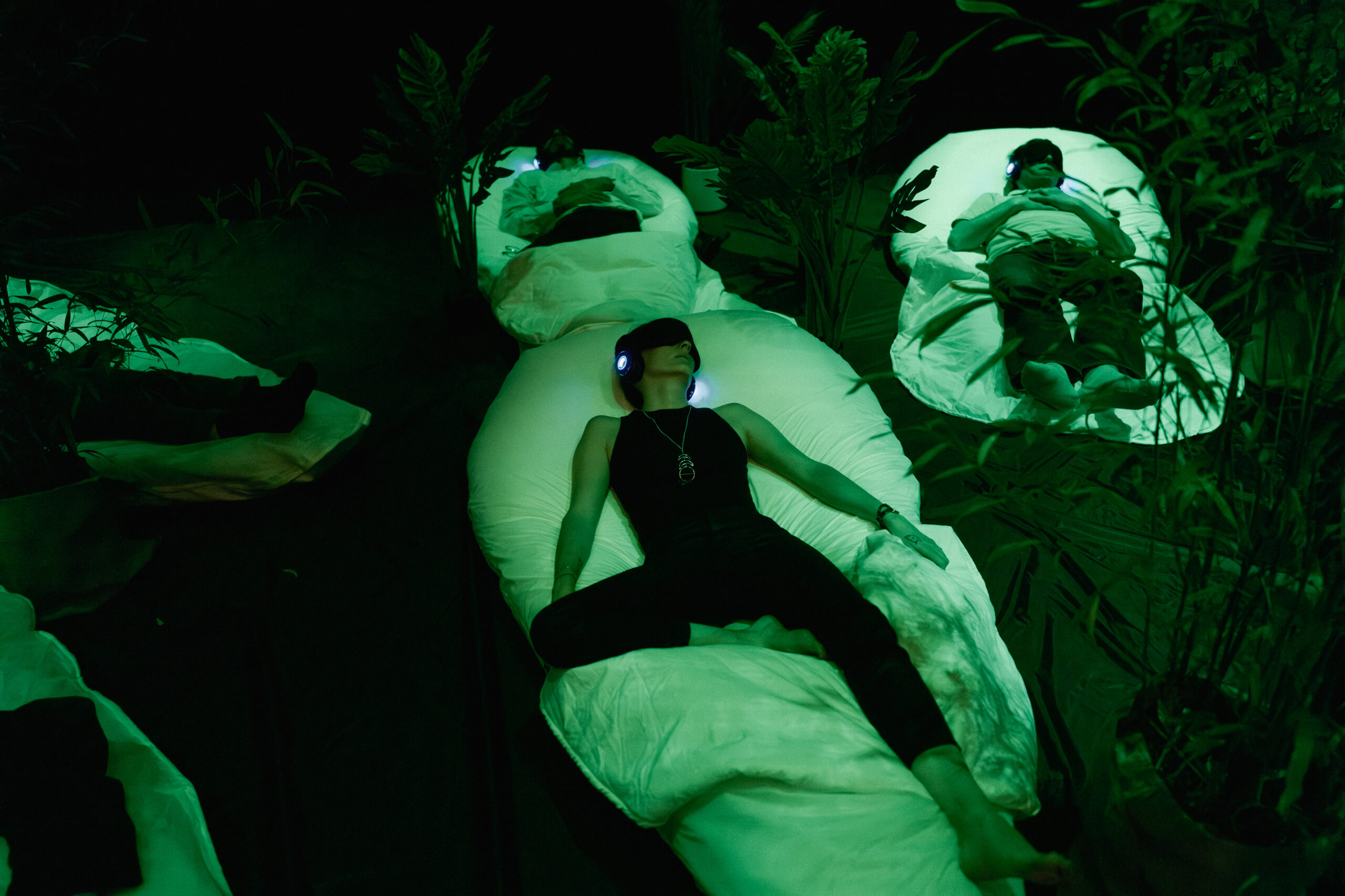
With Voyage du Geste, emotion is put to work in the service of care (see also Art and care: can digital technology bring us together?). Designed by Julien Lomet, an artist-researcher at Paris 8 University, with Rennes-based researchers Ronan Gaugne, Valérie Gouranton and Anne-Hélène Olivier, this collaborative VR prototype is intended for women living with metastatic breast cancer. Its aim is to encourage movement through dance, promote relaxation, and reduce stress, anxiety and both physical and emotional pain. “There is a substantial body of scientific literature on the positive impact of VR for cancer patients, particularly in terms of relaxation and mental health. The same goes for dance. I wanted to bring the two fields together in a single project, placing each patient’s performance at its heart,” explains Julien Lomet. The dance sequence is gradual and guided, accompanied by an interactive landscape and a sound design built from field recordings. Every detail is designed to avoid overwhelming participants. A lengthy preparation phase precedes the immersive experience, as some participants may be wary of technology or experience balance problems related to their treatment. The semi-humanoid avatar takes on a floral appearance, to avoid distressing women who have undergone surgery. “We work with patients who may have had breast surgery, lost their hair or gained weight because of their treatment. We therefore needed to find an avatar that would not trigger insecurities or body dysmorphia, while still allowing them to feel embodied.”
Henrique Sequeira
Jean-Jacques Temprado, of the Institute of Movement Sciences at Aix-Marseille University is developing MAGIC exergames: games in which the body replaces the controller, with the aim of preventing cognitive decline in older adults. His starting point is that existing offerings are ill-suited to an audience with limited digital literacy. Yet immersive cultural and landscape-based experiences have proved popular with these groups. The idea, then, is to use cultural content to stimulate cognitive and motor interactions, as in the game Silver Explorer. “What the cultural and creative industries do so well, moving people and telling stories, becomes a tool for supporting mental and cognitive health,” he explains.
Measuring emotions
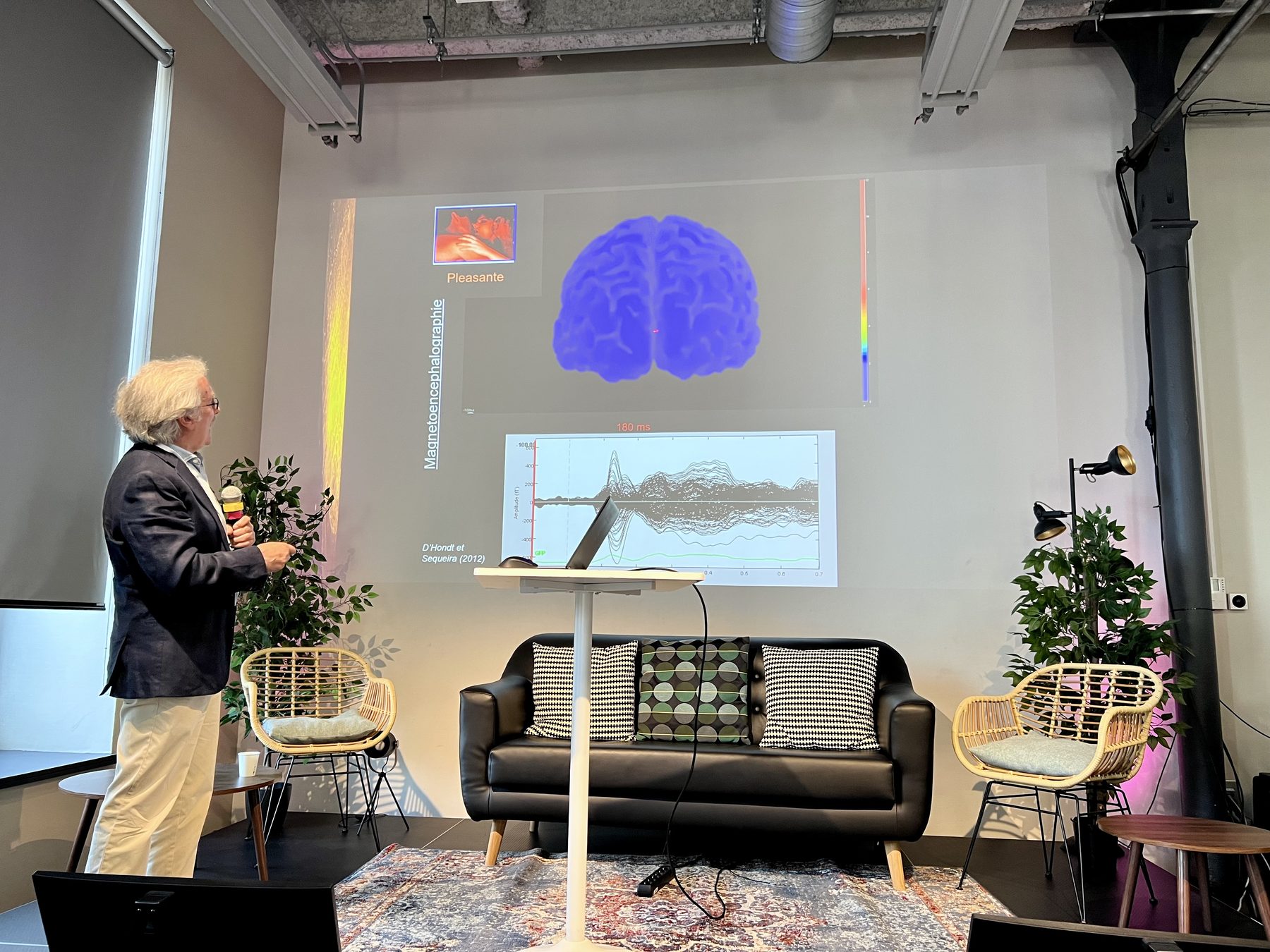
Measuring emotion is nothing new. Léa Dedola,an artist-researcher at the Passages XX-XXI laboratory at Lumière Lyon 2 University, notes that body-swap experiments date back to the 1960s. She also points out that many devices originally developed for medicine have been repurposed and reworked by artists, including music controlled by electroencephalography (EEG). Her work extends ideas already explored in our article Are immersion and empathy good friends?. Marie-Laure Cazinof the TALM-Le Mans School of Art and Design demonstrated this with ÉMOTIVE VR.This neuro-emotional system accompanies her 360° interactive VR film Freud, the last hypnosis.An EEG headset connected to OpenViBE, software developed by Inria, analyses the viewer’s emotions along two axes: valence (whether an emotion is positive or negative) andarousal.The soundtrack and colour palette change in real time. Negative valence shifts the music towards minor, dissonant, metallic chords; positive valence brings major, light and airy chords.
Léa Dedola
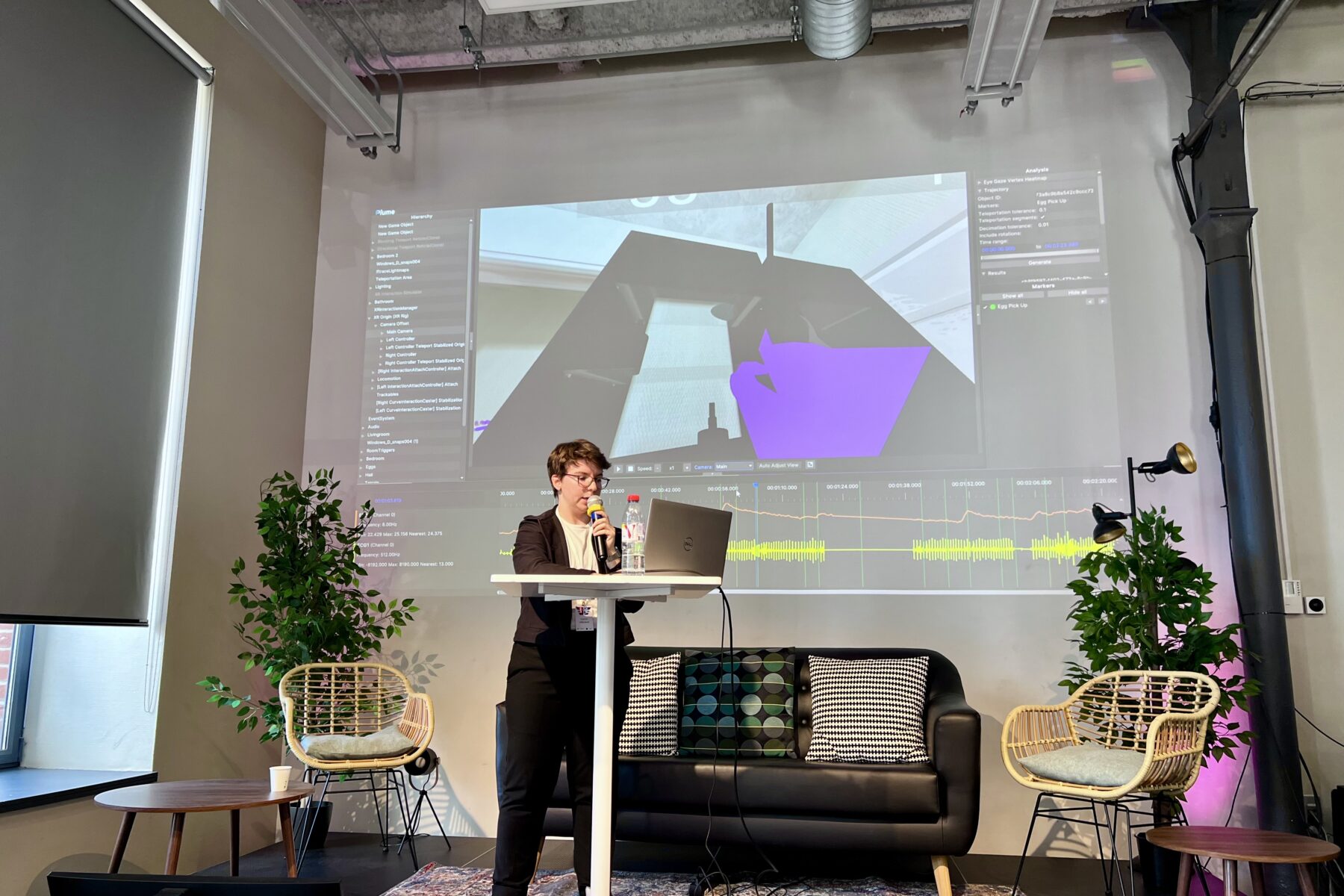
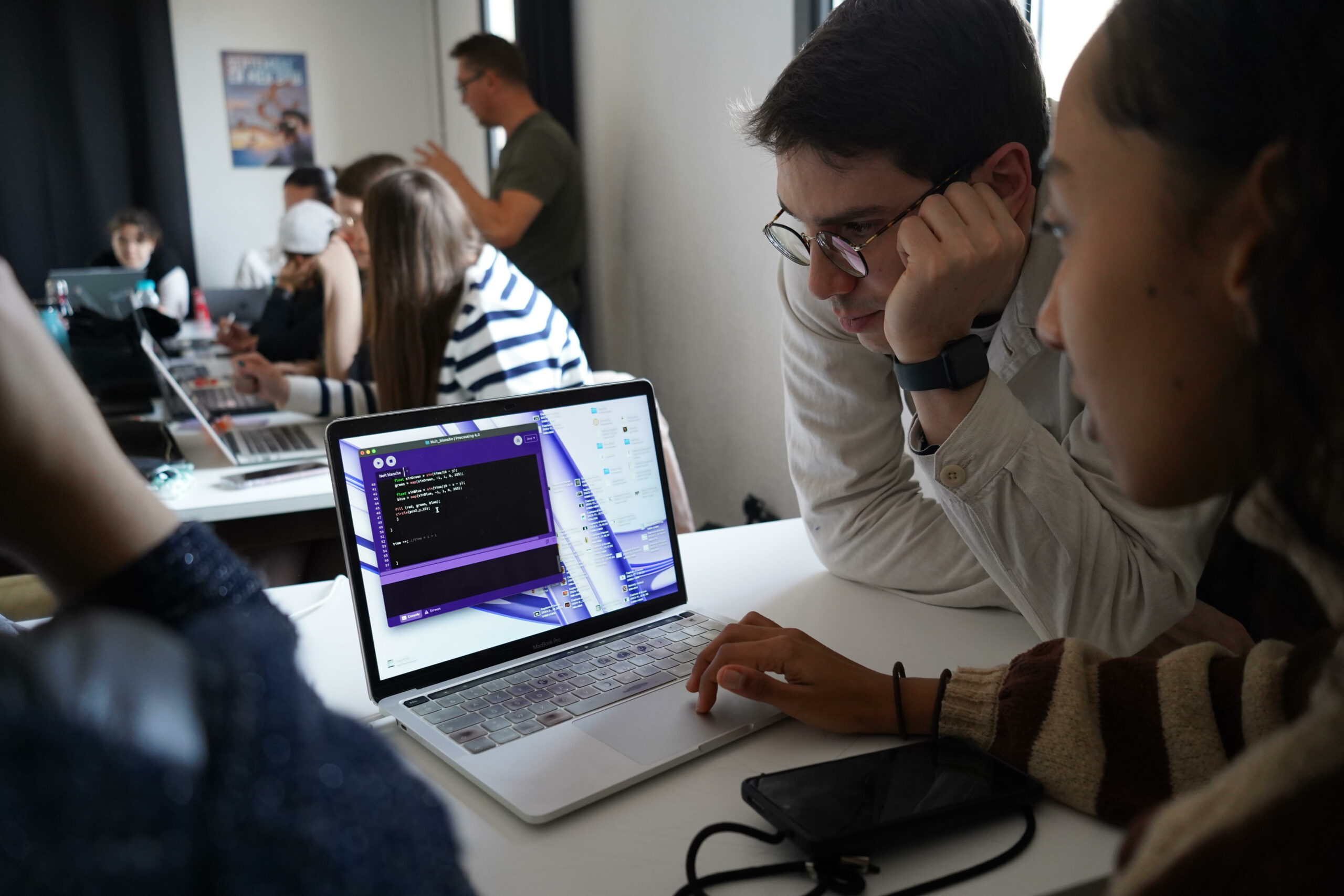
The challenge now is to make these measurements reliable. This is the purpose of PLUMEa toolkit developed at École Centrale de Lyon (ENISE) by Sophie Villenave and her colleagues Charles Javerliat, Guillaume Lavoué and Pierre RaimbaudTo understand the impact of an experience, the tool combines a comprehensive recording of the simulated environment with physiological and behavioural data. It addresses two problems. First, the difficulty of reproducing and comparing experiments across laboratories. Second, the reliance on paid tools that store data abroad. Hence the decision to use open source. Crucially, PLUME stops where interpretation begins. Sophie Villenave deliberately leaves that stage to laboratories and users: “PLUME includes data visualisation tools, but it does not provide a model for interpreting the data. We designed it so that each researcher can implement the interpretation models suited to their methodology and experimental conditions.” Each laboratory follows its own processing pipeline, and a detail one team considers superfluous may be decisive for another. In other words, emotional data never speaks for itself.
PLUME
The ethical challenges of measuring emotions
The risk, then, is to overinterpret the data. Yann Coello, director of the COMET project, goes further still: “An entirely digital approach does not work.” Emotion is not produced by immersive technology alone. It emerges at the intersection of disciplines and the choices each one is willing to make.
Léa Dedola raises an even more immediate concern. Among other projects, she presented EMOTOUCH, a modular system for capturing and feeding back emotional responses, designed for the general public and built around “smart skin”. She highlights its darker side: quasi-medical data, the rationalisation of intimate experience, and the potential for control, surveillance or exploitation. “Our field can become very dangerous,” she warns, citing marketing and human resources as examples. Should the possible uses of these technologies be limited, certain kinds of knowledge withheld, or even research itself restricted? If data can be made to say whatever we want it to say, interpretation is never neutral…
Romain Astouric
This article was published as part of a partnership with the national research programme on Cultural and Creative Industries (PEPR ICCARE). HACNUMedia is responsible for the editorial content and retains full editorial independence.