XRMust takes a new turn as the media outlet documenting the immersive industry
Article published on 29 September 2026
Reading time: 6 minutes
Unframed - MrVincent
Article published on 29 September 2026
Reading time: 6 minutes
In today’s media landscape, XRMust is one of the pioneers to have developed expertise dedicated to immersive creation. Now increasingly conceived as a platform, XRMust is stepping up its data strategy focused on international ecosystems with a new website. The shift also reflects the gradual structuring of a sector that remains fragile, but is becoming increasingly professionalized. We spoke with the media outlet’s director, Mathieu Gayet.
Not so long ago, before the term immersive became an established reference, the field was still largely referred to as “XR.” The name XRMust carries that history with it. And rightly so: since its creation, the media outlet led by Mathieu Gayet has closely followed developments in immersive creation. The story began after a trip to SXSW in 2017. “At the time, people were starting to show virtual reality works, with the first headsets available on the market. I felt that these technologies were going to bring about a major shift in audiovisual media,” Mathieu Gayet recalls. Then came the desire to meet the people creating new forms with digital technologies. “XRMust was born out of this need to document the emergence of an industry.” Since then, the bilingual media outlet has published more than 1,000 articles covering international developments. XRMust focuses as much on economic issues, through in-depth features on Luxembourg, the Netherlands and the export of French immersive works, as it does on news from studios, festivals, artists and new exhibition venues. “The goal is to be an information hub for everyone, professionals and audiences passionate about immersive experiences alike.” At the beginning of summer 2026, however, XRMust accelerated this approach with a new website, described as “a two-sided site, with an editorial approach on one side and a global database on the other.”
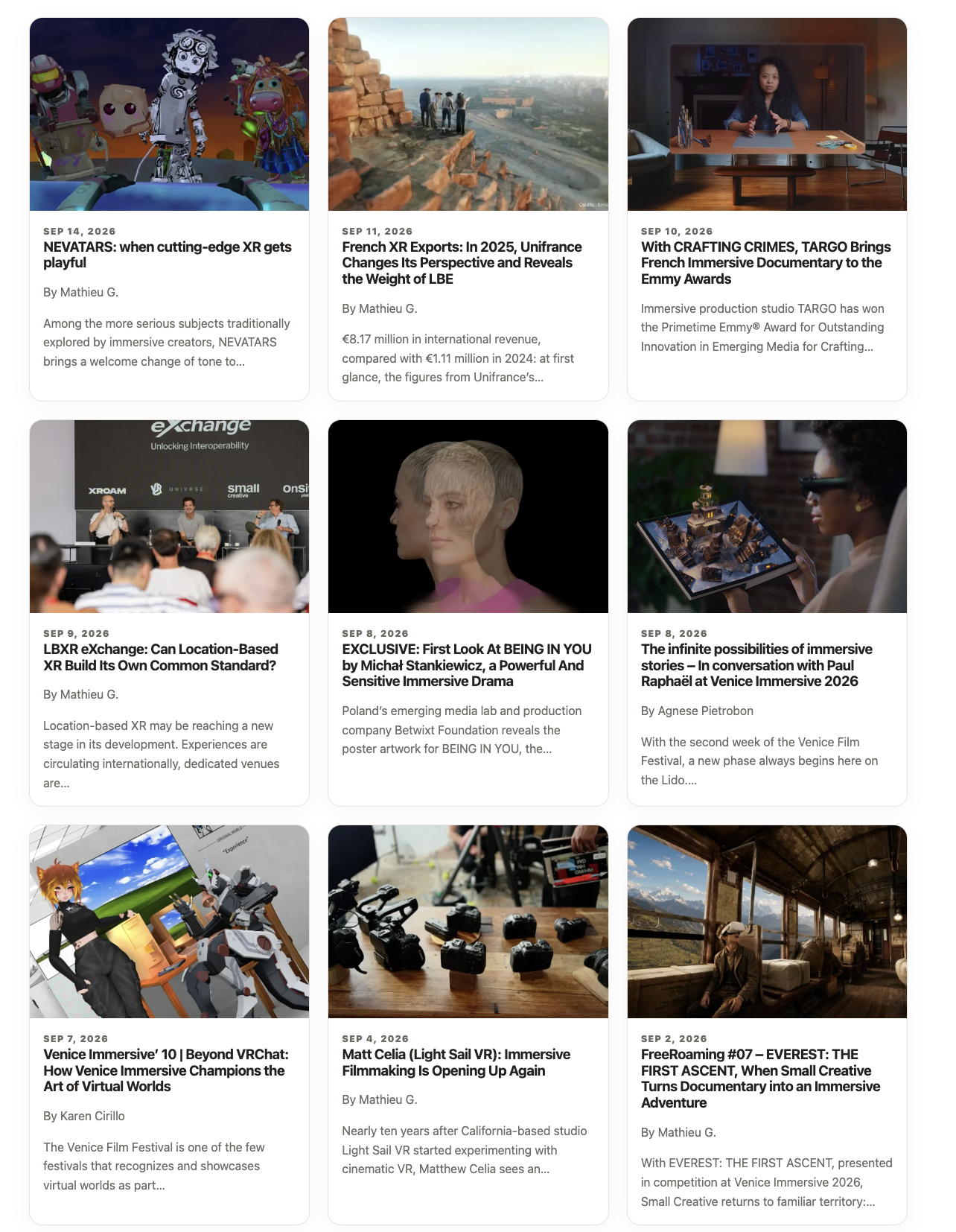
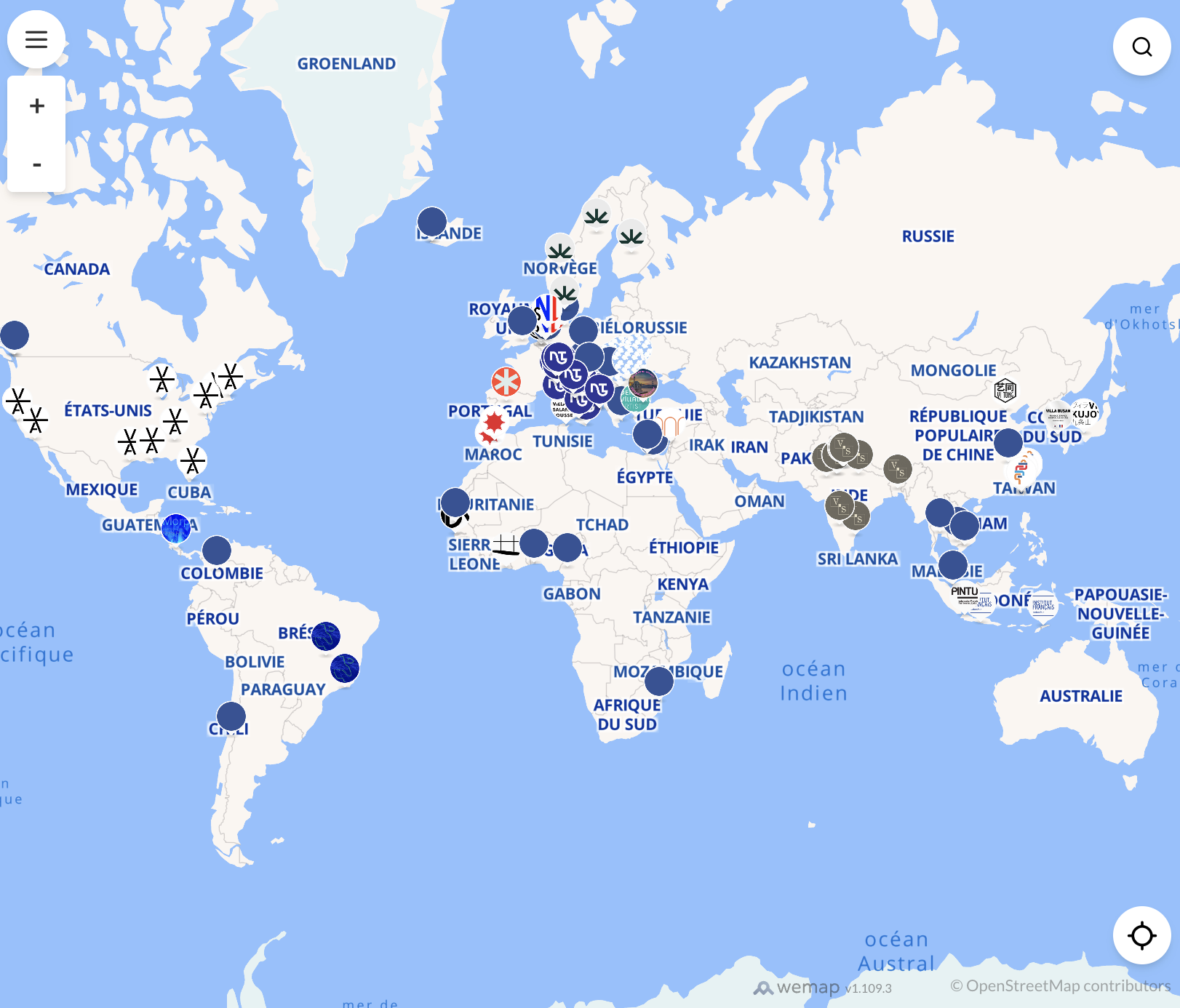
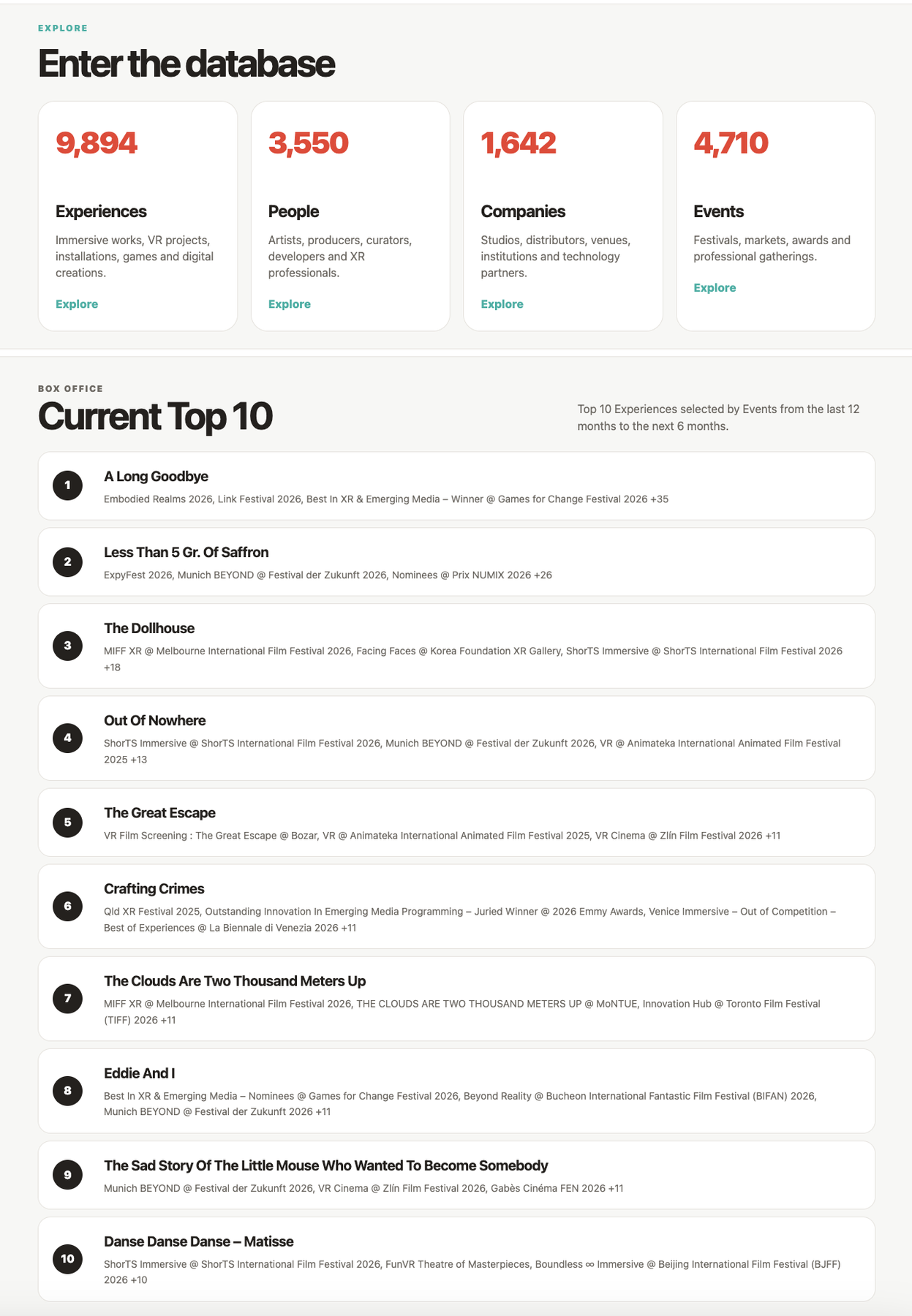
From the very beginning, the idea behind the media outlet was to catalogue immersive works, festivals and producers that were not listed in any existing database. The new version of the website takes this approach a step further. “The ambition is to be an information hub. That’s why users will now have a greater role in this new version. ” Much like a site such as AlloCiné, users can consult information about a work: credits, production details, awards and more. But they can also select and compare projects, contributing to a form of collective curation. “We list the top 10 experiences on the site, the top 10 from the past twelve months, and the overall top 10. We’re going to try to offer a perspective, not a quantitative one, but at least a perspective on what’s happening around the world. To show that some projects are successful, while others may be less successful but have interesting aspects. What we’re really introducing is a form of analysis of the current market,” Mathieu Gayet explains. In short, the goal is to provide new performance and decision-making indicators for creators, producers, programmers and researchers. The data will become more precise over time. “ These figures will evolve as we improve the way we qualify the database. I think the idea is simply to become a point of reference,”and in doing so help establish meaningful market indicators.
This new direction also comes with a shift in the business model. XRMust is moving to a subscription-based model, priced at €38 per year. The goal is to keep part of the site freely accessible while reserving around 80% of its content and features for subscribers. “I see XRMust today as just the beginning of what it could become tomorrow. Obviously, there are so many more things we could do and, like a traditional media outlet, eventually find ways to make it financially sustainable.”
In 2026, running a media outlet is already a risky undertaking. Stabilizing its business model in the age of AI is no less challenging. This raises a broader question: how can a media outlet contribute to the emergence and structuring of an international industry? Because while funding for artistic creation does exist, support mechanisms remain relatively scarce. Without media outlets documenting, analyzing and connecting its stakeholders, it is difficult to build a shared history and give visibility to a sector. In digital creation, the relationship between media outlets is less about competition than complementarity. “ Each media outlet has its own specialty. Some cover creators and their work, others cultural policy, while others, like HACNUMedia, choose instead to analyze the tensions between tech, art and the cultural and creative industries.” For Mathieu Gayet, the challenge is therefore to “pool knowledge rather than multiply silos. ”.
Such an ambition also requires collective involvement. “The people working in the industry need to support us in this. Producers and creators need to make time to fill out the profiles.” Behind the new version of XRMust lies a strong ambition: to help document an industry that is still young, establish shared points of reference and facilitate the circulation of information. “It really is an extraordinary sector,” Mathieu Gayet concludes. All the more reason to support those helping document and structure it.
Adrien Cornelissen
This article was published as part of a partnership with XRMust. HACNUMedia is responsible for its editorial content and operates independently.