Behind the data deluge, how can we measure culture’s impact?
Article published on 21 September 2026
Reading time: 12 minutes

Yutong Liu - Creative Commons
Article published on 21 September 2026
Reading time: 12 minutes
Digital tools make it possible to collect and analyze ever-growing amounts of data. Ticketing systems, audio guides, apps, touchscreens, digital guestbooks… every interaction leaves a trace. Yet does this abundance of data really transform our understanding of audiences and the way cultural policies are managed? Can indicators actually measure the experience and impact of cultural projects?
“Culture is often said to be at odds with numbers, even though data has never been more present,”noted Olivia Guiragossian,a researcher at the University of Avignon, during the acceleration day of the research program, ICCARE Building audience indicators in the cultural sector,held last June. Behind this apparent contradiction lies a paradox. Cultural institutions are producing more and more data, yet it remains underused when it comes to guiding decisions or measuring the effects of cultural policies. The event was organized by Pascal Quiduof Avignon University, whose doctoral research focuses on the sociology of audience research, and Jérémie Poiroux,a postdoctoral researcher at ENS Paris-Saclay, whose work examines how cultural institutions, including museums, theaters and heritage sites, are reclaiming digital tools.“My work looks at how data is collected, how it is analyzed and how organizations manage their activities based on that data.” According to him, the subject goes far beyond the technical dimension alone, since it raises questions about how cultural policies themselves are constructed.
To begin with, it is worth remembering that not all data serves the same purpose. In the cultural sector, statistics have historically developed through audience research. Their primary aim is to understand “cultural practices, uses and visitor behavior in order to inform institutions’ thinking about their missions,” as Pascal Quidu explained when opening the event. This research produces valuable knowledge, but it rarely leads to management tools.“At this stage of my research, after around ten interviews with cultural institution directors, I have not identified any systematic link between data collection and activity management,”Jérémie Poiroux observes. A gap persists between the production of information, its analysis and its translation into decisions. There are also significant disparities between institutions. Large cultural institutions generally have the resources needed to run permanent observatories or conduct regular surveys. Smaller organizations, by contrast, struggle to finance these kinds of initiatives.“The implementation of GDPR has made organizations more cautious about the type of data they collect. When surveys do exist, they often remain one-off exercises rather than becoming part of regular monitoring.” explain the resercher.

Alongside this research, performance indicators have emerged, driven by an entirely different logic. The goal is no longer to understand audiences, but to measure whether an organization has achieved its stated objectives. In the cultural sector, attendance remains the most widely used indicator. “One of my questions concerns how these indicators circulate: how are they defined by the ministry, then passed down through the DRACs before being applied by institutions?” asks Jérémie Poiroux. Still relatively recent in cultural policy (ed. note: since the implementation of the LOLF in 2006), these project management indicators remain relatively marginal in the administrative chain.
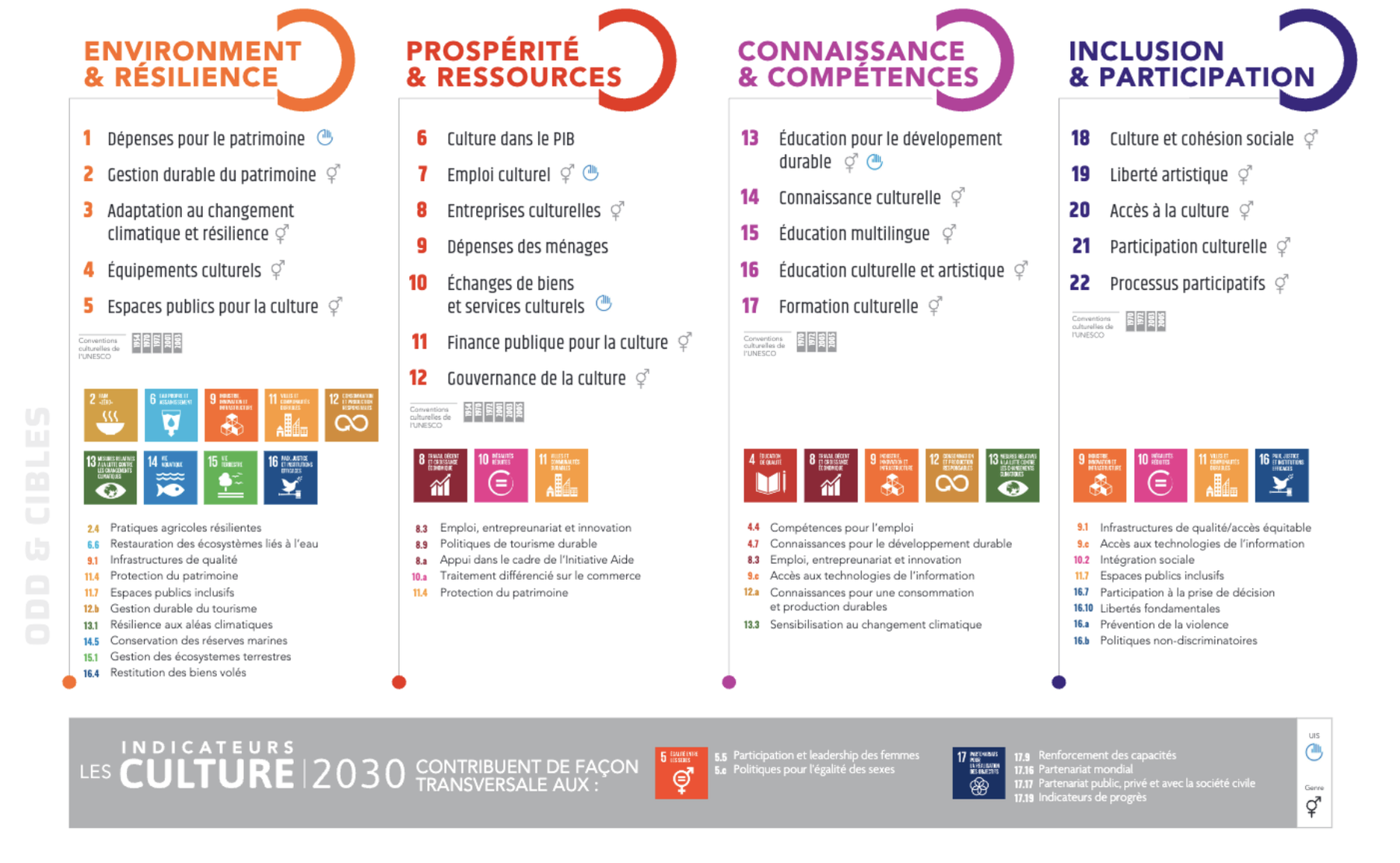
This situation could nevertheless change. Cultural policies are gradually opening up to these questions. At the European level, for instance, efforts are underway to assess culture’s contribution to achieving the Sustainable Development Goals and their targets by 2030. One example is the UNESCO’s 22 thematic indicators across four areas inits Culture for the 2030 Agenda.The evaluation covers a wide range of areas, including economics, sustainability and diversity, but audiences are only directly addressed by the 21st indicator, “access to culture,” which ultimately focuses on the frequency of cultural practices and attendance at cultural venues. The 22nd indicator, “participatory processes,” goes further by considering audiences as actors in the development and implementation of cultural activities, whose democratic and social benefits are explored further in this European Union publication, Culture and democracy, the evidence..
Funding mechanisms are also giving greater weight to project evaluation. In practical terms, some European calls for projects and national schemes such as France 2030, through BPI, increasingly require project leaders to demonstrate their results, economic viability and ability to reach their audiences. This shift is gradually bringing cultural policy closer to the logic already at work in the Cultural and Creative Industries (CCIs), where measuring usage and performance has long been a management tool.“If you have to report to investors, you set objectives and manage your activities more closely based on data. Conversely, this logic is less present when there is no such accountability requirement,”Jérémie Poiroux explains. This shift remains uneven, however. Programs led by the Ministry of Culture still rely primarily on attendance indicators. The state usesrelatively undemanding indicators and could be more ambitious, for example by setting objectives around audience diversification.
One of the main difficulties lies in the very nature of the data available. Performance and objectives contracts, written agreements between a certified organization and the state, as well as multi-year objectives agreements, offer a glimpse into the information currently considered a priority. “I have reviewed several of them, as well as internal dashboards. Ultimately, there is very little data devoted to audiences. What the state primarily asks for is attendance. By contrast, there are numerous indicators concerning staff, programmed artists and environmental issues,” Jérémie Poiroux observes. This hierarchy is not insignificant. The information collected determines the indicators that can be built, and those indicators in turn shape decisions. Yet attendance figures say little about the transformations produced by a cultural project. “There is still very little thinking upstream about what we are actually trying to measure,” the researcher continues.
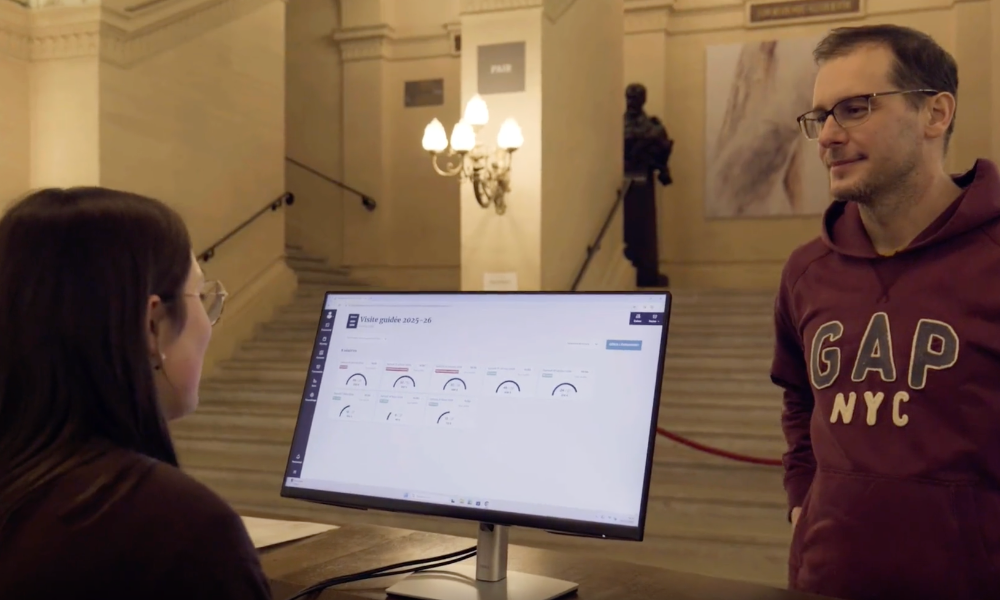
There is a deeper imbalance as well. While data collection is now largely integrated into projects, analysis is often pushed into the background.“It is easy to budget for data production, much less so for its interpretation. Sometimes I feel that we are expected to produce data before even asking why we are collecting it or what we intend to do with it.”Digital tools now play a central role in this production chain. Ticketing platforms, CRMs and management software automatically generate significant amounts of information about audiences and usage. At Mapado,this data feeds both reporting requirements and management tools made available to cultural institutions. “Ticketing is a starting point for building certain impact indicators,”explains Solène Jimenez, Mapado’s head of development. “Over the years, the platform has developed maps, interactive dashboards and data visualization tools to make this information easier to understand.” r. These systems are a first step; they then need to be given direction in order to analyze usage. That is precisely the role of specialized organizations such as L’Œil du Public. “Our job is to choose the methodology best suited to the situation, collect the data and then support organizations in analyzing it so that it can inform their decisions,”summarizes Adrian Mohr, the agency’s president and founder
On the ground, however, the growing use of digital tools runs up against a more complex reality. Cultural institutions have access to ever-larger volumes of data without necessarily having the staff or skills needed to make use of them. “The real challenge lies in the time required for analysis and in the internal resources needed to make sense of the data,” observed Nathalie Candito, head of Visitor Experience, Research and Quality at the Musée des Confluences in Lyon, during the acceleration day. At the same time, software providers promise to aggregate information from ticketing systems, accounting, CRMs and mediation tools in order to produce increasingly comprehensive dashboards. “It is visually very appealing, but that does not solve the question of how to interpret them.”

This accumulation also raises methodological questions. Digital guestbooks, for example, now allow automatic analysis of written feedback.“Yet they often concentrate the opinions of the most enthusiastic or most dissatisfied visitors. We no longer really know to what extent they represent audiences as a whole.” The development of digital tools is therefore out of step with professionals’ ability to use them.“Everyone has embraced digital technology; the limitations are now becoming apparent when it comes to actually using this data,”Nathalie Candito adds. For Anne Le Gall, general delegate of the TMNlab which published in 2026 an Overview of data interoperability in the performing artsthe problem also lies with infrastructure and protocols.“Teams still spend a great deal of time retrieving, cleaning and structuring data from software systems that have difficulty communicating with one another.” Interoperability is therefore becoming a central issue.
Against this already crowded backdrop, artificial intelligence is generating new expectations. Yet the professionals interviewed reject any technosolutionist narrative. AI could primarily make it easier to exploit data that is already available. “AI does not change our needs,” Julien Zimboulas, head of audience development at the MUCEM, explained during the acceleration day. “We were approached by a company offering to analyze social media feedback using AI and then generate an action plan. When we are presented with a technological solution, we first look at how it will be used. It must not become a gadget.” The real challenge lies more in consolidating information currently scattered across several software systems. “We have data coming from everywhere, and of very different kinds. We need solutions capable of bringing it together. AI may be one answer.”
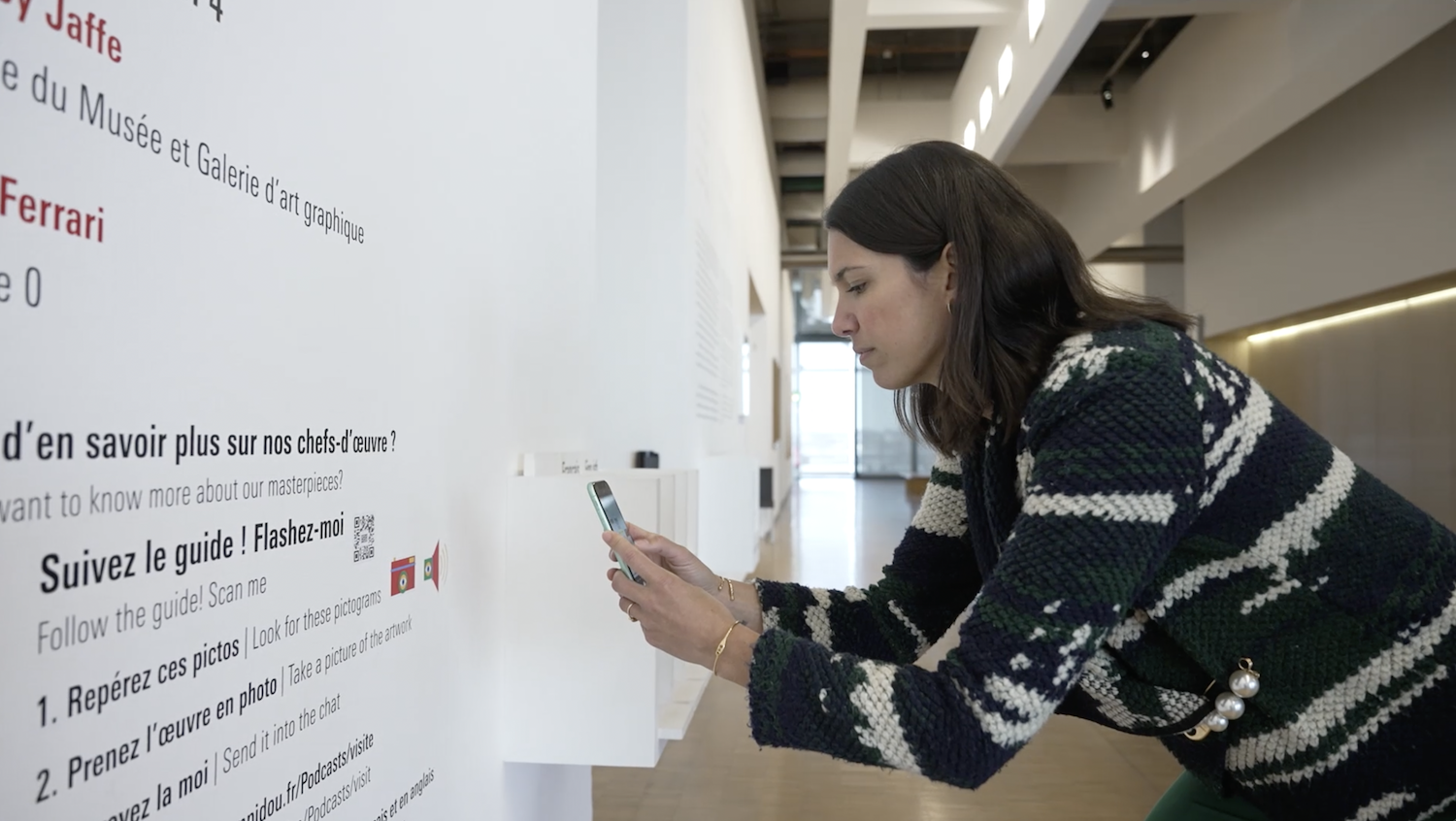
For Marion Carré, co-founder of Ask Mona, artificial intelligence brings something else to the table. The conversational assistants developed by the company generate a new category of data: the questions visitors spontaneously ask during their visits to cultural venues. “Visitors can freely ask questions about a work or an exhibition. This allows us to identify which works generate the most questions, spot areas of confusion through semantic analysis, and adapt content to different audience profiles.” In other words, AI does not replace existing evaluation methods. It provides access to information that institutions have previously struggled to capture. It makes it possible to process larger volumes of data and enrich audience research, without resolving the underlying questions: what data should be collected? How should it be interpreted? And above all, what decisions should it inform?
Another approach is to shift the question. Before even thinking about data collection tools or analytical methods, we should ask what we are actually trying to evaluate. Measuring the impact of a cultural project first requires defining what we mean by impact and identifying the indicators capable of making it visible. If we limit ourselves to traditional indicators, attendance, occupancy rates or visitor numbers, we risk leaving a crucial part of the cultural experience in the shadows. Several studies are therefore exploring complementary approaches. In an article devoted to library evaluation, for example, the authors propose the a methodological framework designed to make audiences’ subjective experiences observable. The model distinguishes four dimensions (emotional, intellectual, social and creative), broken down into twelve parameters. The goal is no longer simply to measure what visitors do, but also what they feel, what they understand, how they interact with others and how an experience may lead them to act. Integrating researchers, anthropologists, sociologists and artists into these evaluation processes becomes all the more relevant, as demonstrated by the Sensitive Cultural Assessment conducted in 2024 in the Seine en Plaine Champenoise area (Aube).
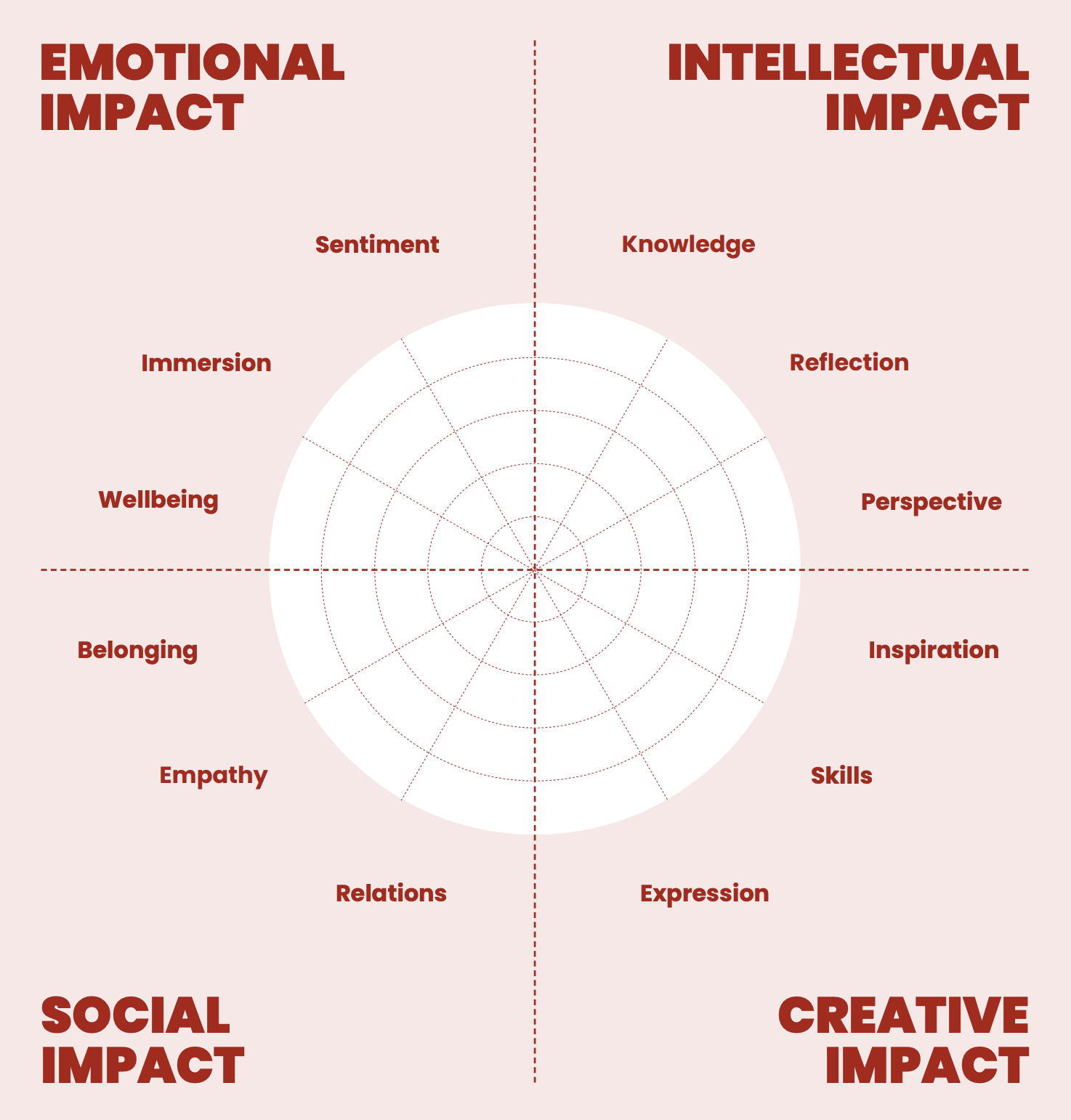
This approach invites us to reverse the perspective. Rather than starting with the results available and using them to build indicators, it proposes first defining what we want to observe, then identifying the most relevant methods for measuring it. In this framework, digital technology and artificial intelligence would no longer appear as ends in themselves, but as tools serving a prior reflection on evaluation criteria. The question may therefore not be how to produce ever more data, but how to better select the data that can account for the diversity of a cultural project’s effects. At Aix-Marseille University, researchers Edina Soldo and Djelloul Arezki have placed this question of sensitive evaluation at the heart of their research within the Organizations and Territories of Arts, Culture and Creation chair.“Quantitative indicators and traditional data do not always capture people’s experiences, perceptions and vulnerabilities,” “It can take simple forms, such as asking children to draw the experience they have had, but it can also involve more elaborate artistic approaches, such as performances,” explains Djelloul Areski. Here, evidence of impact comes directly from those most concerned: audiences, who should be at the heart of designing the evaluation process, as demonstrated by this project carried out by the Val de Drôme en Biovallée community of municipalities. “Here, evidence of impact comes directly from those most concerned: audiences. “It can take simple forms, such as asking children to draw the experience they have had, but it can also involve more elaborate artistic approaches, such as performances.”Much like forum theater, the aim is to make sensitivity not an additional layer of evaluation, but a genuine tool for understanding, starting from people’s experiences, whether they are audiences or cultural professionals. In reality, quantitative and qualitative research are not incompatible with this kind of sensitive evaluation. In 2026, studyconducted by IFOP for the Art Explora Foundation, was published, a podcast was recorded live. Produced in partnership with the well-known program Les Pieds sur Terre,it gave several French people the opportunity to talk about the role culture plays in their lives. An embodied, lively approach, not to say moving, that complemented the statistical perspective.
Ultimately, the revolution lies less in producing more data than in evaluating what culture produces. Digital tools and AI can contribute to this shift, provided we do not confuse data accumulation with knowledge of audiences. Attendance figures, occupancy rates or a single piece of feedback can never, on their own, tell us what a cultural experience transforms in those who live it. The challenge is therefore less about opposing quantitative and qualitative approaches than about developing methods that allow them to engage with one another. Measuring, in this context, does not necessarily mean reducing an experience to a number. It can also mean making emotions, misunderstandings, shifts in perspective or forms of appropriation that are harder to capture perceptible. As cultural institutions acquire new tools for collecting and analyzing data, a more fundamental question is therefore emerging: what do we choose to make visible?
Rédaction Adrien Cornelissen
AGENDA: The next acceleration day of the ICCARE research program, part of the “When indicators take the stage: from data to indicators, putting cultural audiences into numbers” cycle, will take place on December 7, 2026, in Marseille. More information will be available on the research program’s Events page: https://pepr-iccare.fr/evenements/
This article is published as part of a partnership with the national research program Cultural and Creative Industries (PEPR ICCARE). HACNUMedia is responsible for the editorial content and retains full editorial independence.