Signal: building connections, strengthening networks and daring to dream…
Article published on 23 November 2026
Reading time: 6 minutes
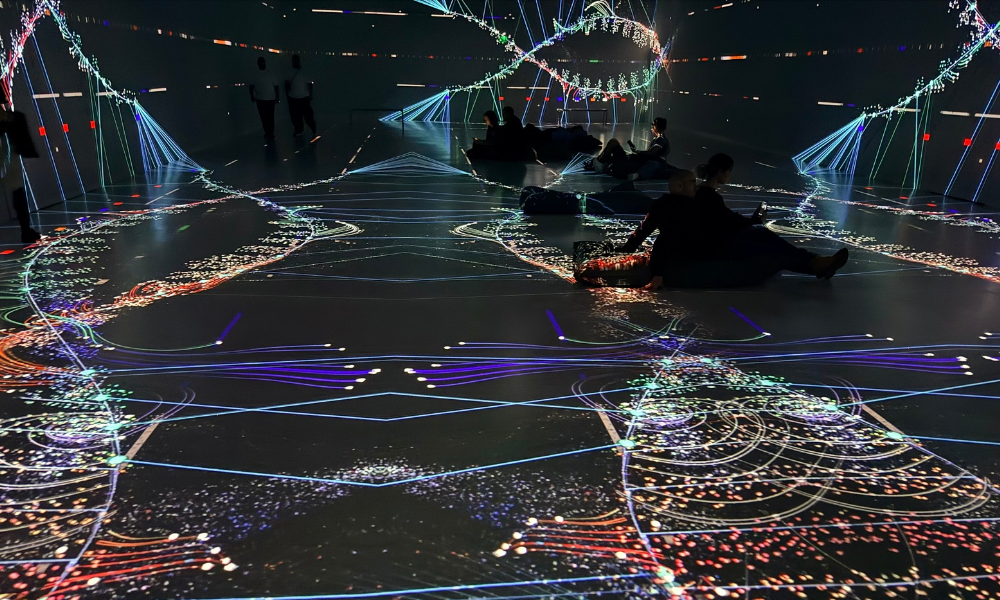
Signal Space - photo Gwladys Bernard
Article published on 23 November 2026
Reading time: 6 minutes
Dream On! – Dreams and Visions was the theme of the 14th edition of Signal Festival, which featured 21 installations and a program shaped by the legacy of Václav Havel. A delegation of French cultural professionals traveled to Prague to explore the city and meet their Czech counterparts. These exchanges are all the more important at a time when the future of digital culture depends, more than ever, on building an international ecosystem. A look behind the scenes of these encounters.
Founded in 2013, Signal takes over the streets of Prague every October for four nights. The festival, which claims to have welcomed more than five million visitors since its inception, has developed a professional event, the Signal Forum, and, since fall 2025, a permanent venue: Signal Space, located in the former market hall in the Old Town. Behind it all is the commitment of a large team, volunteers and co-founder Martin Pošta, who has been leading the festival since 2013.
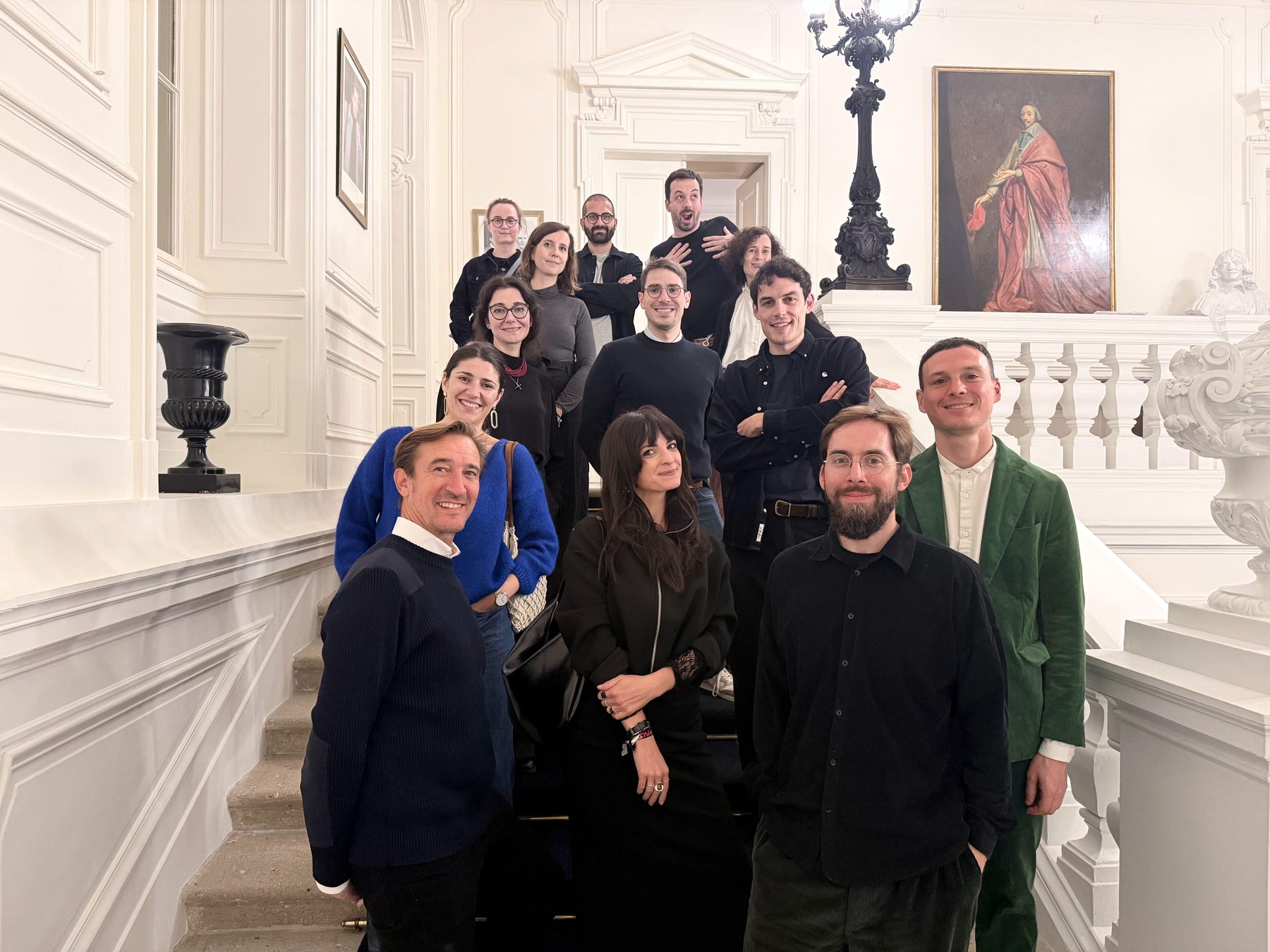
For the third year running, the Institut français in Prague, in partnership with HACNUM, brought a delegation of French professionals to the festival. The group included artists (Simon Chevalier, Simon Lazarus, and Dorian Rigal, aka Minuit); producers (Lucile Cassassolles of LUX, Arnaud Doucet of Anima Lux, and Paul-Émile Skler of Le Clair Obscur); festival directors and managers (Laurent Decès, director of Stereolux and the Scopitone festival, and Jeanne Soccorsi, general coordinator of ZERO1); as well as Gwladys Bernard from HACNUM and the author of this article (editor’s note: Romain Astouric). Supported by the French Ministry for Europe and Foreign Affairs and the Institut français through the PICC, the delegation aimed to foster cooperation between the French and Czech scenes and help build a digital arts ecosystem that is still taking shape. “I came as a representative of several artists and different types of projects,” explains Lucile Cassassolles. “Here, you can really connect with a wide range of programmers and festival directors.”
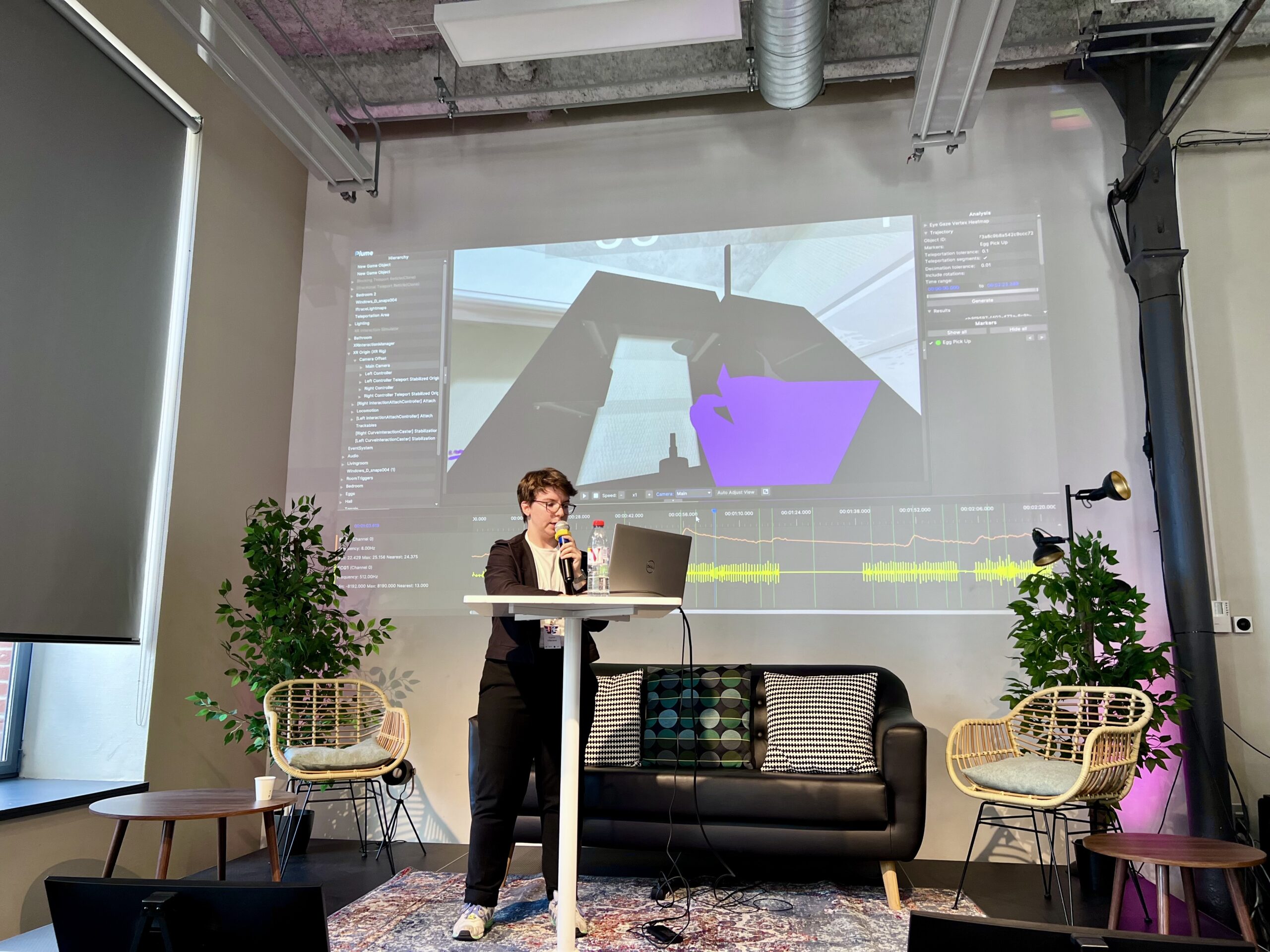
“Signal is a key point of contact with the Czech ecosystem and Central European networks in the field of digital arts,” adds Mathilde Cocq, who organized the delegation for the Institut français in Prague. “The two countries already have ties, but there is still considerable potential for concrete collaborations and networking.” Project presentations, B2B meetings and networking sessions: the program was specifically designed to bring French, Czech and international professionals together. On Saturday morning, the Signal Talks featured three artists from the delegation, Simon Chevalier, Simon Lazarus and Minuit, alongside Aka Chang, Felix Frank and Kurt Hentschläger.
Minuit presented an unconventional approach to digital tools through the lens of video games, with a highly colorful aesthetic shared by Simon Lazarus, still relatively rare in the world of light festivals. For her first delegation, however, the most important things happened elsewhere: “After spending three days with people, professional relationships change. The time spent together creates a more horizontal relationship: it no longer feels like a formal presentation of who you are.”
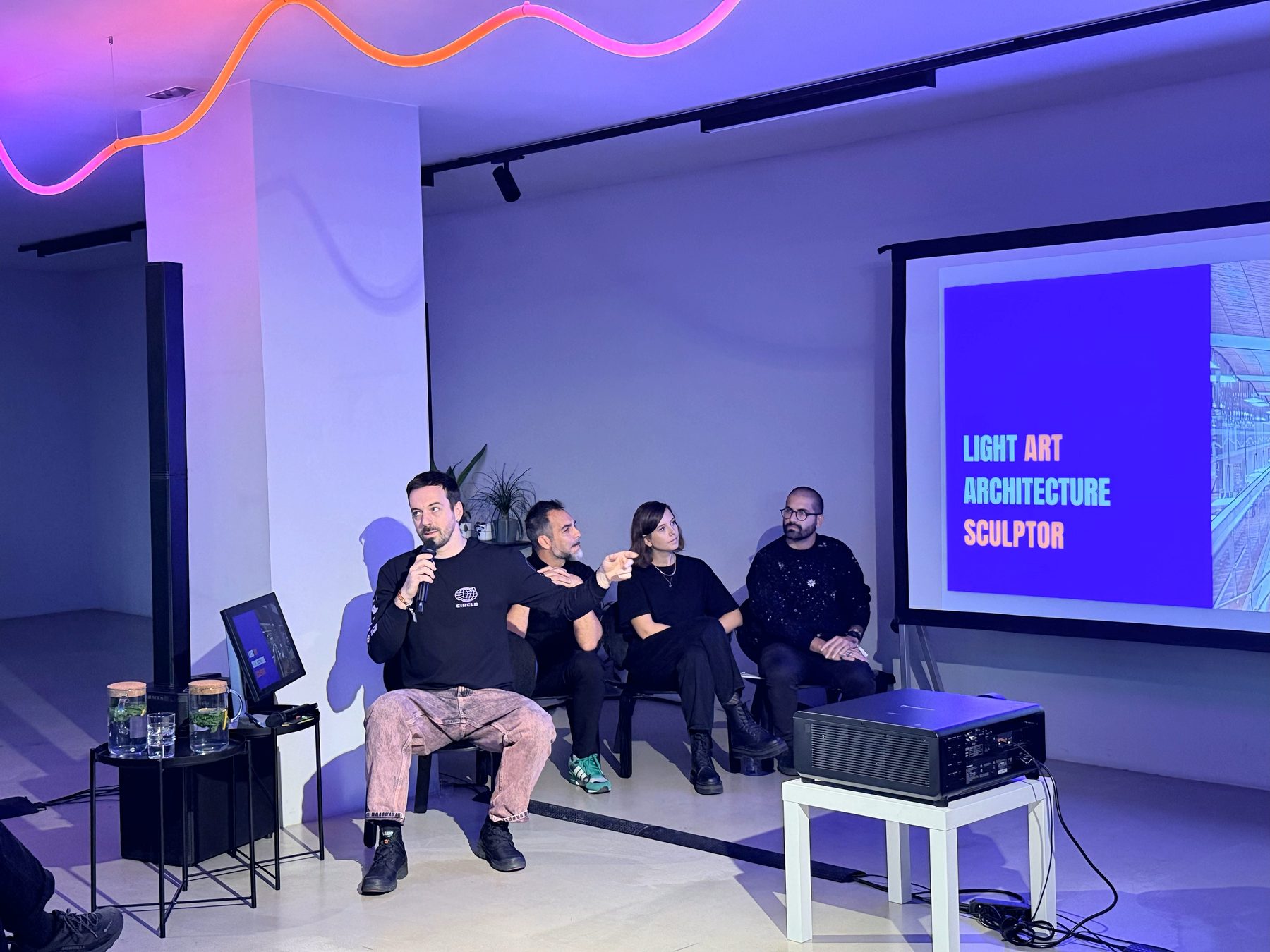
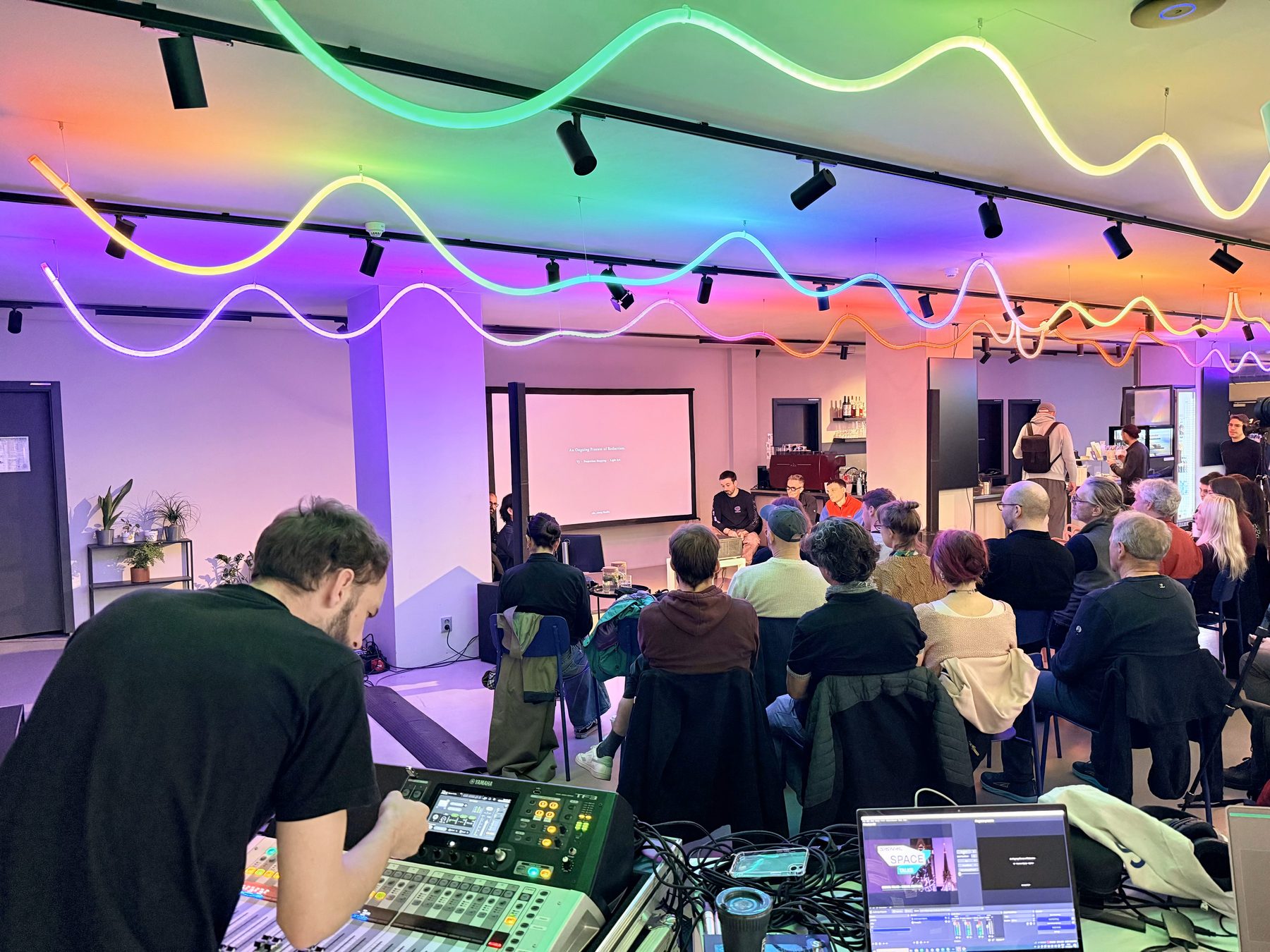
That afternoon, the format shifted somewhat. At Signal Space, HACNUM and Signal brought together a small group of 16 Czech professionals for a workshop. The network presented how it operates, highlighting the particularly favorable conditions in France, shaped by the country’s cultural exception and public support for the arts. For Marcel Kraus, director of the TAH Centre, a network that already connects more than 60 institutions working across technology, the arts and the humanities, the community came before the network: “The French scene had already come together and identified shared concerns before HACNUM was created. Here, we need a broader conversation among the many small organizations and independent professionals about what they have in common and what they need.”
Funding mechanisms also differ between the Czech Republic and France. Mercedes-Benz, for example, is one of the main partners of the 2026 edition of Signal. In the courtyard of Clam-Gallas Palace, designer Maxim Velčovský uses lasers to tell the story of the carmaker’s 140-year history. VIP ticket holders travel between festival sites in the brand’s shuttles, while short Ferrero projections precede Felix Frank‘s impressive work on the Archbishop’s Seminary. Finally, paid areas known as “Signal INSIDE” host eight installations. The festival team stands by this balance: “The partner installations are primarily there to cover the costs of the other two sections. But we don’t do them simply to generate revenue: they can’t be pure advertising,” explains Daniel Burda.
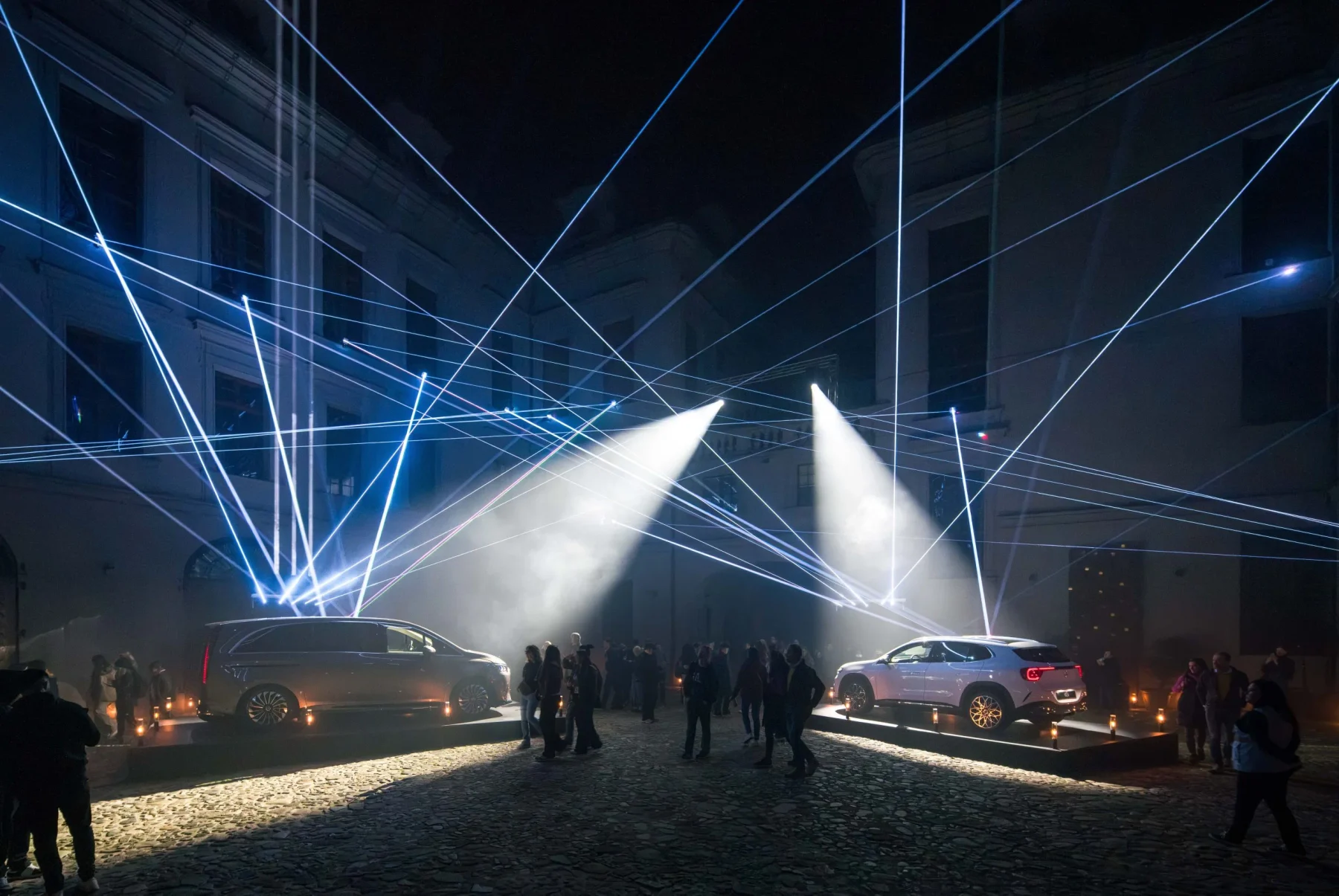
Seen from France, where public funding remains the norm, the approach raises more reservations. “For me, acceptable sponsorship is when the sponsor steps aside and lets the artist and the artwork take center stage,” says Lucile Cassassolles, producer at LUX. On LinkedIn, a Mercedes-Benz partnerships manager describes In a Flash, created “in collaboration” with Maxim Velčovský, as a “brand experience.” “It’s a shame when artworks are used as advertising billboards,” the producer says. These two perspectives echo a principle put forward in Prague last year by Ilaria Bondavalli of Chroniques during the Digital Days: “The best business model is the one that fits its ecosystem.”
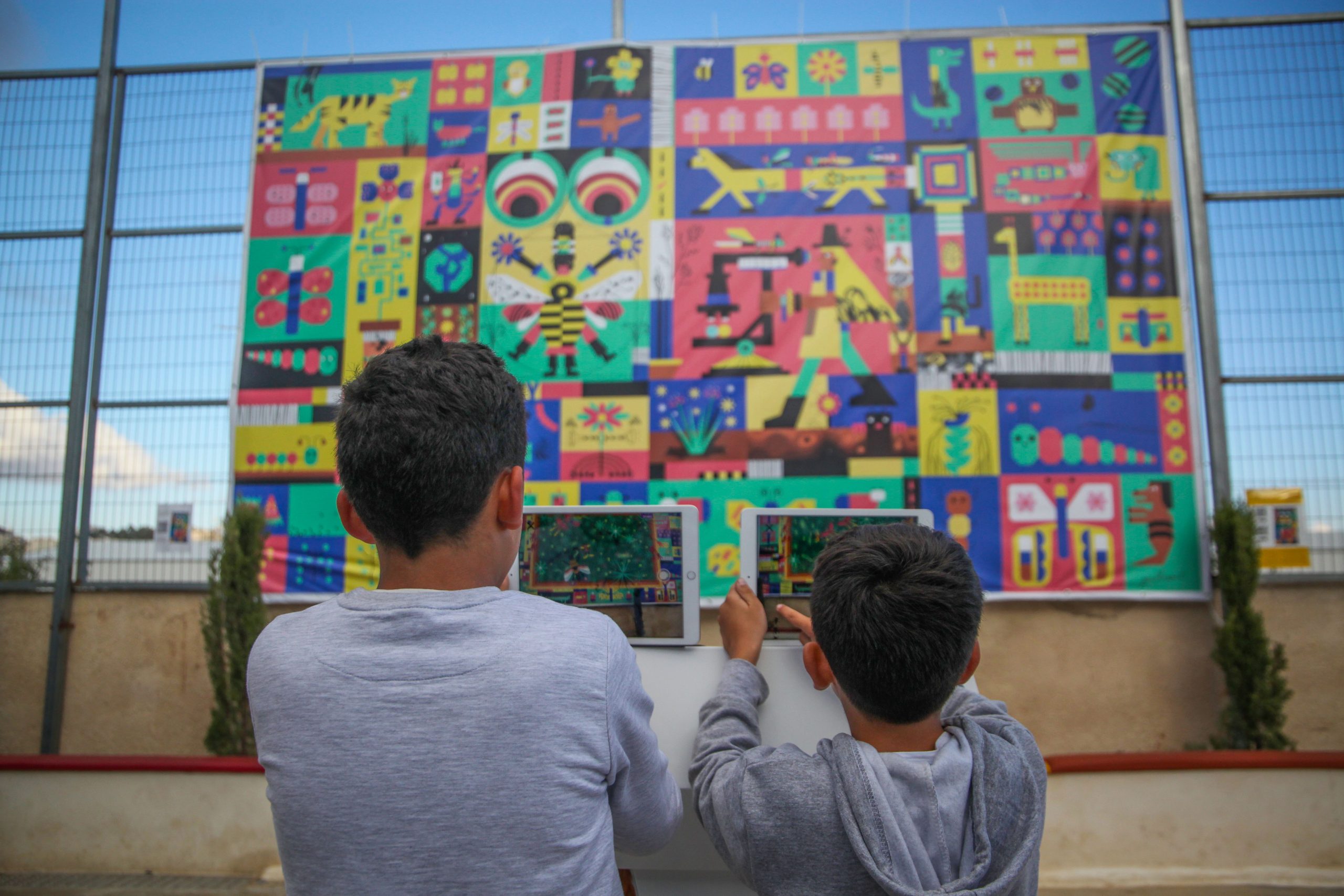
One thing may seem obvious, but it is worth remembering: Signal is a festival experienced in public space. On the Vltava River, Aka Chang projects a ten-meter column of laser light above the water. In Fleming Square, in the Dejvice district, Milan Cais‘s mirrored cube seems to have landed from another planet. Largely free of charge, the festival claims to have become the most visited cultural event in the country. It also pays tribute to those who came before. As part of its Homage to Masters series, launched in 2023 with a sculpture by Zdeněk Sýkora, MUCHA Studio transforms a student residence into a tribute to Woody and Steina Vašulka, pioneers of video art. A camera breaks down visitors’ images across a wall of cathode-ray tube monitors.
This year, the Czech cultural scene had a major anniversary in mind: the 90th anniversary of Václav Havel’s birth. At the Signal Forum, where the Institut français in Prague was a partner, the panel “Dare to Dream” explored his legacy. Pavel Kopřiva, who heads the Interactive Media Studio at UJEP University, reminded the audience how quickly freedom can be lost, concluding with a well-known maxim: we may choose to ignore politics, but politics will eventually take an interest in us. The same legacy runs through the festival’s installations. In the courtyard of Our Lady of the Snows Church, Karolína Schulzová, a student at Pavel Kopřiva’s studio, draws inspiration from Havel’s The Power of the Powerless (1978). In What Are You Responsible For,illuminated signs urging passivity switch off one by one, until only the last remains: “It only takes one.” Following Havel’s example, the work suggests that change does not necessarily require grand gestures. It can begin when people stop pretending and take responsibility for their own actions. The message resonates far beyond Prague, at a time when citizens are actively mobilizing in several European countries. It also echoes the theme of the Chroniques Biennale, “Resistance.” The Marché des Imaginaires Numériques welcomes Martin Pošta and Christelle Havranek, curator at Kunsthalle Praha, as guests of the Institut français in Prague.
On the City Hall tower, the same idea takes on a very different scale. In the video mapping Living in Truth, Ukrainian artist Svitlana Reinish makes the words Truth, Freedom and Democracy appear, before they distort and dissolve. “Presenting Living in Truth in Prague meant connecting Václav Havel’s resistance to the Soviet regime with Ukraine’s struggle against Russia today,” explains the digital artist and scenographer, who says she felt “encouraged by the curators to express [her] political ideas directly.” Proof that a festival supported by corporate sponsors can also make room for an uncompromising statement. This edition invited us never to stop dreaming, even with our eyes wide open. The Czech digital arts scene seems ready to take up the challenge: dreaming with our eyes open also means building the structures needed to make those dreams possible.
Rédaction Romain Astouric