GTA in the hands of artists: 10 artworks created in Grand Theft Auto
Article published on 18 November 2026
Reading time: 12 minutes
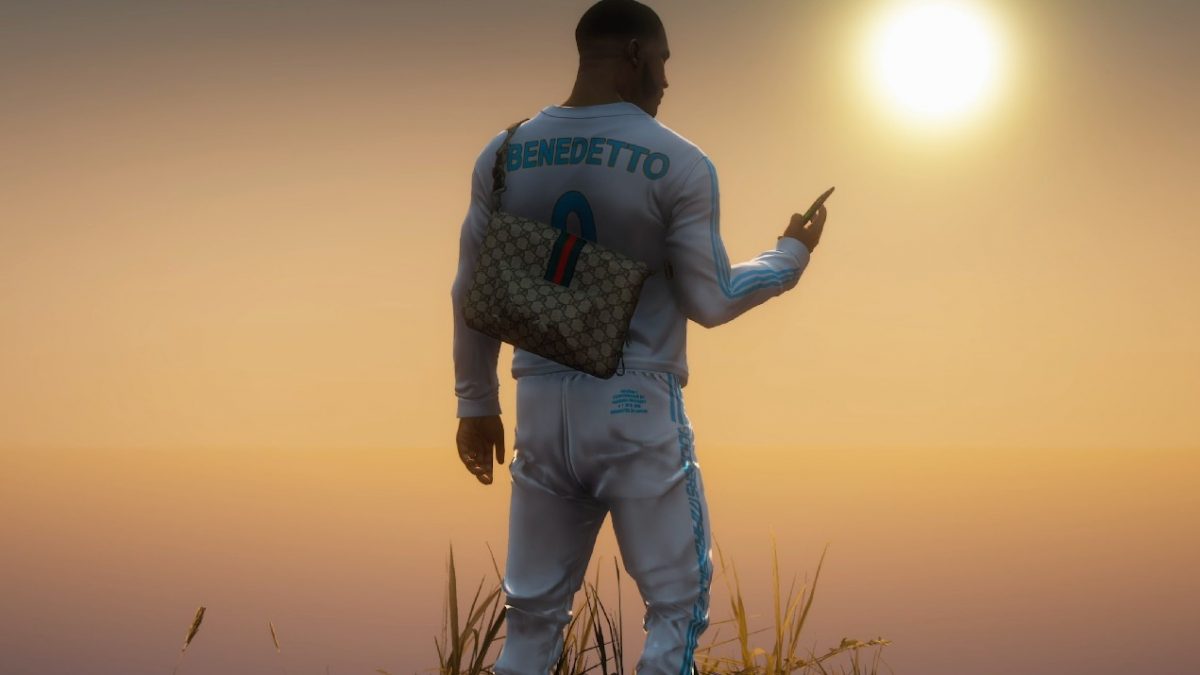
Sara Sadik Khtobtogone (2021)
Article published on 18 November 2026
Reading time: 12 minutes
On the occasion of the release of Grand Theft Auto VI, this article looks back at how Rockstar Games’ franchise has become a creative playground for numerous artists. For more than twenty years, GTA has been appropriated in many different ways: in-game photography, performances, theater productions, concerts and documentaries.
Who could deny GTA’s global influence? The media coverage surrounding the latest installment is only one indication of its reach. For nearly twenty years, this video game has gone beyond its original purpose as entertainment to become a space for experimentation, open to artists from a wide range of disciplines. Three key features help explain its influence on the art world. The first lies in the staging possibilities offered by the game. Its various camera modes, which can be controlled from a wide range of viewpoints, have fostered new filmmaking practices, from machinima to in-game photography. “ The practice has shifted toward composition, patience and an iterative gaze. Photo modes have introduced an explicitly photographic vocabulary: field of view and focal length simulation, depth of field, exposure-like settings, stackable filters, control over time of day and weather, and often a free or semi-free camera,” Matteo Bittanti explained in a previous article on in-game photography.These tools make it possible to break free from the narrative imposed by the game and create images of one’s own.
The second feature is its social dimension. Launched on October 1, 2013, GTA Online extended the GTA V experience by offering a shared open world, regularly expanded with new content and opportunities for interaction. Much to the dismay of Big Tech and its promises of the metaverse, the game was already offering a space for encounters and collective creation. Players could meet up, organize events, subvert gameplay mechanics or invent their own forms of performance (see the article Let’s playformance: 4 ways of performing video games). This community dimension has played a major role in GTA V’s longevity, which lasted fourteen years, to be exact, as GTA Online may soon be shut down, as reported in this article by Le Monde.
Finally, GTA’s influence stems from the very nature of its fictional universe. The franchise portrays an America saturated with violence, consumerism and contradictions of every kind. “Anarchic, irreverent, funny, cynical, ironic, violent, fascinating, problematic”: these are some of the terms Angelo Careri uses in Grand Theft Auto: Crime et architecture, a book devoted to the imaginaries conveyed by the franchise. GTA thus operates as a satire of contemporary capitalism, holding up a mirror to our society through its excesses and absurdities. Needless to say, this makes it fertile ground for artists. Here is a (subjective) selection of ten visual artworks that demonstrate GTA’s influence on contemporary art.
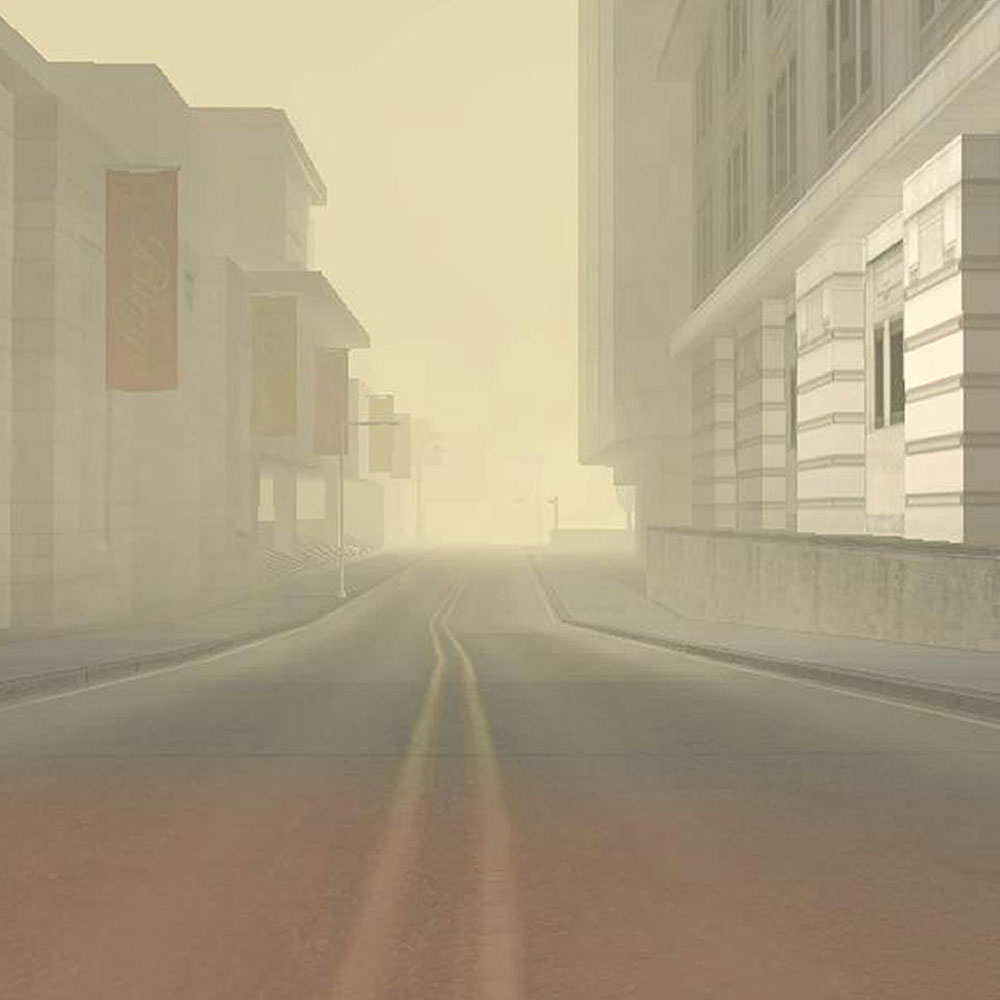
In Vice City, Thibault Brunet wanders through the world of GTA, leaving missions and gameplay mechanics aside to photograph its landscapes. By making the game’s settings his subject, he creates contemplative, sometimes deserted images that oscillate between documentary photography and painting. The artist explores the boundary between reality and virtuality, while helping to open up new possibilities for in-game photography.
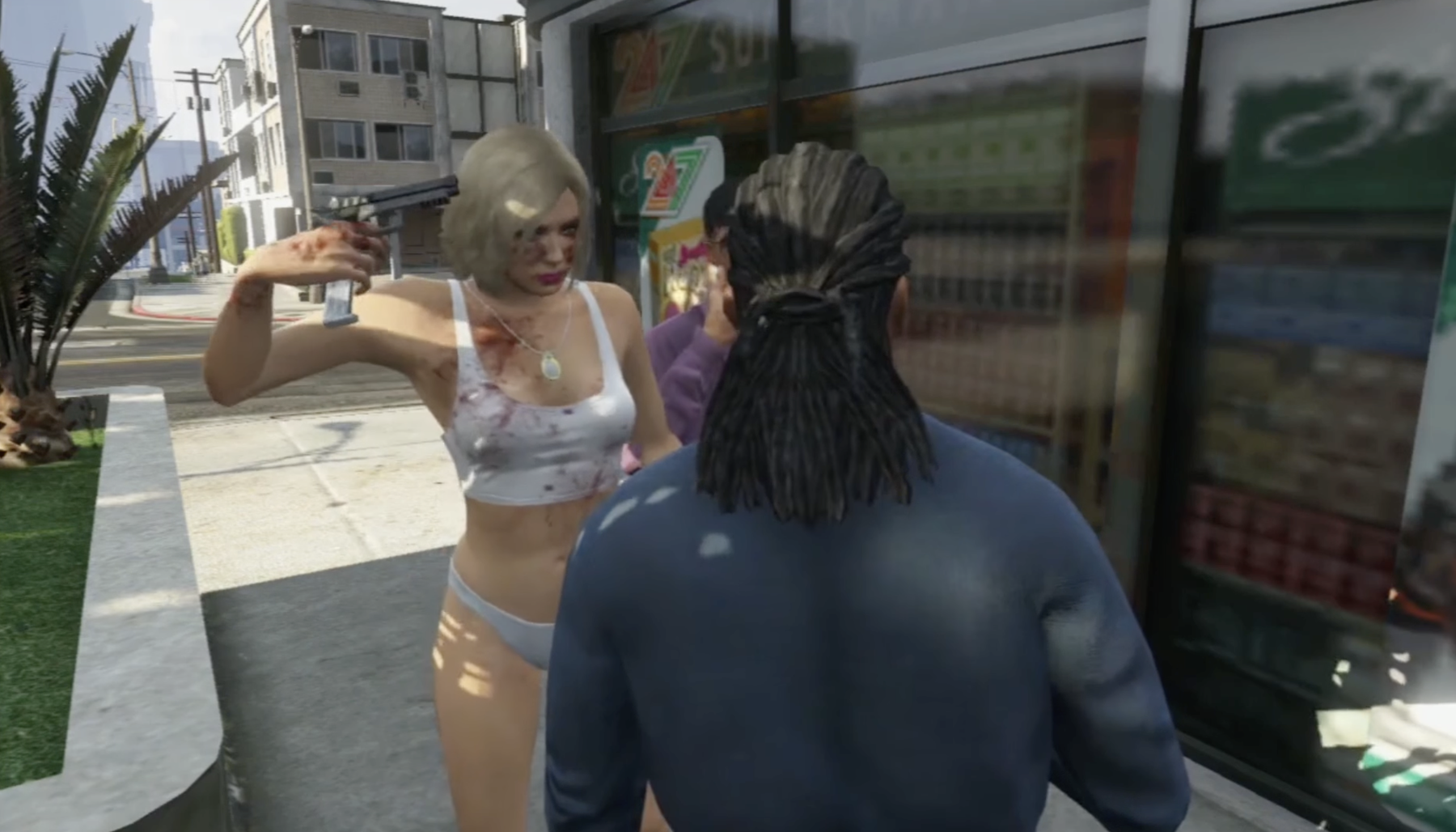
In this intervention staged in GTA Online, Georgie Roxby Smith presents a protagonist who turns the game’s violence against herself. Through the ritualized repetition of her virtual suicide, the artist denounces the representation of women in video games and asserts a form of feminist protest. Her gesture, at once emancipatory and tragic, meets with indifference from other players and runs up against the game’s mechanics, which turn every death into a rebirth.
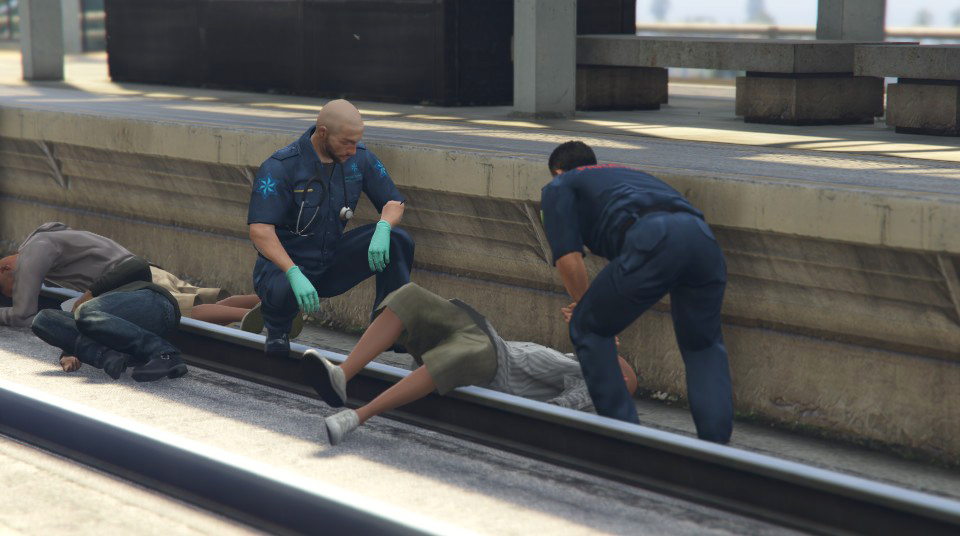
Using the camera built into GTA V, Alan Butler documents the homeless people of Los Santos. Drawing on the conventions of photojournalism, he photographs these marginalized characters, their living spaces and their interactions. The series examines how poverty is represented in a video game universe governed by economic logic and violence. It also reveals the possibility of an empathetic response to characters generated by artificial intelligence.
Inspired by Alan Clarke’s film Elephant, 11 Executions is a machinima that confronts gun violence with GTA V’s artificial intelligence. Hugo Arcier stages eleven executions of civilians, whose reactions are entirely generated by the game. Each sequence is repeated twice under identical conditions, yet produces different outcomes. The artist explores the role of randomness in violence and questions the ability of simulation to account for human tragedy. In another work, Ghost City, Hugo Arcier revisits the world of GTA V, removing all its inhabitants. Viewers discover a ghost town whose buildings and landscapes gradually disappear as they approach them. The work examines the fragility of our digital existence and the possible disappearance of the data that make up our collective memory. Los Santos becomes the remnant of a virtual world destined to fade away.
Made entirely from footage captured in GTA V, Martin pleure follows a young man wandering through a dematerialized world in search of his missing friends. Through the game’s cold, disembodied landscapes, Jonathan Vinel constructs a melancholic narrative about contemporary loneliness, frustration and rejection. Here, Director Mode becomes a filmmaking tool, allowing the artist to repurpose the game’s aesthetic and create a sensitive work of fiction.
Drawing on testimonies from players who have been victims of swatting, Ismaël Joffroy Chandoutis explores the real-world consequences of cyberharassment. The film combines YouTube videos, video game footage and vector-based representations of GTA V, stripped of their textures to create an abstract space. This visual distancing highlights the porous boundary between virtual and real worlds, while the testimonies give shape to a form of digital violence that can sometimes have fatal consequences.
In Khtobtogone, Sara Sadik repurposes GTA V to tell the story of Zine, a twenty-year-old from Marseille who wants to become the best version of himself before asking his girlfriend to marry him. Through this machinima fiction, the artist explores masculinity, romantic aspirations and the emotional vulnerabilities of young people from North African immigrant backgrounds. Los Santos becomes an imagined Marseille, where the character is free to tell his own story.
In this online performance, the artists invite the audience to explore Los Santos as if on a guided tour. By subverting the violent uses of GTA V, they explore machinima filming locations and the creative possibilities offered by the game. This virtual walk becomes a reflection on the appropriation of video game worlds and on how art can deconstruct the representational mechanisms of hyperrealistic media.
In the midst of the pandemic, two British actors set out to stage Hamlet in GTA Online. Filmed entirely within the game, this documentary follows rehearsals, auditions and the challenges faced by a theater company in an environment where players are more interested in fighting one another than watching a play. The project turns Los Santos into a theater stage and questions whether collective creation is possible in a virtual world defined by violence and unpredictability.
In Kinderfilm, Total Refusal explores the ordinary streets of GTA V, where the characters’ routines seem to conceal an unsettling absence. Through Edgar, a protagonist trying to understand what is missing from his world, the collective examines the limits of simulation and imaginaries of the future. By appropriating the game, the artists transform a universe designed for entertainment into a silent dystopia, where the absence of a future becomes a symptom of a society in crisis.
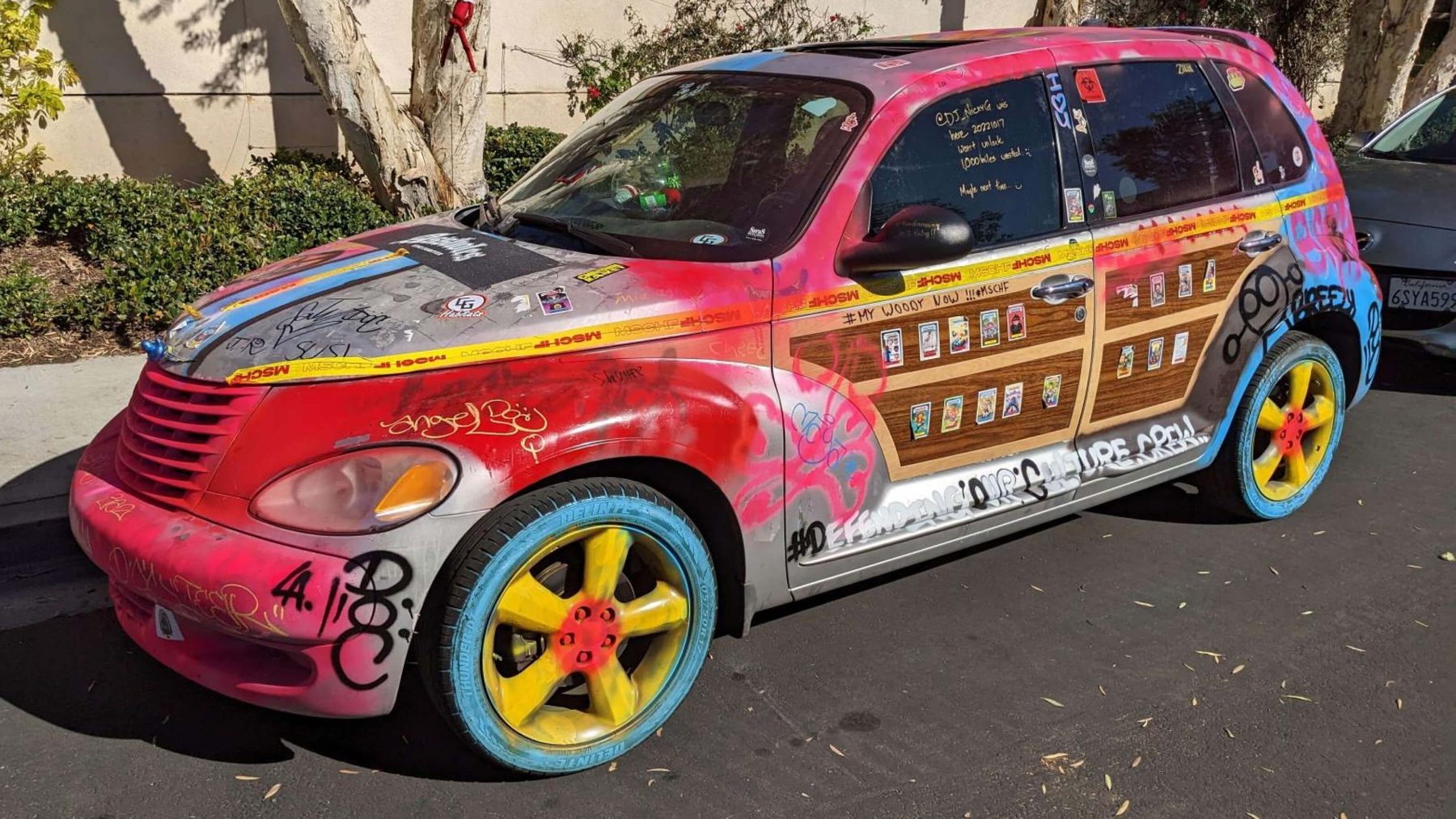
This work takes an unconventional approach: rather than being created within the world of GTA, it appropriates the game’s mechanics and brings them into real life. Key4All offers a collective experience centered on a car, a Chrysler PT Cruiser. MSCHF sells one thousand keys that can unlock and drive the same vehicle, whose location is shared through a hotline. Anyone can take possession of it, but risks having it taken away by someone else. The project subverts the conventions of GTA to explore individual ownership, the sharing economy and collective behavior.
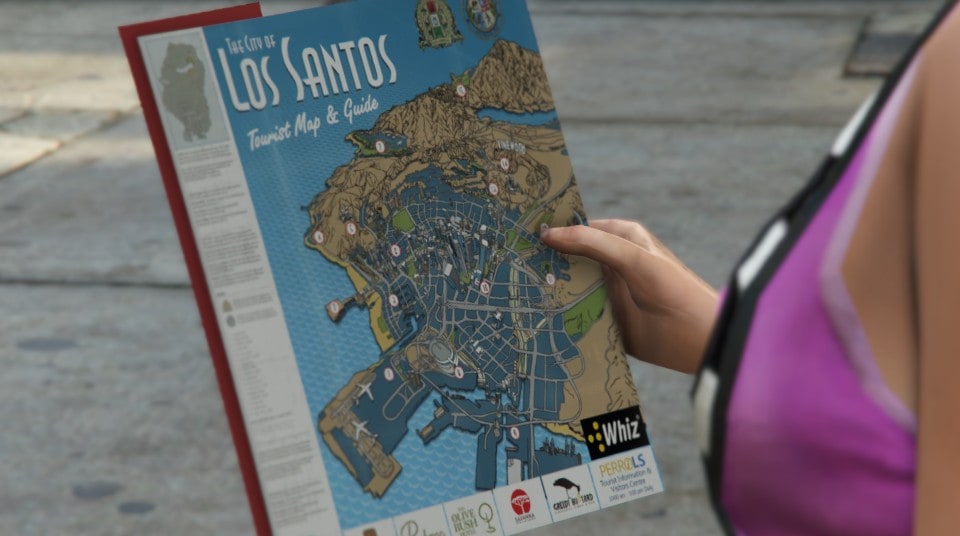
It is not quite an artwork in itself, but it comes pretty close. Straddling the worlds of travel guide, photography manual and exhibition catalog, this research project explores the artistic practices that have emerged within GTA V. Marco De Mutiis and Matteo Bittanti invite readers to explore Los Santos as a photographic territory, documenting the works created there. Through exercises, tutorials and analysis, they make the case for an approach to video games that goes beyond gameplay mechanics and treats them as spaces for experimentation and creative subversion.