Digital technology is reshaping how cultural experiences are created and experienced, including in artistic fields where craftsmanship and hands-on skills remain central. Puppetry is a perfect example. A gathering organized last April as part of the PEPR ICCARE program explored the professional transformations underway and the new possibilities opened up by digital tools. Here’s a quick recap.
On April 10, nearly fifty professionals gathered at La Chartreuse de Villeneuve lez Avignon. Researchers and cultural practitioners alike came together around a shared passion: puppetry. The event, titled Writing and Construction in the Digital Age, was organized within the framework of PEPR ICCARE and promised “acceleration.” Whether that term is appropriate remains open to debate, especially at a time when everything seems to be speeding up and artists increasingly need time to think, experiment, and create, argues Christian Giriat, dramaturgy advisor at La Chartreuse. “Digital space requires slowing down,” he says. How? “You have to glitch,” he replies.
A Database of Puppetry Dramaturgies
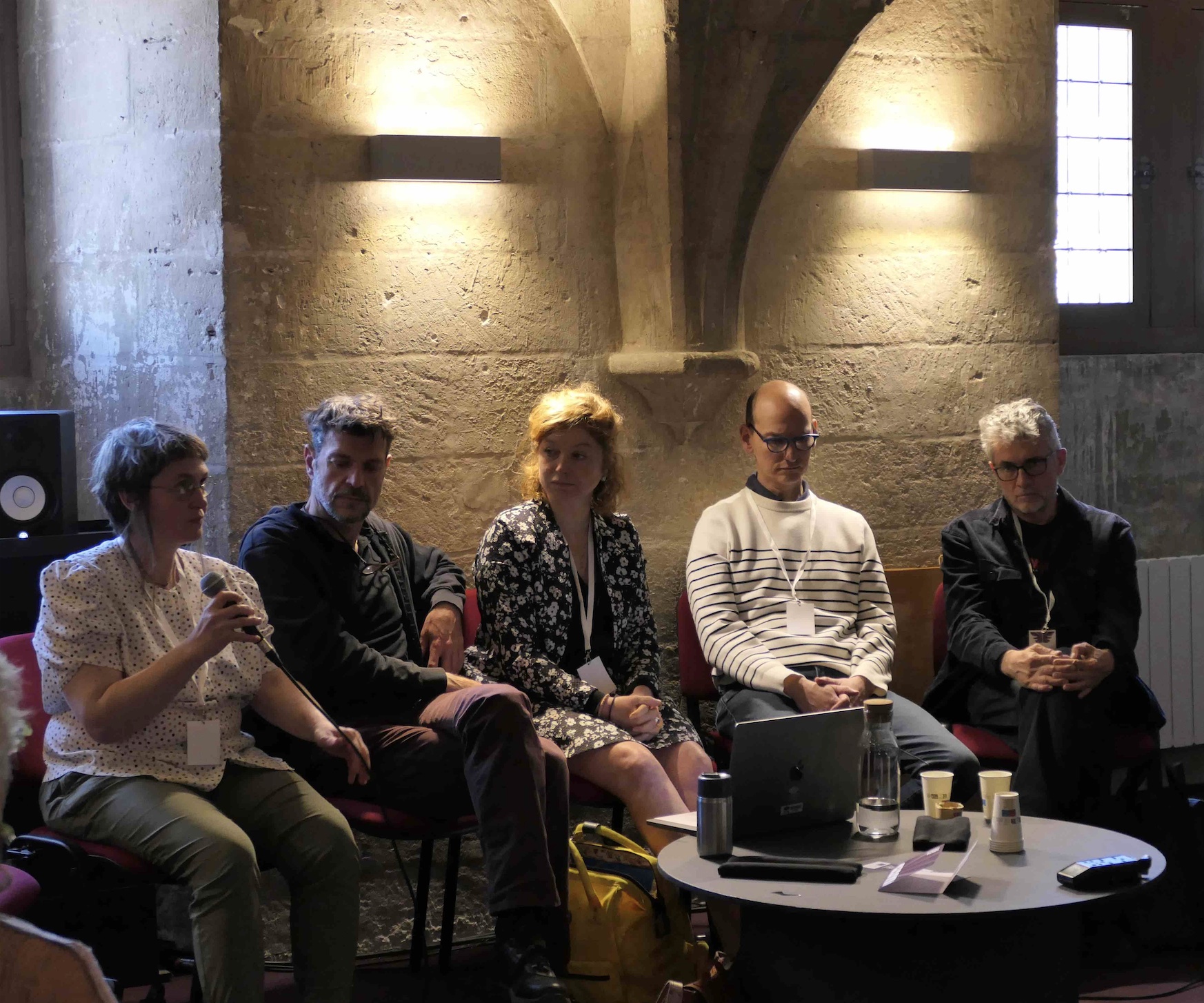
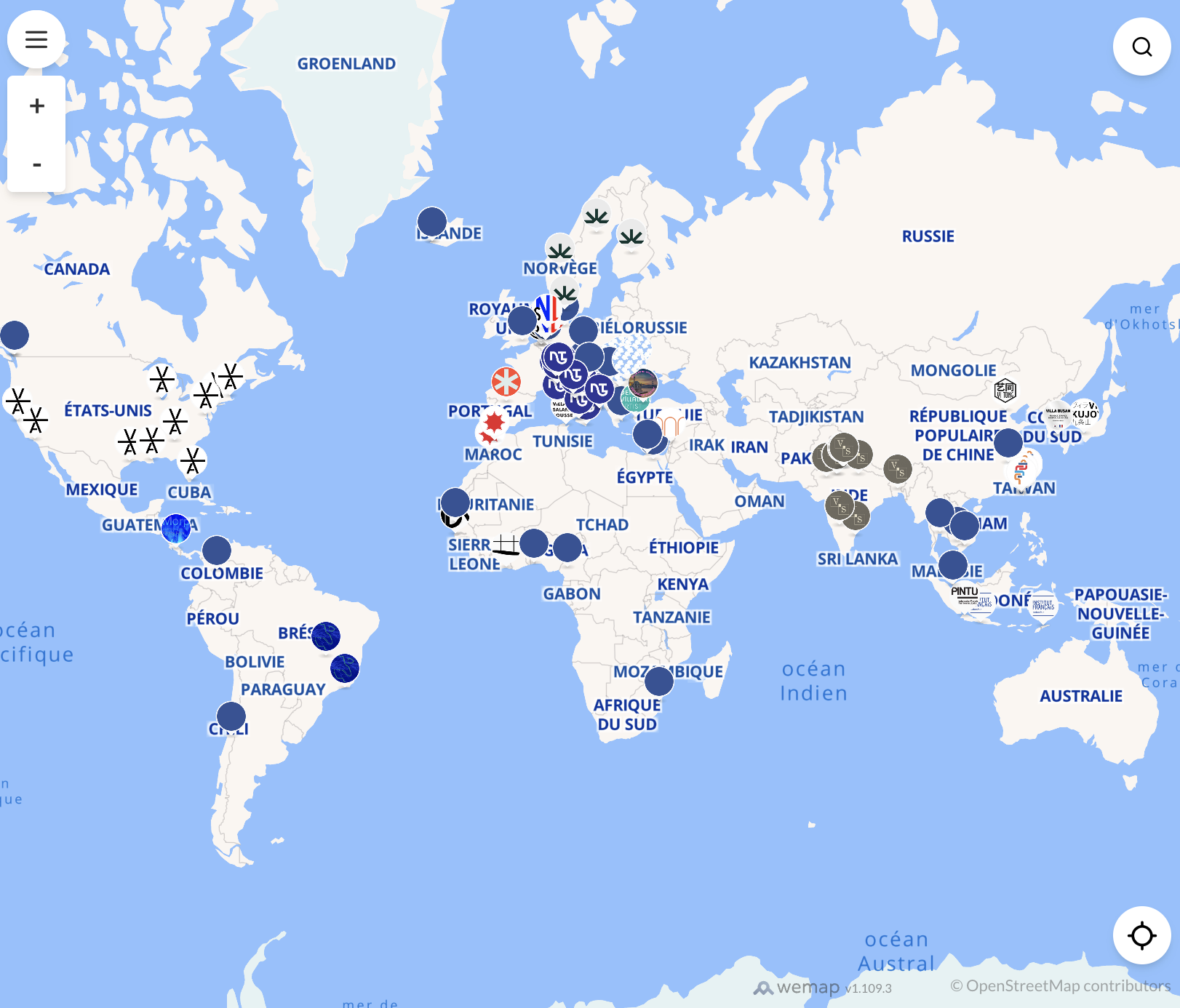
During the event, Didier Plassard and Carole Guidicelli presented Puppetplays, a database containing thousands of analytical entries on plays produced in Western Europe from 1600 to the present day. The project complements the Puppet Arts Portal (PAM): while Puppetplays focuses on texts and dramaturgical techniques, PAM centers more on puppets as objects. The scope of the work is impressive and built on a clear premise, the researchers explain: greater visibility leads to deeper knowledge of puppetry as an art form. Although the project has no longer received funding since 2025, its creators continue collaborating to expand and sustain the database. The impact of digital technology was also a central topic during the roundtable discussion “Uses and Misuses of Electronics and Digital Technology.” Moderated by Julie Sermon, professor of contemporary theater history and aesthetics, the conversation brought together four artists and one researcher.
table ronde « Usages et détournements de l’électronique et du numérique »
DIY Tech
“I’m one of those people who’s instinctively drawn to a screen whenever it lights up,” says director and head of pedagogy at Théâtre aux Mains Nues, Mathieu Enderlin. To examine our relationship with machines, he contrasts the passive role we adopt in front of screens with the active engagement required to make sense of his non-figurative puppets. “I create a confrontation between an image that jumps right at us and the place where the spectator has to make an imaginative effort in order for the character to exist,” he explains.
In his first production, Cubix, he used video mapping on wooden pixels—“voxels,” as he specifies—to create a playful, constantly shifting space for manipulation. In Bad Block, connected blocks blink and buzz, immersing audiences in a sensory adventure. In Code Source, he flips the immersive headset around: by facing the screen toward the audience, he projects a gaze outward while he himself can no longer see anything. A self-described techno-curious beginner, Enderlin enjoys getting his hands dirty in order to blow apart the black box. “By trying to make things work, I push the whole thing forward.”
“Technology Slows Us Down”
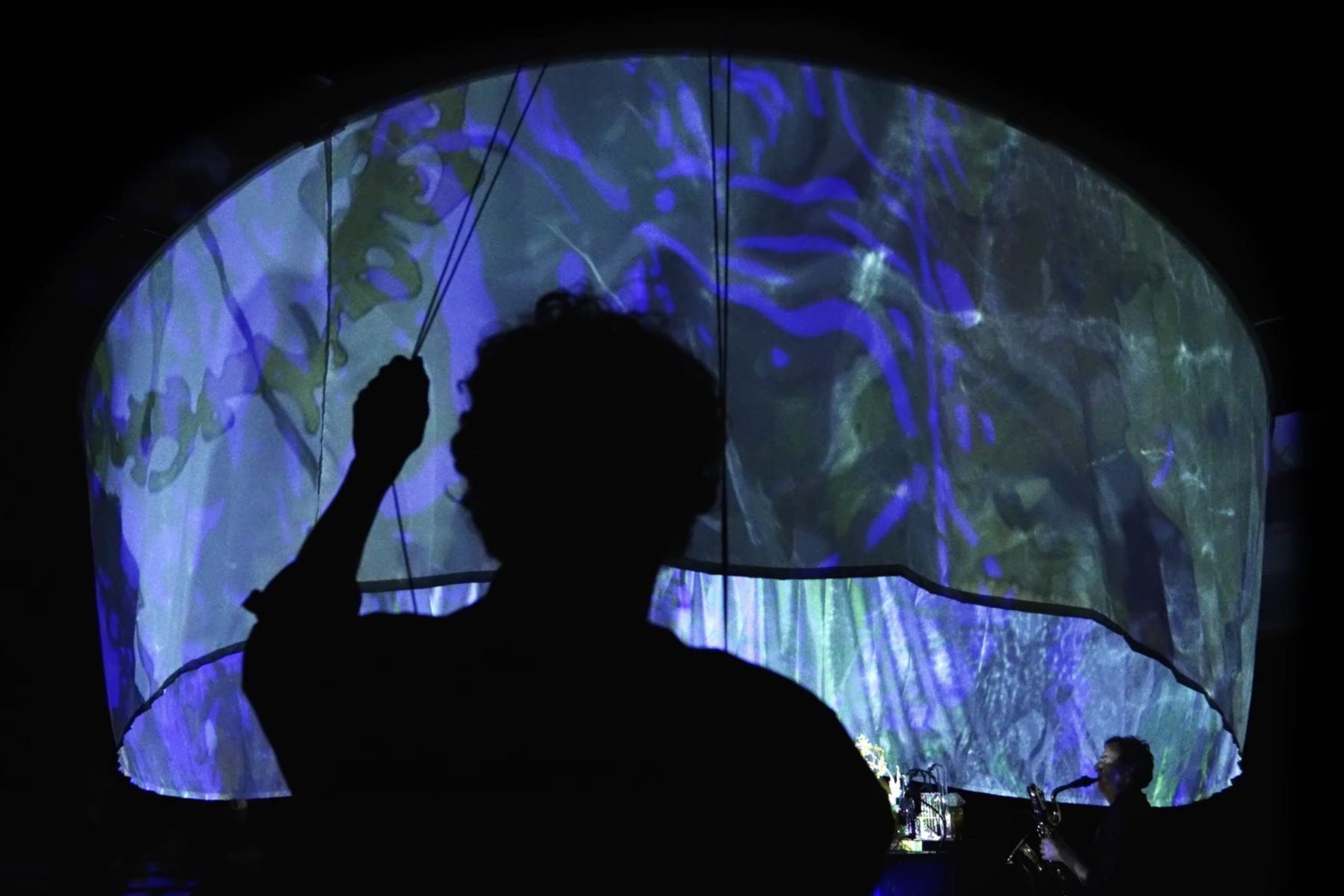
Fleur Lemercier also works hands-on with wires and circuitry. Yet the director—trained in mathematics and geographic information science, and a member of France’s first hackerspace, /TMP/LAB—long resisted the pull of electronic puppetry. “I wanted to make ‘normal’ puppets,” she laughs. After falling in love with shadow theater, she began designing custom-built devices tailored to her artistic needs. In her Ombres sonores trilogy, Lemercier mechanized her instruments so she could accelerate or slow down music at will, while also developing her own “light organ” for free improvisation.
In each of her productions, the technology is manipulated openly onstage, and audiences are invited to interact with the setup. “The goal is to make people interested in technology in its concrete forms, and to encourage them to feel capable of thinking critically about it,” the puppeteer explains. If she develops her own technologies, she says, it is also out of necessity: hiring the technical expertise she needs is expensive. “When we ask robotics engineers to work on our projects, the first thing they ask about is the budget,” adds researcher Séverine Reyrolle. “Obviously, we can’t compete.” Echoing Christian Giriat’s call to “glitch,” Reyrolle pushes back against the idea that technology necessarily moves fast. “New technologies slow us down. It takes countless iterations before anything actually works.” Lemercier estimates that her residency periods have doubled, while her construction time has increased tenfold.
Technology Was Always Part of Puppetry
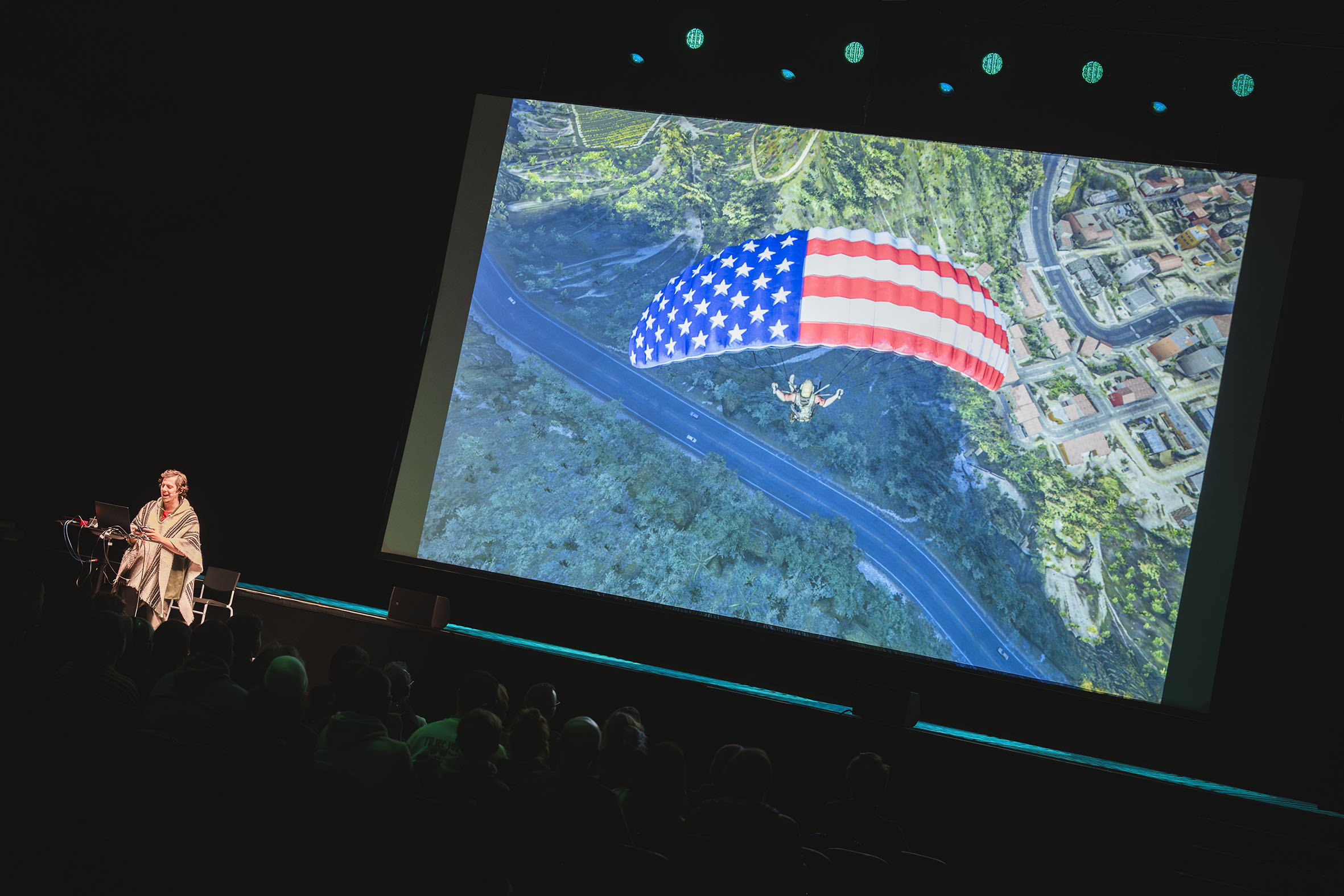
David Girondin-Moab and researcher Séverine Reyrolle conceived Open Ha.I.ku as both an educational and experimental work. In the piece, a robot manipulates objects based on prompts written by audience members. The resulting text is then interpreted as a song by a platform similar to Suno. For Girondin-Moab, the connection between AI and puppetry is obvious: “Puppetry already contains, in embryonic form, what new technologies are capable of revealing,” he argues. The performance is preceded by a presentation exploring the links between puppets, automatons, and AI. According to Reyrolle, this conversation “lowers the level of hostility and allows people to enter into the experience.” A Q&A session with the audience follows the performance.
Independent artist Kostadis Mizaras was also initially resistant to these technologies. Yet when he first put on a virtual reality headset, he recognized the sensation of trying on a puppet that wasn’t his own. “The avatar behaved like a puppet,” he summarizes. As with physical objects, he plays with weight: the weightlessness of an avatar contrasted with the cumbersome heaviness of the headset itself. Since then, he has participated in hybrid performances combining live and remote interaction.
“We can’t switch off the technological world, so we have to engage with it,” Mizaras says. His view of technological change as an unavoidable movement sparked lively—and at times emotional—debate among participants. Discussions ranged from failure and the Luddite movement to the environmental and social impacts of AI. For advocates of digital experimentation, however, these technologies can expand theatrical practice in meaningful ways. “It’s a starting point, something we share,” Mathieu Enderlin concludes, in a conciliatory tone. “At the very least, it’s a wonderful place to ask these questions.” It would be hard to put it better.