Digital Mediation in Museums: A Widespread Yet Understudied Practice
Article published on 27 April 2026
Reading time: 6 minutes
Correspondances Digitales - Musée de la Marine
Article published on 27 April 2026
Reading time: 6 minutes
More than 250 pages and around thirty institutions and experts interviewed. With its study on digital mediation in museums published in January 2026, the cultural agency Correspondances Digitales makes a strong statement. Here are the key takeaways.
After gaining major visibility during the COVID-19 crisis, where does digital mediation stand today? At a time when eco-responsibility has become essential for museums, how sustainable is digital technology? And as public funding for museums declines, is digital deployment still a priority? Against this backdrop of overlapping “polycrises,” Antoine Roland, founder of the cultural agency Correspondances Digitales, launched a large-scale study on the sustainability of digital mediation in museums, under the scientific direction of Olivier Aïm.
The study was commissioned by the Heritage Observatory at Sorbonne University and serves as the inaugural research project for its Opus Source think tank. Antoine Roland and his team (Sofia Saa, Vincent Mathiot, Charlotte Baugé) met with about twenty museum professionals. “We spoke with leading professionals representing a diversity of regions, institutional scales, governance models, and collections,” the expert explained in an interview. The research also drew on about ten interviews with representatives from professional networks such as OCIM, AGCPPF, ICOM, as well as France’s Ministries of the Armed Forces and Culture and several regional cultural agencies (DRAC).
These interviews were further enriched by insights from four academic researchers: information and communication sciences scholar Jessica de Bideran; museum management specialist François Mairesse; computer scientist and archival digitization expert Bruno Bachimont; and information and communication scholar Éva Sandri, who provided what Antoine Roland describes as “a more technocritical perspective on the pressures driven by digital technology.” Together, these contributions build as comprehensive a picture as possible, mapping current initiatives before analyzing their long-term sustainability.
The first section of the study focuses on a panorama of in-gallery digital offerings. “Depending on the type of museum, the approaches vary widely,” Antoine Roland explains. “Available resources—especially staff capacity—as well as funding mechanisms such as sponsorship or co-production differ significantly from one institution to another.”
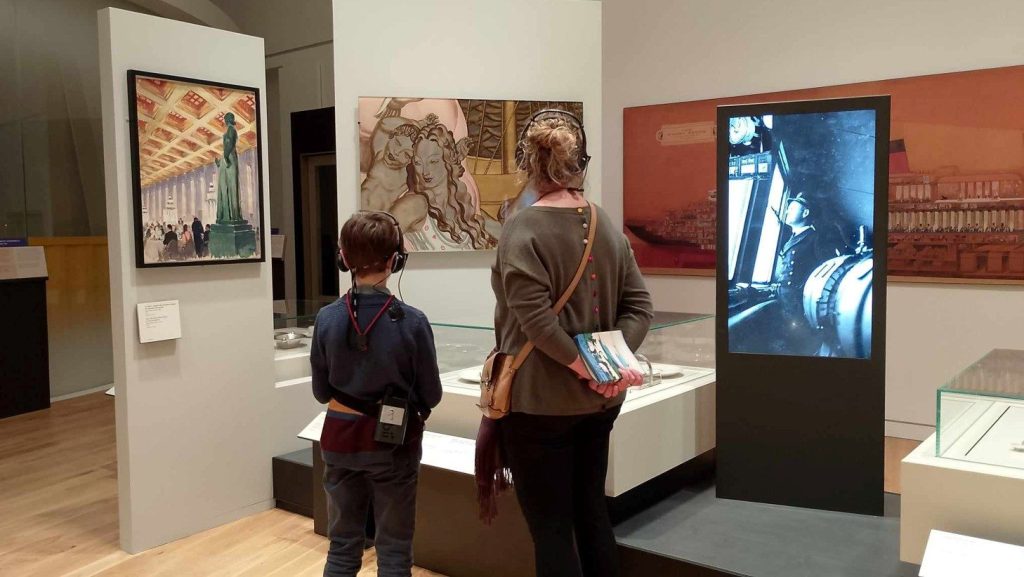
With this baseline established, the innovation expert develops a classification of digital mediation initiatives. Depending on how it is used, digital mediation can function as a visitor welcome and guidance tool; extend access to additional resources, particularly to overcome spatial constraints; explain complex phenomena or recontextualize objects; reconstruct artifacts in their original context; create playful interactions with visitors; or offer multisensory experiences.
“How do we recreate the smells of the 17th century? Or conduct sound archaeology by restoring lost sounds?” Antoine Roland asks. One example is Odeuropa, a European project dedicated to collecting digital data on our olfactory heritage. The Musée du Quai Branly, meanwhile, has designed a sound-based visitor pathway to add an additional layer of meaning to its collections.
Digital tools can also be used to personalize visitor journeys based on available preference data. However, Roland expresses reservations about this approach. “It undermines cultural democratization. If visitors are only given what they already expect, it raises questions about the role of museums.” Virtual reality, he adds, sometimes leans more toward artistic creation than mediation. “It can, for instance, involve an artist’s immersive interpretation of a work,” he notes—such as the immersive project Obsession des Nymphéas, developed in 2018.
With this nearly exhaustive panorama in place, the second section turns to identifying the challenges museums face today. Once again, Antoine Roland takes a structured approach to mapping these issues. “We looked at inspiring examples. It seemed important to adopt an optimistic lens to see what could actually be achieved,” he explains.
The first priority he identifies is designing for longevity. This means better accounting for visitor uses and practices, particularly through co-design processes. Roland observed visitor workshops in institutions such as Musée Dobrée and Louvre-Lens. Digital sobriety is another key lever for sustainable design. This includes selecting more durable materials, using equipment in multi-use configurations, and even setting up reuse and repair hubs.
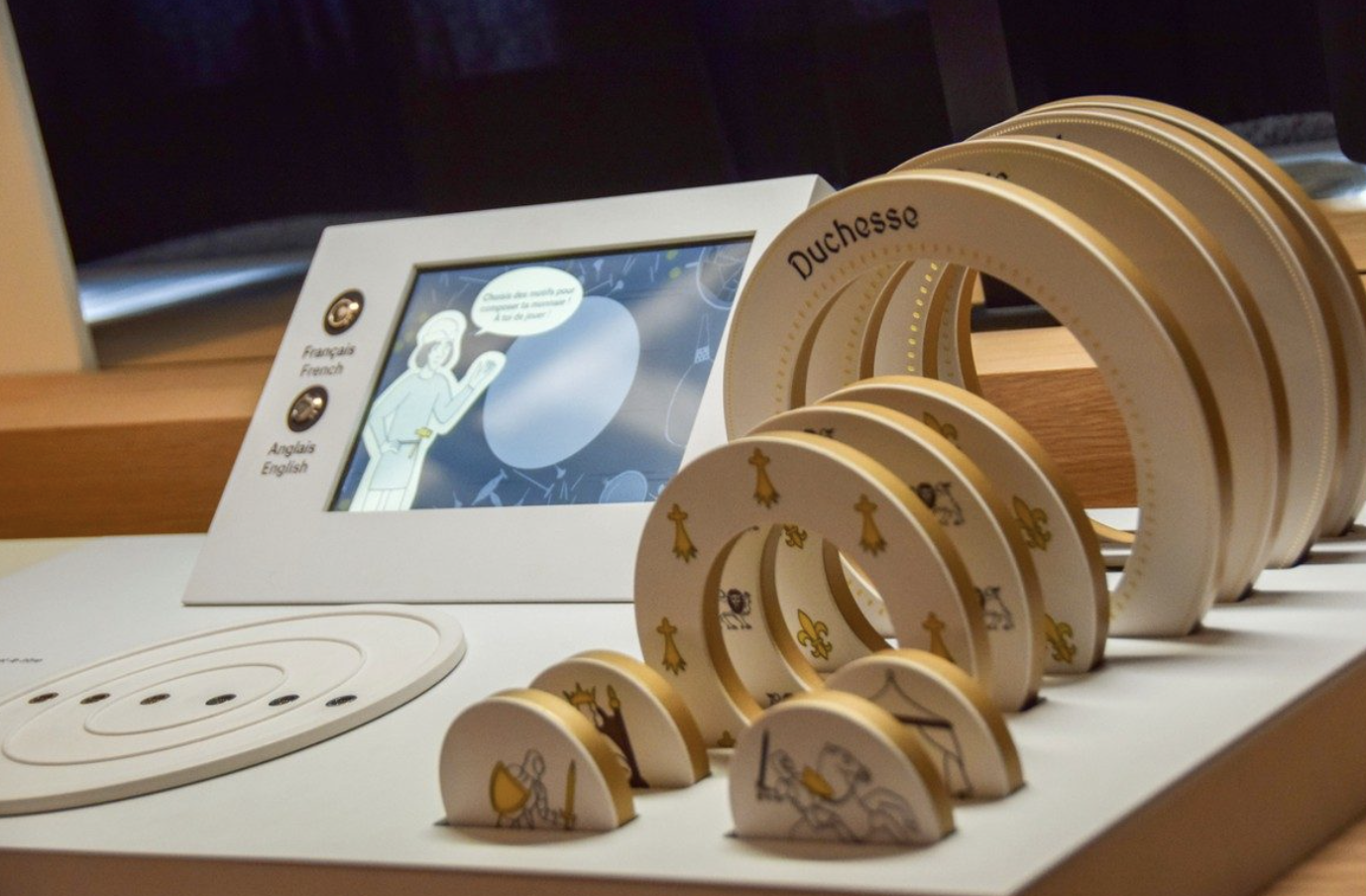
A second major challenge for sustainable practices is collaboration. Roland points to the Aliénor museum network in Nouvelle-Aquitaine, which digitized its member collections in 3D. The network then created an online portal and supports museums in implementing these 3D models onsite. Such collaboration requires broadening the range of potential partners museums engage with—companies, local governments, schools, and more. He cites the Musée Fabre in Montpellier as an example. The institution collaborates with the digital arts school ArtFX, has established skills-based sponsorships with the Altran group, and co-produces projects with the virtual reality studio Lucid Realities.
Another pillar of sustainable practice is project evaluation. “Many studies focus on visitor reception, but there are very few collective studies that allow us to understand—across multiple museums—what works and what doesn’t, and which practices are emerging at a broader scale. We need to pool results and conduct meta-research. That’s the purpose of this study,” Antoine Roland explains.
In 2024, the French Museum Service surveyed 900 museums out of the country’s 1,200 institutions. Among them, 30% reported having interactive kiosks, while 45% offered audioguides and visitor apps. Digital practices are therefore already widely adopted. “This topic drives a great deal of structural reflection on the role museums play in today’s society.”
Pour consulter l’étude en deux volets.
Elsa Ferreira