Cultural Institutions’ Digital Heritage Is a Unique Resource for an Alternative AI
Article published on 6 July 2026
Reading time: 4 minutes
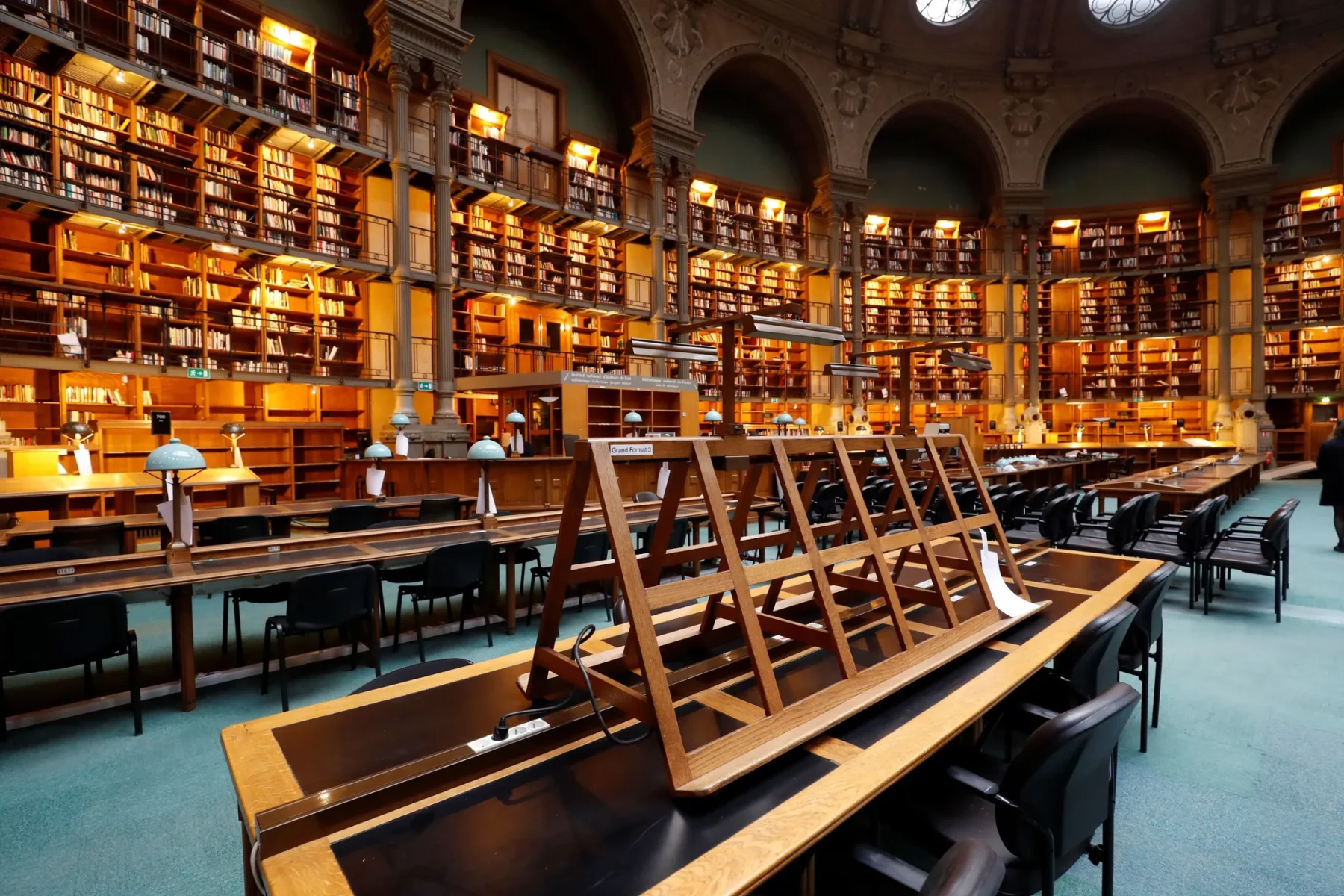
Bibliothèque National de France
Article published on 6 July 2026
Reading time: 4 minutes
As generative artificial intelligence (AI) reshapes access to knowledge, major cultural institutions must embrace a new role in support of trustworthy, sovereign, and culturally diverse AI.
Large language models (LLMs) and retrieval-augmented generation (RAG) systems depend on the availability of vast amounts of data. For more than thirty years, the Bibliothèque nationale de France (BnF) has been engaged in the large-scale digitization of its collections, building a unique repository of cultural and heritage data. Today, more than 11 million public-domain documents are available through its digital library, Gallica, representing over 500 billion OCR-processed words and millions of images. These documentary resources are enriched with structured, fully sourced metadata.
This digital heritage represents a unique asset for French-language AI technologies at a time when LLMs remain overwhelmingly dominated by English-language corpora. By making these resources available, the BnF enables researchers and industry stakeholders to develop AI models and tools that reflect the French language and cultural context. As part of the France 2030 initiative, “Digital Commons for Generative AI,” the BnF’s public-domain datasets contributed to the training of an open-source LLM developed by Mistral AI, helping, among other applications, to improve OCR performance.
Recognizing the strategic value of the public-domain data disseminated by the BnF, generative AI companies are now harvesting Gallica intensively, generating tens of millions of requests every month. These developments raise unprecedented questions: How can institutions maintain high-quality services for human users when automated agents consume an increasing share of digital infrastructure? How can cultural institutions be fairly compensated for producing these datasets? How can we balance open access with appropriate legal safeguards? And how can direct access to source materials and the integrity of those sources be preserved in an era of misinformation and increasingly automated mediation? To address these challenges, the BnF has developed a strategy centered on its Data IA services, providing managed access to the public-domain heritage data it produces and disseminates. The library establishes contractual agreements with companies seeking access to large-scale datasets or specialized corpora for model training and RAG applications, while continuing to support academic research through initiatives such as its DataLab.
Yet the BnF’s AI strategy goes far beyond data provision. The institution is also developing a wide range of projects to enhance the discoverability of its collections. Among them is Gallica Images, which will enable the automatic indexing of millions of images contained within digitized documents. Other initiatives aim to create new tools for scholarly research on collections and to accelerate the production of the library’s own data resources.
Ultimately, data are part of the heritage of cultural institutions, just as much as their physical collections. By producing, preserving, and disseminating these resources—as they have done with physical collections for centuries—national libraries are helping shape the profound cognitive and societal transformation represented by AI while remaining true to their enduring mission: supporting the creation, dissemination, and democratization of knowledge.
Isabelle Nyffenegger, Deputy Director General, Bibliothèque nationale de France.