With Local and National Subsidies Declining, Is Europe a Panacea for Culture?
Article published on 2 March 2026
Reading time: 20 minutes
Creative commons
Article published on 2 March 2026
Reading time: 20 minutes
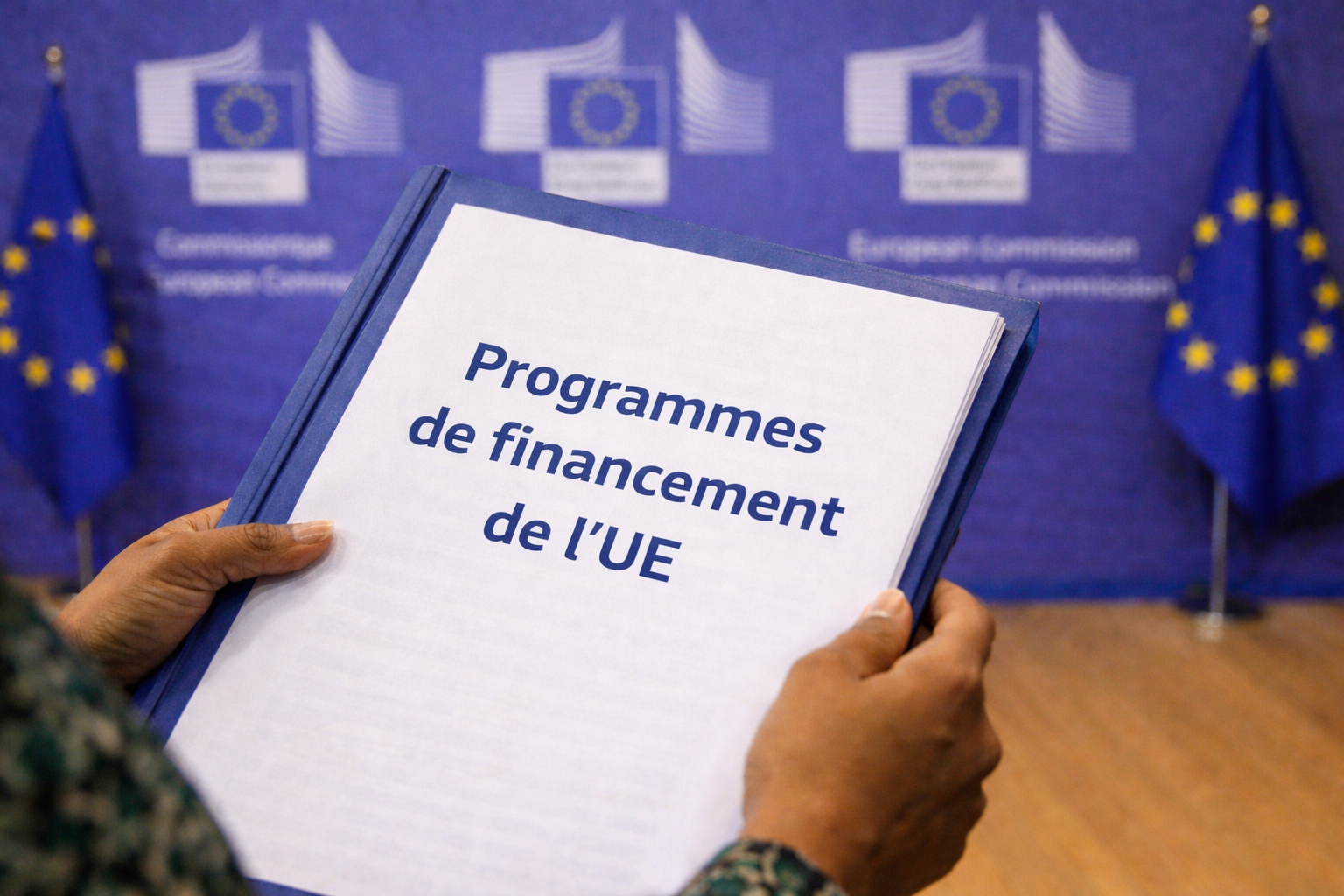
As public support tightens in France, an increasing number of cultural organizations are turning to European funding programs. What are the eligibility conditions for these funds? What human and strategic resources do they require? In a context of intensified competition, are smaller organizations disadvantaged compared to larger institutions better equipped to respond to these calls for projects? An analysis with several European project experts.
The decline in local and national subsidies, now well documented by the Observatoire des Politiques Culturelles Cartocrise, affects cultural organizations across the entire country, across all disciplines. The digital creation sector, which has nevertheless gained increased visibility in recent months—particularly given the central role technology plays in our daily lives—is not immune to this trend. In this context, many digital creation organizations have recently announced projects supported by European funds. For example, Electroni[k], together with five partners (OHME, iii, LEV Festival, ULB, and VUB), is rolling out Solar Futures, a Creative Europe–funded initiative. The project invites three artists to create three works exploring ecological, digital, and societal futures. In concrete terms, European funding can reach several million euros, but it can also take the form of more modest support of just a few thousand euros. The Chromosphère project, a touring full-dome festival organized with co-hosts in Greece (ADAF), Poland (Patch Lab Festival), Italy (LPM), Hungary (Fonix), and Romania (Art Mirror), enabled AADN to secure approximately €35,000. “An amount that made it possible to design a rich event, for both professionals and the public, entirely free of charge,” notes Cyrielle Tissandier, AADN’s production manager. “It was particularly relevant in view of our goal of democratizing practices.”

These collaborations between European partners are multiplying rapidly. But are European programs now oversubscribed? Looking more closely at the European Commission’s report A Decade of Creative Europe, published in December 2025, the answer clearly points to an overload. In 2021, there were 463 submissions to the Creative Europe Cooperation call, the program that appears to be the most well-known; by 2023, that number had risen to 831. As a direct result, the success rate dropped sharply, from 27% to 17% over the same period. Political deadlock at the national level, which began in 2024 and worsened in 2025, further exacerbated these figures (last year’s success rate was 7%), making access to these funds increasingly conditional.
Should this discourage applicants? Certainly not, given the diversity of programs—and therefore objectives—and the potential transformative opportunities they offer to cultural actors.
Before examining existing programs in detail, a reminder is in order: culture is not, strictly speaking, a competency of the European Union. “Sometimes it’s said that culture entered through the window,” introduces Pierre Brini, co-founder of LABA, an organization specialized in supporting European projects, and associate professor at Université Lyon 2. In other words, cultural funding is most often channeled through other lenses: regional development, education, or social initiatives. “This inevitably shapes these programs and their priorities,” he notes.
While the 2000s saw the emergence of initiatives such as Kaléidoscope, Culture 2000, and Culture 2007–2013, directly focused on creation (residencies, production, distribution), 2014 marked a turning point with the launch of the Creative Europe program. With €2.44 billion allocated for 2021–2027 within an overall European budget—excluding the COVID recovery plan—of approximately €1,074.3 billion (less than 0.23% of the total), the program represents a significant shift. “Symbolically, we removed the word ‘culture’ from the program title to open up to the notion of creativity, more geared toward the cultural and creative industries,” analyzes Brini.
Financial support under this program is therefore primarily geared toward market integration, more akin to seed funding than support for creation per se. “It was a neoliberal turn that structured European policies until 2020,” he continues. Since then, Creative Europe appears to have reincorporated more transversal concerns—ecological, egalitarian, and democratic—without, however, putting artistic creation back at the center of its priorities. Broadly speaking, “pure” creation remains relatively peripheral in European agendas. Other major programs are no exception, each pursuing its own objectives. “Erasmus+ focuses on learning mobility and pedagogical innovation. Horizon Europe is concerned with research and innovation. The CERV program focuses on citizenship issues,” summarizes Brini. Additional programs, such as Interreg, dedicated to cross-border cooperation, also exist. All share one principle, except in exceptional cases: transnational cooperation, a sine qua non for access to these funds.
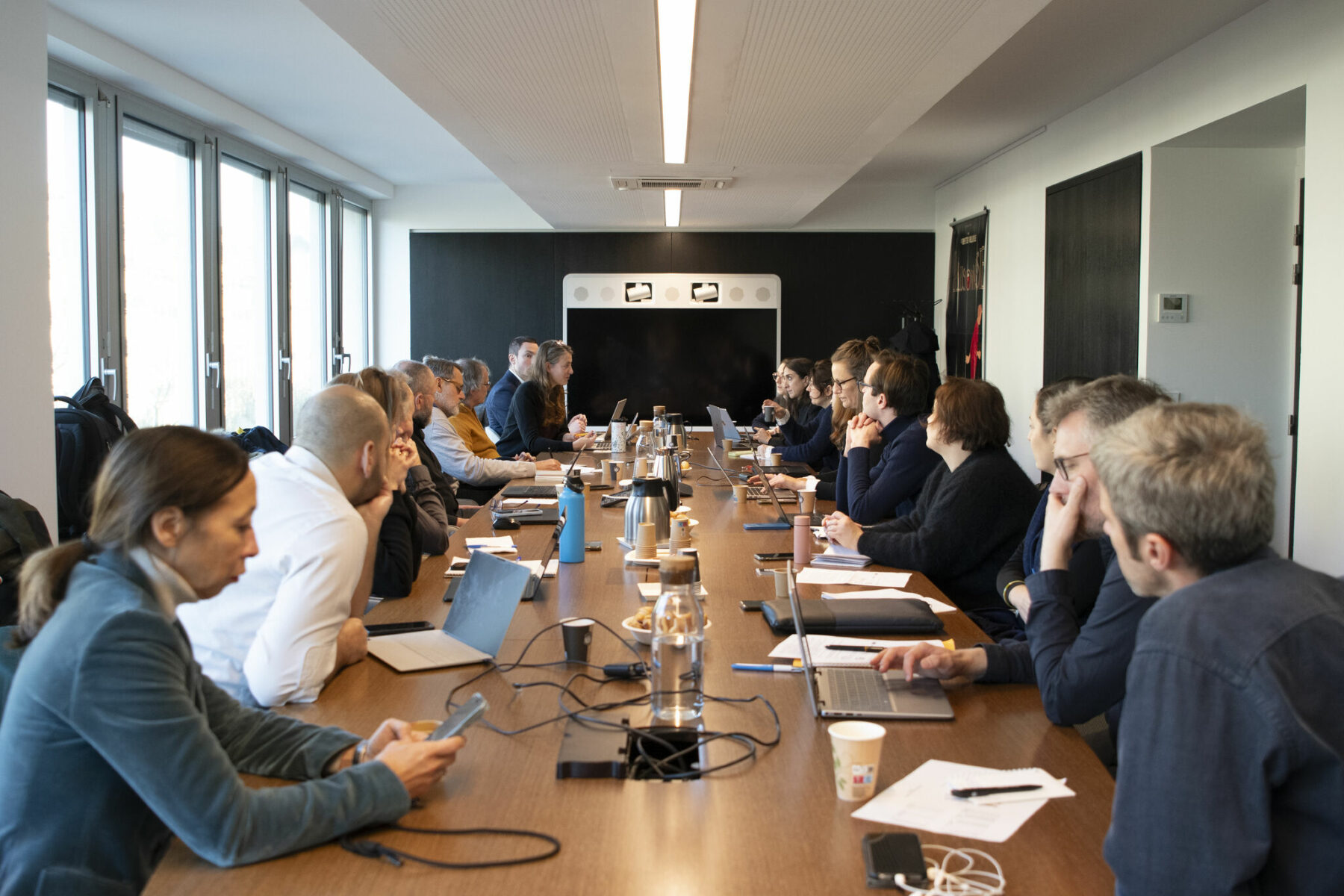
Beyond these major programs, there are also mechanisms less frequently used by project holders. This is the observation made by Aurélie Delater, founder of Noisette and expert in European funding research, who supports organizations such as Chroniques, GLUON, and OGR Torino. Some cooperation calls, widely recognized, are now saturated, with particularly low success rates. Conversely, other mechanisms remain more confidential. “A less sought-after type of call, because less well known, is cascade funding,” she explains. “When a large-scale project is approved under a European initiative such as Horizon or Creative Europe, specific funds are often redistributed through residency calls or programs, with envelopes of several thousand euros. They are open both to individuals, such as artists, and to organizations.” Cascade funding, however, has its limits: it does not follow a logic of recurrence and has limited visibility. Access requires constant monitoring and an in-depth knowledge of the intricacies of European policies, which most often restricts it to organizations already supported by specialists in grant applications.
This initial reading, however, deserves some nuance. Each of the programs previously mentioned actually unfolds as a mosaic of calls for projects, calibrated according to different scales, ambitions, and levels of complexity. “This introduces real granularity, with mechanisms aimed at all types of organizations,” emphasizes Stéphane Segreto-Aguilar, director of Relais Culture Europe, the French office of the Creative Europe program, tasked with a public service mission to support applicants at the national level. “Some calls are relatively simple, like mobility grants: these are applications that can be prepared in a few weeks if a partner is already in place,” he notes. “Conversely, other projects, much more structured, mobilize several hundred thousand euros. They require time to build solid partnerships, assess long-term sustainability, and align all stakeholders.”
For Stéphane Segreto-Aguilar, it is especially important to deconstruct a common misconception: the supposed systematic dominance of large organizations among awardees. “It’s a myth to think there is a typical profile. What matters are well-constructed projects, led by relevant partnerships and clearly aligned with the objectives of the calls. In cooperation calls, we see both large organizations that fail and small organizations that succeed.”
This is precisely where Relais Culture Europe’s mission comes into play: providing free support to project holders in understanding European stakes and aligning them with local realities. “We support applicants up until the submission of their proposal; after that, the European Education and Culture Executive Agency (EACEA) takes over,” he explains. Over the course of a year, from group training to individual guidance, several hundred projects in the cultural and creative industries benefit from this support. “We connect initiatives, facilitate partner searches, and ultimately help maximize the chances of success for applications.”
In practice, this granularity translates into a diversity of profiles among applicants and awardees. Yet further analysis is needed to understand the filtering mechanisms at work. Pierre Brini offers a first key insight: “European funding is primarily project-based. This implies a near absence of operating support.” Concretely, project holders must demonstrate medium-term impacts, generally over two or three years. “One must either provide evidence of economic impacts or highlight societal, ecological, or other outcomes,” explains the European funding specialist. This approach inevitably leaves behind certain artists engaged in strictly artistic creation, whose work is difficult to reduce to impact indicators. Conversely, “those working in laboratory, research, or artistic and cultural education formats, and who conceive of the social function of the artist more broadly, find a better fit within European funding,” he observes.
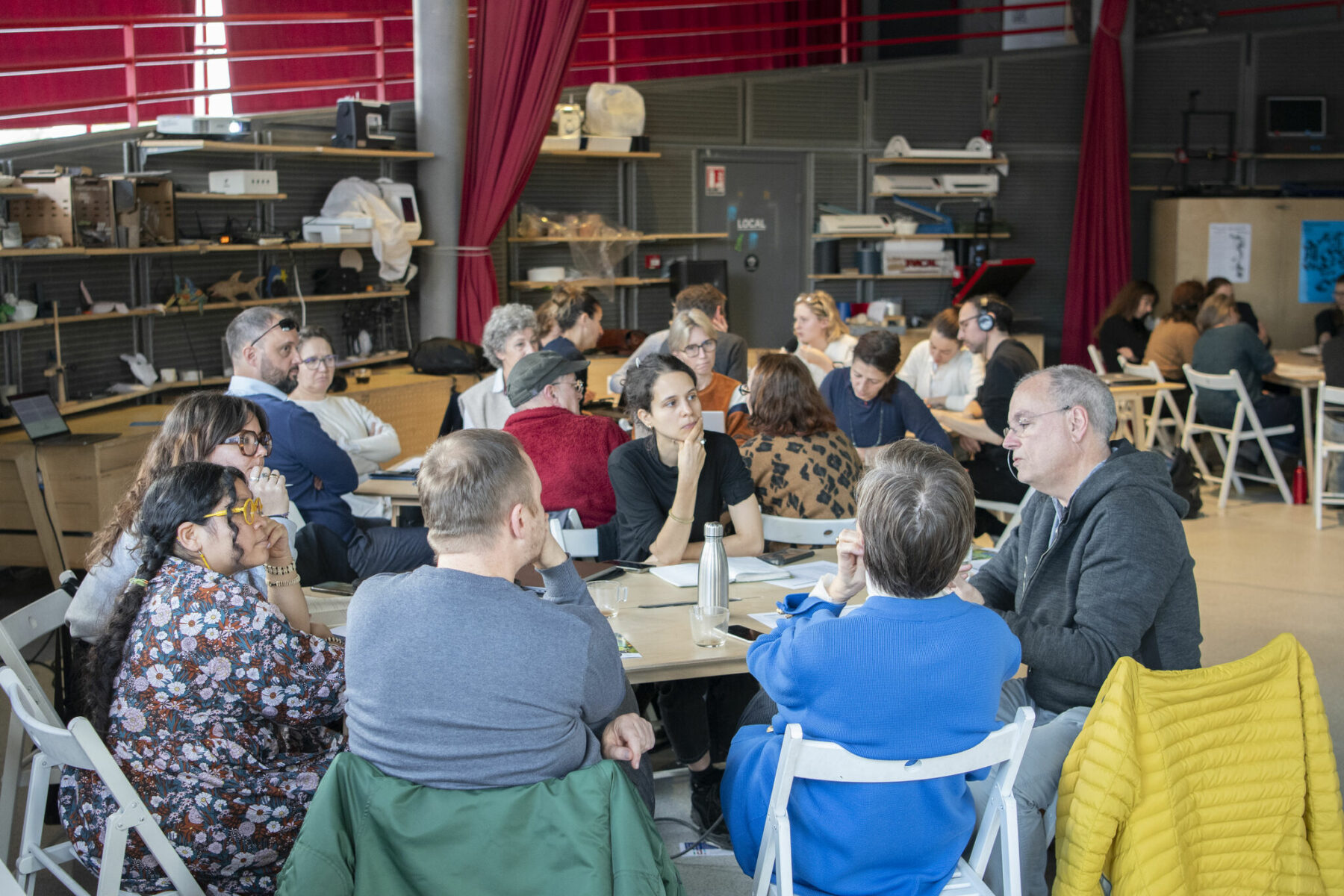
Moreover, while the Creative Europe offices play a central role in supporting applicants, submitting a European proposal requires substantial work, both before submission and after the project is selected. The preparation phase, often invisible, demands significant time, skills, and financial resources. The organization Creative FED, the European federation for the creative economy, has noted that for each project reviewed under Creative Europe, the cost—including staff time and overhead—can be estimated at around €25,000 per proposal. Applied to all applications ultimately rejected between 2021 and 2023, this represents, according to this ICC advocacy organization, nearly €40 million invested without funding as a result. In other words, the time spent on applications carries a real cost—for both the European Union and the organizations themselves, which often struggle to absorb these costs, especially when their cash visibility sometimes covers only a few months.
What about organizations based in rural or overseas territories, often on the margins of cultural and creative industries (CCI) logic and still underrepresented in these calls for projects? This is precisely one of the findings highlighted in the Culture & Territories report, released in early 2026 by the “Prospective & Territories” working group of Relais Culture Europe, which proposes a series of measures for the 2028–2034 programming period. In these regions—undergoing industrial transition or with low population density—numerous locally rooted cultural initiatives contribute to creating new balances. Yet, despite their clear relevance, they remain underrepresented or insufficiently recognized in European projects. Among the recommendations, the report calls for “a differentiated approach for the ORs/OTs,” suggesting, for instance, the creation of specific calls based on lessons learned from the Archipel program.
“The first step is crucial, and it sidelines part of the cultural world based on efficiency and cross-cutting criteria,” acknowledges Pierre Brini. Once awarded, organizations must also meet the operational demands of European projects. “There is a lot of data to gather, organize, and document,” shares Cyrielle Tissandier, reflecting on her experience with Chromosphère. In this project, coordination was handled by the lead partner, ADAF, which had a dedicated position for managing relations with partners and the European Union, as well as for evaluation and reporting issues. “We held weekly videoconferences, which allowed us to create and consolidate genuine cooperation around a common project, rather than a mere juxtaposition of events. In short, yes, it is demanding, but with the right human resources and proper tools, it works very well,” she emphasizes.
This workload often relies on specialized profiles, as is the case with Ilaria Bondavalli, European project manager for Chroniques. “A person dedicated to European affairs ensures the link between partners, streamlines communication, creates relevant connections, and guarantees the overall coherence of the project,” she explains. These tasks are accompanied by numerous international trips. She adds, “You can very clearly see the difference when a project is coordinated by these profiles versus when it is entrusted, in addition to their regular duties, to a team member.”
It is worth recalling that these European calls for projects represent a major opportunity for the digital creation sector, which is currently undergoing an active phase of structuring. The ecosystem has become significantly denser in recent years, and potential partners have multiplied, as Aurélie Delater points out: “Digital cultures have developed across Europe. Where previously I struggled to identify contacts, I now have connections everywhere in Europe.” Certain countries appear particularly mature in their approach to European funding, notably Belgium and the Netherlands. Italy is also a favorable ground, with cultural actors long compensating for weak national support through European funding mechanisms. More recently, countries such as Croatia, Hungary, and Slovenia are emerging in these cooperation dynamics.
This openness is all the more remarkable because digital technology now crosses all calls for projects in a transversal way. “The digital transition is truly a Pandora’s box: there are a thousand ways to talk about digital,” analyzes Pierre Brini. “It is a transversal priority, and its trap lies precisely in being everywhere and nowhere at the same time.” The European Commission uses broad, catch-all terms, leaving their interpretation to the project leaders. This latitude offers genuine freedom of action but also places a strong responsibility on project framing and meaning. “Today, artificial intelligence is mostly invoked or encouraged in calls for projects. It is becoming increasingly difficult to obtain Erasmus+ funding without an action related to AI skills,” Brini notes wryly.
Digital creation, however, appears more directly in a specific European initiative: S+T+ARTS, launched in 2015. “It is not on the same level as Creative Europe or Horizon Europe, which are full-fledged programs. S+T+ARTS is an initiative led by DG Connect, in charge of the European digital agenda,” explains Aurélie Delater, who is familiar with these calls. Every year for nearly ten years, financial support has been mobilized, though the total budget has not been made public. “On average, around fifteen projects have been supported annually, with funding of roughly €1.5 million per project,” she estimates.
A new European roadmap is expected to take shape in the coming months, notably with a view to merging the Europe Creative and CERV programs. This future initiative, provisionally named AgoraEU, would cover the period 2028–2035 and benefit from increased financial allocations. “It would be a better-funded program, and although the orientations are still under discussion, the proposal overall seems very positive,” emphasizes Stéphane Segreto-Aguilar. This shift reflects a clear political ambition: to make AgoraEU a space of protection and support for those who create freely, in a European context marked by growing democratic tensions. An increase in funding is planned, but questions remain regarding the place and role assigned to culture. “I am concerned about seeing culture become ‘merely’ a tool, even for a noble cause like democracy,” nuances Aurélie Delater. “It is not up to Europe to define what culture is for. In this vision, culture risks being limited to utilitarian functions and only valued when it serves the interests defined by policy.” Pierre Brini prefers a more nuanced reading, seeing it as an opportunity. “It can also be a chance to ask cultural actors what culture really is, and how they influence social movements and ongoing social transformations,” he concludes. From this perspective, digital culture actors clearly have much to contribute.
“It is essential to build your strategy from the start and map out your European journey. The first step can be a mobility grant request, then securing Erasmus+ funding, before moving on to a Creative Europe project. Start with small-scale support, then scale up,” advises Stéphane Segreto-Aguilar, Director of Relais Culture Europe.
“You need to train in the methodological challenges and the vocabulary imposed by Brussels. Some are accustomed to it, others are not, as this kind of project engineering remains very specific. In any case, setting up a European project takes time and high demands, but it is also an opportunity to develop project methodology skills that the organization can later reuse in other contexts,” explains Pierre Brini, co-founder of LABA and associate professor at the University of Lyon 2.
“Competition for European projects is fierce and the success rate is often low. It is essential to diversify funding sources to avoid relying solely on European funds,” notes Aurélie Delater, expert in European funding research.
Adrien Cornelissen