As the defense industry moves to the center of national priorities, the nature of conflict itself has shifted. Today, war is also waged in the digital realm. Many of the tools currently embraced by artists—AI, robotics, VR—maintain structural ties to the military sector. This dynamic is not one-sided: cultural and creative industries also contribute, sometimes unwittingly, to the development of military technologies. So where exactly do these points of contact lie? What kinds of technological transfers or symbolic slippages are taking place? This first article explores different forms of cooperation, whether deliberate or unintended.
At first glance, art and the military-industrial complex seem fundamentally opposed. How can we draw a connection between a field that the collective imagination readily associates with a critical stance and another perceived as the very embodiment of armed conflict? And yet history reveals a relationship far more complex than it appears. The central role of artists in wartime propaganda is well documented, from Antiquity to contemporary conflicts. Less widely known, perhaps, are the more technical collaborations between artists and military industries—interventions that move beyond the symbolic register to operate at the very core of military systems and infrastructures.
Artist and geographer Trevor Paglen, whose work extensively probes the invisible infrastructures of military power (Limit Telephotography and Code Names of the Surveillance State), has compiled on his website a series of articles devoted to psychological operations, or PSYOPS. He notably references the Ghost Army, a secret World War II unit made up of painters, designers, and architects, including Ellsworth Kelly,Art Kane, and Bill Blass. “Their mission was to conduct large-scale deception operations,” Paglen writes.This army of artists designed and deployed inflatable tanks and dummy military equipment to mislead Nazi reconnaissance missions. They also used powerful loudspeakers to simulate the movement of nonexistent armored divisions across the countryside, and staged the appearances of fake generals in strategic locations. Through ruse and misdirection, the unit effectively manufactured an alternate reality—a technique that finds an unsettling echo today in the use of deepfakes in contemporary conflicts.
The Evolution of (Digital) Military Technologies
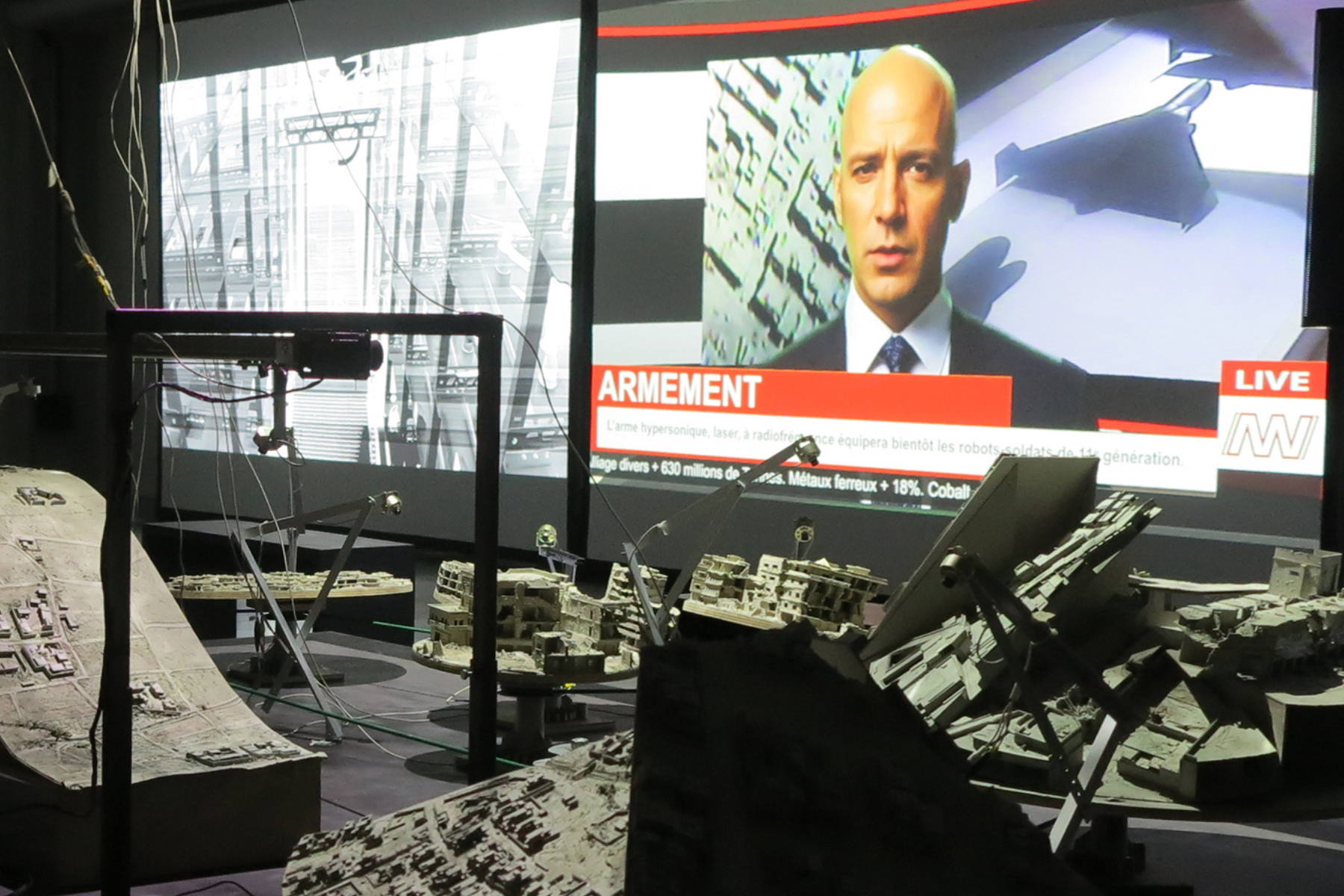
In recent decades, military technologies have undergone profound transformation under the impact of digital and electronic innovation—particularly in the field of imaging: infrared, photogrammetry, AI-driven optimization—now grouped under the umbrella of optoelectronics. “The first 3D and thermal images were initially developed for military use,” notes Alain Josseau, whose work examines the imagery of war. “These technologies and aesthetics were later fully absorbed into the world of entertainment, such as reality TV, where infrared is constantly employed.” The same holds true for images captured by drones or satellites—once confined to military operations, now commonplace across audiovisual production. In Eye/Machine I, II, III (2000–2003), Harun Farocki examines precisely these shifts in imaging technologies originally developed for military purposes, which now contribute to machine autonomy in civilian contexts.
Artist Mishka Henner, in Fifty-One US Military Outposts—a series of satellite images captured via Google Earth—reveals how the traditional camera has been supplanted by global surveillance infrastructures. This artistic approach illustrates a significant shift in how artists can engage with digital cartography: “appropriating the same tools of vision used by states and corporations to create counter-maps of visibility,” as Henner explains on his website. This turning of the weapons back against their developers can be observed elsewhere—for example, in the work of Forensic Architecture, which leverages a broad array of imaging technologies to expose state violence and war crimes.
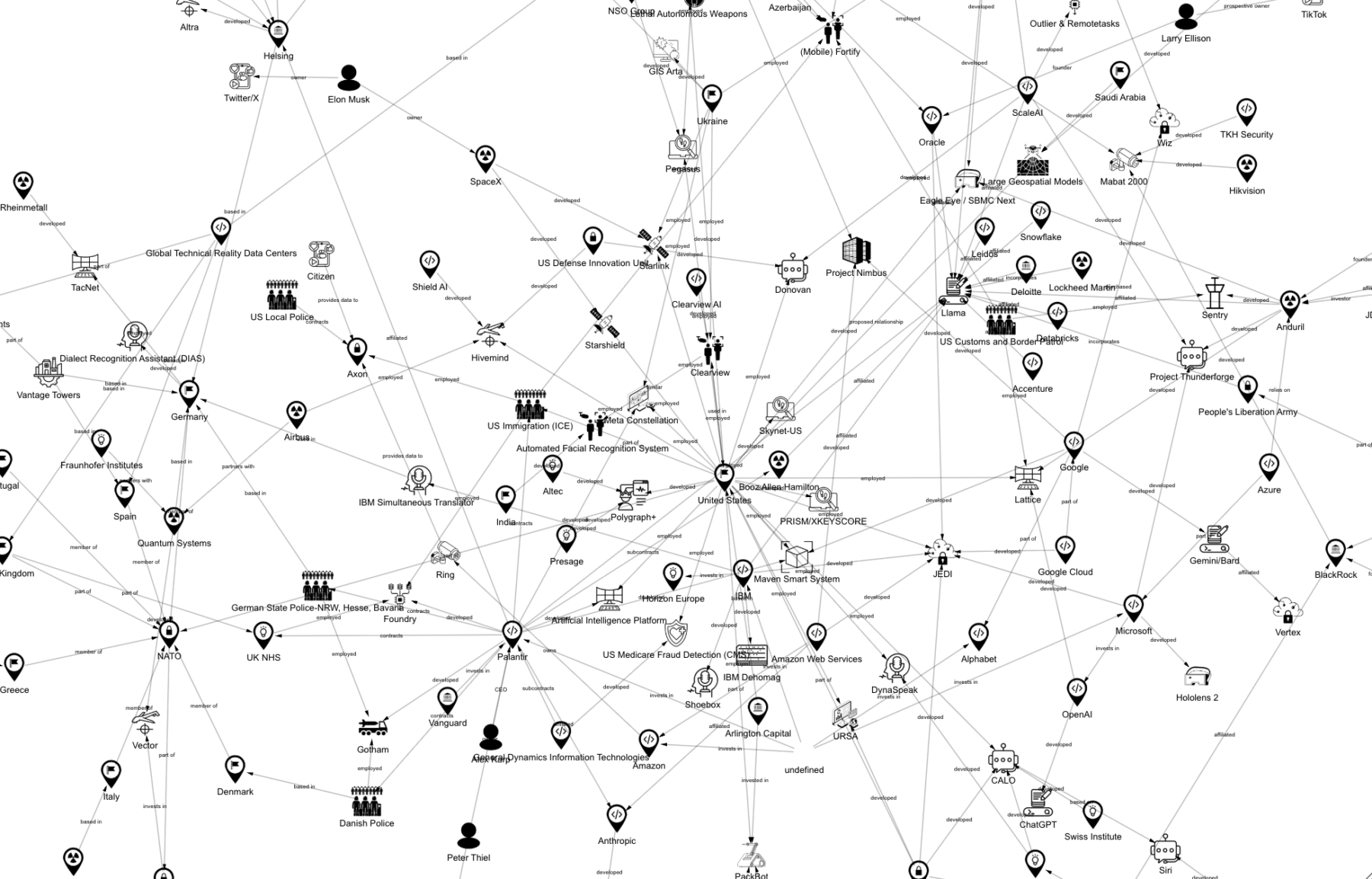
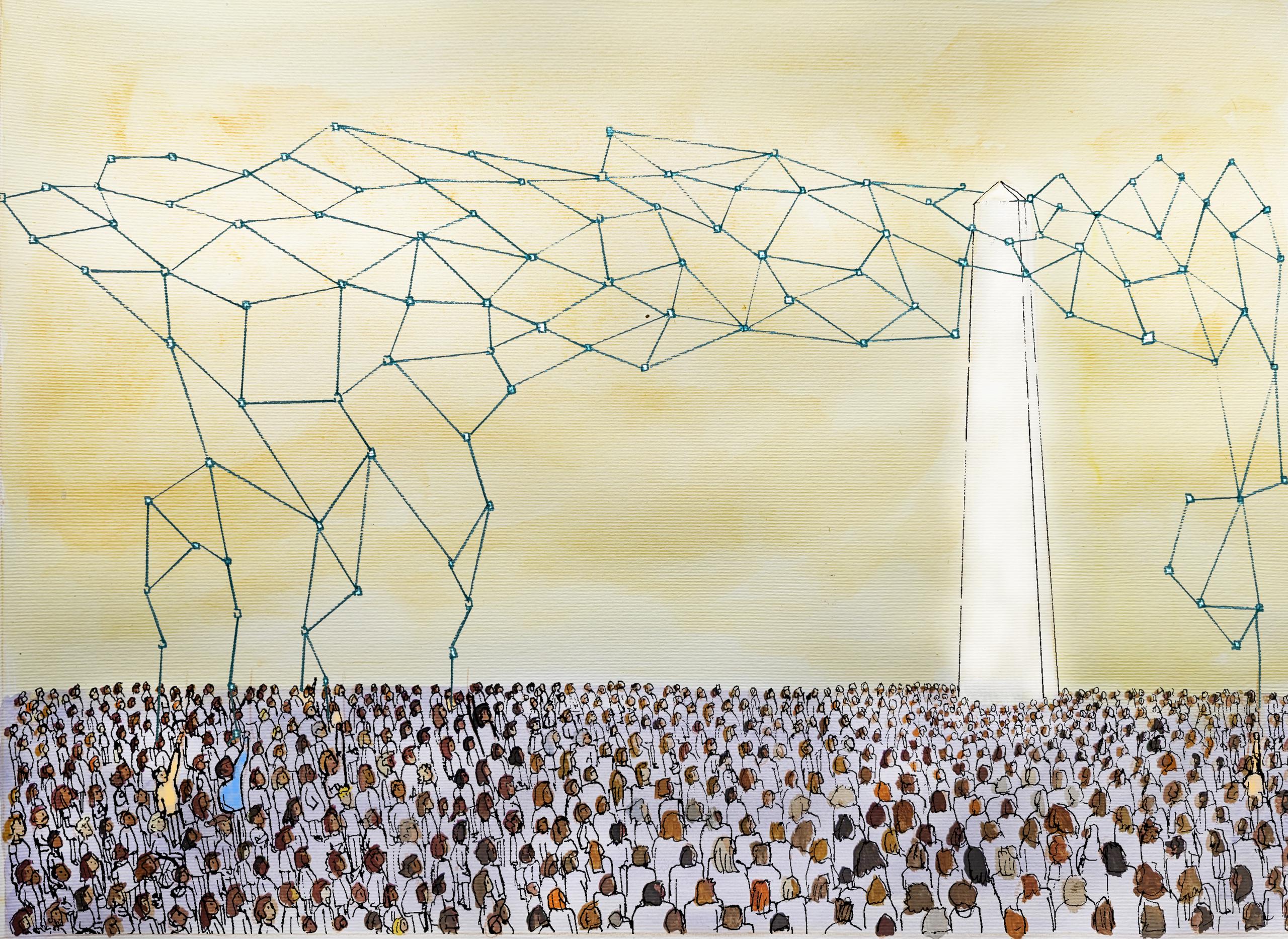
This permeability between the military and civilian spheres is hardly exceptional; it extends across other strategic sectors such as healthcare, transportation, and energy. In some countries, research is even structured to facilitate these circulations between defense, universities, and industry. In the United States, Defense Advanced Research Projects Agency (DARPA) stands as a symbol of this model: the agency funds cross-disciplinary programs, some of which—such as ARPANET, the precursor to the internet—have durably reshaped the civilian sphere. This entanglement of technology and defense takes on particular resonance with the widespread adoption of artificial intelligence in everyday uses, including artistic practice. The project AI War Cloud by artist-researcher Sarah Ciston highlights the complexity of these interdependent networks. Through an interactive infographic, she maps hundreds of connections between tech giants, states, and military organizations. One observes, for instance, that Anthropic, developer of the Claude model, is linked to Palantir Technologies, a firm that works in particular with the U.S. Immigration and Customs Enforcement agency, known as U.S. Immigration and Customs Enforcement (ICE). These entities share financial or strategic ties with the reactionary entrepreneur Peter Thiel. Through this mapping, Sarah Ciston raises questions about both individual and collective responsibility: what are the ethical implications—for designers as well as users—when AI tools become embedded in systems capable of producing large-scale lethal consequences? Her work also underscores how technologies first tested in conflict zones can later be redeployed within the very societies that developed them.
Sarah Ciston – AI War Cloud
Artists’ Unwitting Involvement
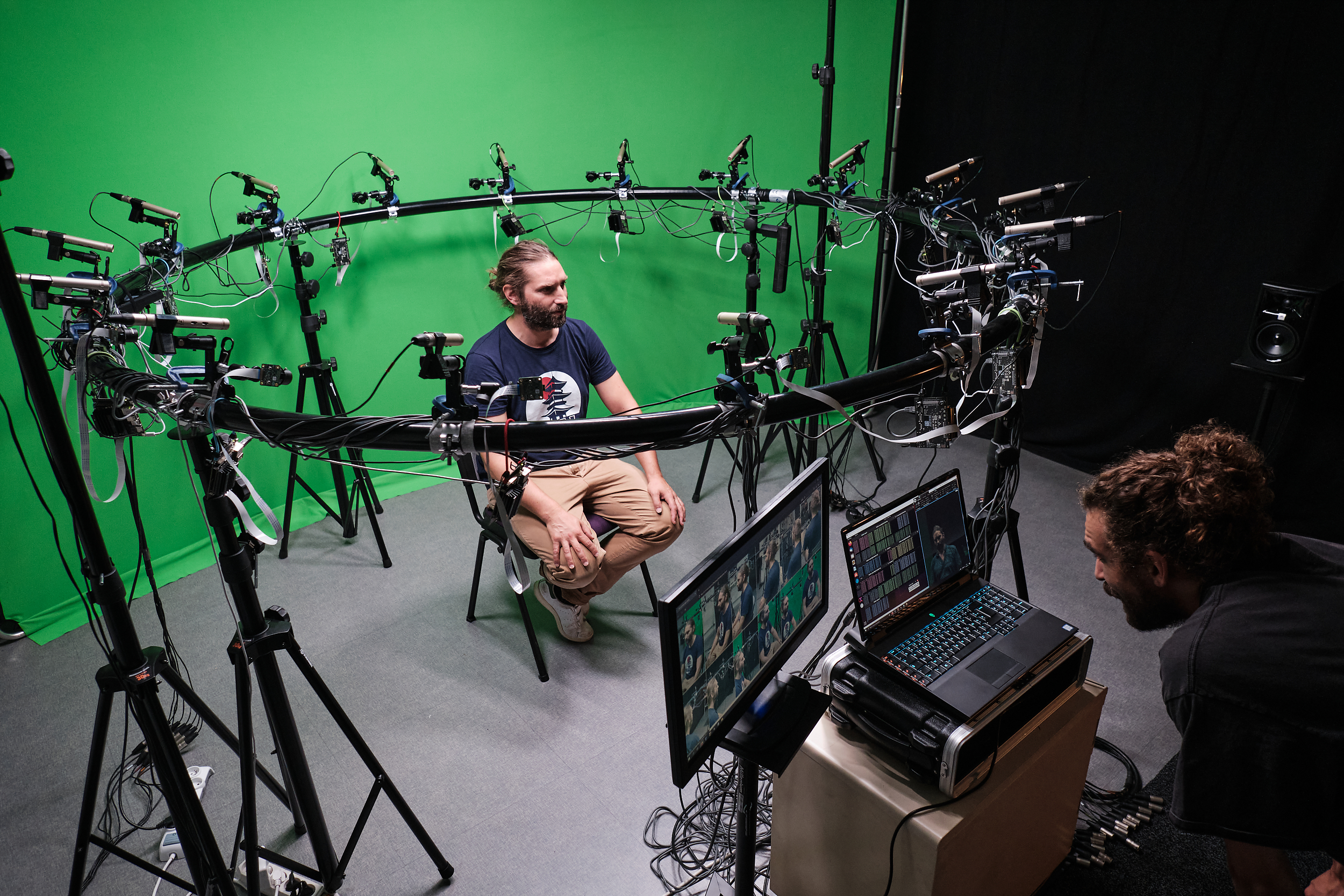
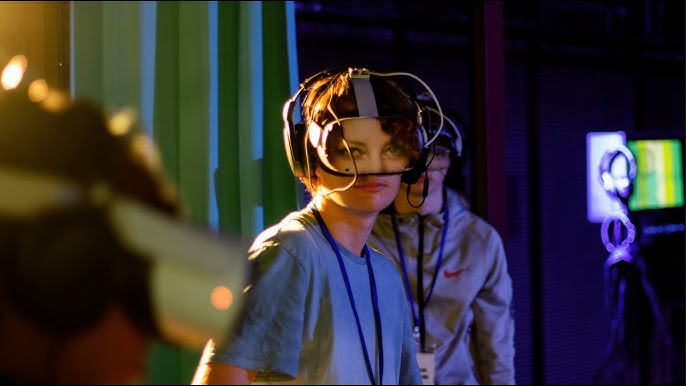
This broader shift toward digital technologies has logically led the military sector to take an interest in artists who master these tools—their experimental uses and the data they generate. In September 2025, iconoclastic immersive artist Adelin Schweitzer published an op-ed in HACNUMedia warning about the military turn taken by immersive practices, also known as XR. “While in Europe we’re still dreaming of a civic metaverse and cultural immersion, Meta is already equipping the U.S. military.” This comment refers to the May 2025 announcement of a partnership between Mark Zuckerberg and Palmer Luckey, founder of Oculus and now head of Anduril Industries, a major player in the U.S. arms industry. The metaverse—initially framed as a space for social interaction and play—thus finds itself reconfigured as a strategic tool. The metaverse, “once marketed as a future of connection and gaming, is becoming an instrument of control and combat,” Schweitzer warns. “Every gesture, every interaction produced in XR—whether tied to entertainment or artistic creation—feeds vast training databases. (…) This data, collected under the pretext of improving our experiences, is also used to calibrate models for military purposes: simulating behavior, anticipating movement, optimizing responses.” In this context, artistic practice in XR cannot be conceived independently of the technological infrastructures that sustain it. It operates within an industrial ecosystem, even if their respective ends do not necessarily align.
Assumed Partnerships with the Defense Sector
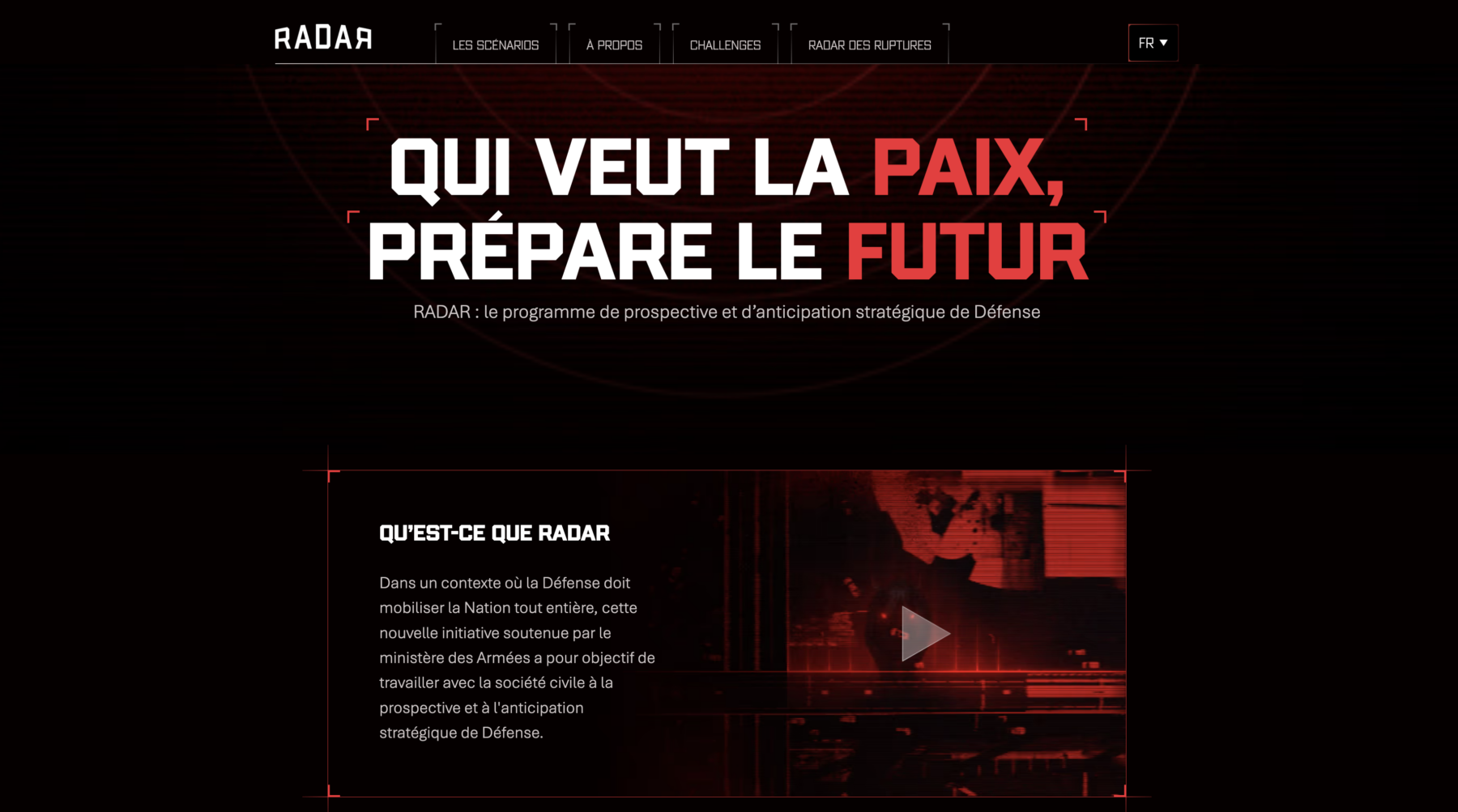
Unlike XR artists who may find themselves inadvertently entangled with the military-industrial sphere, other creators deliberately engage in defense-related programs—particularly in the realm of speculation and the shaping of collective imaginaries. Launched in France in 2019 by the Agence de l’innovation de défense, the Red Team program—modeled on similar initiatives in the United States—embodies this dynamic. Overseen by Université Paris Sciences et Lettres, it brings together science fiction writers, including Romain Lucazeau and Laurent Genefort, as well as illustrators and military experts. Its objective is to imagine potential threats targeting France and its interests over the coming decades. Eight scenarios were published through 2022. In 2025, the RADAR program succeeded Red Team under the slogan “If you want peace, prepare the future.” It expands the framework by convening artists—such as Alvaro Bernis, Benjamin Tejero, and Natacha Picajkic—alongside journalists, industry leaders, and armed forces representatives to develop forward-looking, often dystopian scenarios, including that of an “augmented sovereignty.” Digital technologies occupy a central place in these narratives, such as the hypothetical algorithmic optimization of missile trajectories through the mobilization of citizens. In late 2024, the announcement of a RADAR immersive museum by Emmanuel Chiva, France’s Delegate General for Armament, confirmed the intention to anchor these initiatives within the cultural sphere (editor’s note: since that announcement, no further updates have been made public on the project).
Capture d’écran – programme RADAR
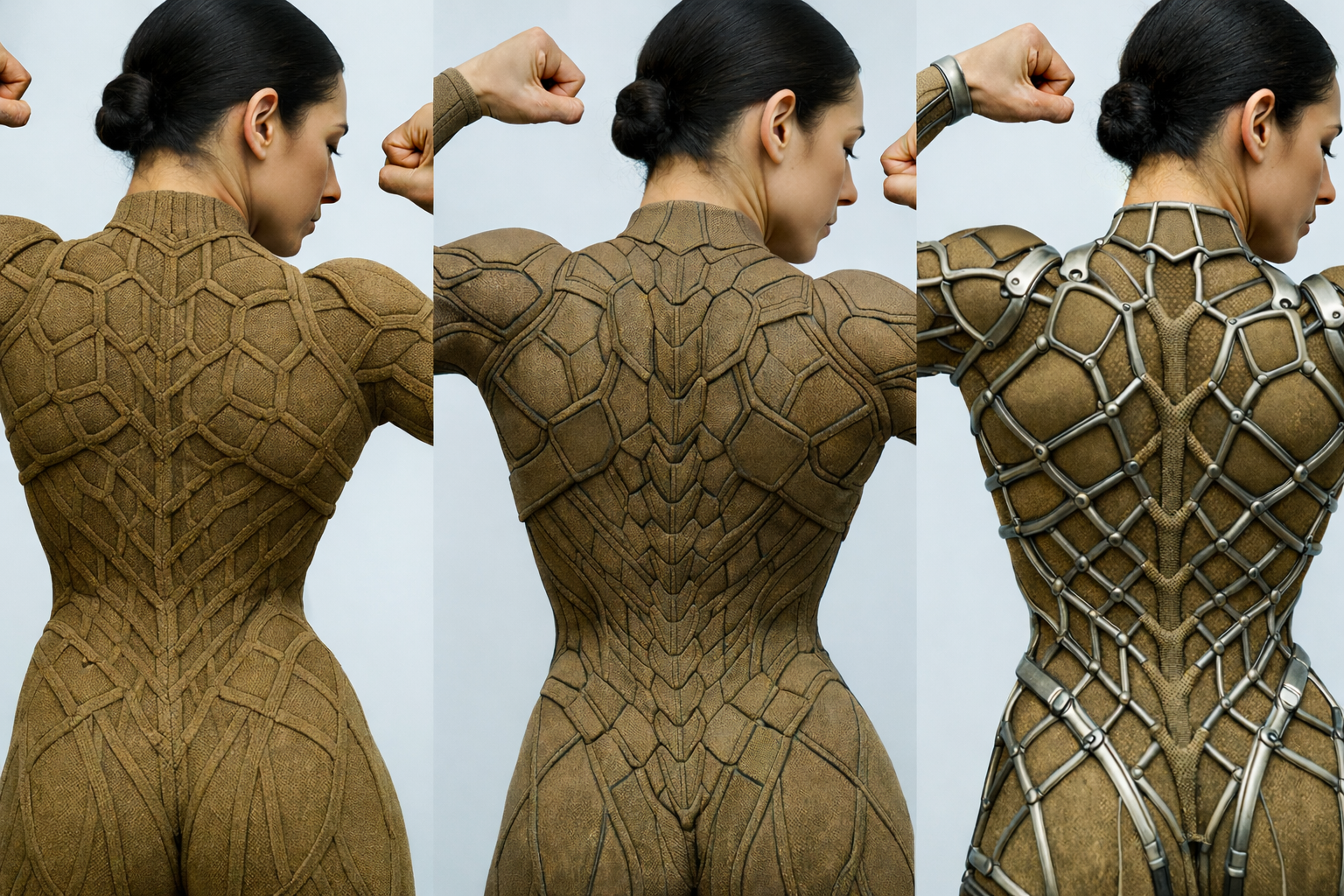
More pragmatic, today, are the ties forming between higher education and the military sector—such as institutional funding from defense contractors, including Safran in partnership with Arts et Métiers in Paris. At the Campus des métiers et des qualifications d’excellence – Images et Design Hauts-de-France, this alignment takes shape through concrete initiatives. “The campus participates in a program called École-Entreprise, led by Mouvement des entreprises de France (MEDEF Grand Lille). Within it, a delegation dedicated to defense has been formed: companies have pooled their expertise in service of this sector. This involves technological know-how—cybersecurity, electromechanics, innovative textiles, embedded systems, AI integration—as well as logistics and crisis management expertise,” explains Christophe Cellier, the campus’s operational director. He prefers to speak of the “defense sector,” emphasizing that the school’s primary mission is first and foremost humanist.”In his view, deindustrialization has weakened certain strategic skill sets and loosened the ties between the armed forces and the local economic fabric.As part of the Images and Design campus strategy recently validated by the Regional Employment Committee (CORE), my role is to help reweave this network in the field of industrial design: identifying the skills, training programs, and companies capable of contributing to the development of a technological demonstrator—particularly one applicable to defense according to its technology readiness criteria.”Another example of partnership lies in calls for projects issued by the French Ministry of Defense, aimed at so-called “dual-use” innovation—capable of both civilian and military applications. The Images and Design Campus is currently working on a project call focused on the concept of the augmented body, in partnership with ENSCI – Les Ateliers as part of the “Compétences et métiers d’avenir” (Skills and Jobs of the Future) initiative within France 2030. “We chose to explore the field of augmented dance and tech wear with training centers in the Hauts-de-France region (editor’s note: the project has been named CAPOIERA).. In these frameworks, the aim is to demonstrate innovation within an artistic context—here, dance—before considering a potential transfer to the defense sector once proof of concept has been established. The presence of creatives is crucial: they allow us to question uses and take a step sideways.” In such configurations, artistic experimentation becomes an unexpected research ground.“Schools must speak truthfully. Today, designers cannot survive solely on a strictly creative posture. Our role is to reposition design within a broader ecosystem, where it engages with economic, technological, and societal challenges,” Christophe Cellier concludes.
CAPOIERA – crédit Images et Design Hauts-de-France
These multiple points of permeability between the military sphere and artistic creation serve as a reminder that, beyond any moralizing stance, the central issue remains transparency. What is unfolding behind the scenes is not merely a matter of industrial strategy or technical innovation; it entails individual and collective responsibility at the very core of our technological environment. A second article, titled The Relationships Between Art, Technology, and the Military-Industrial Complex: Critical and Artistic Spaces, will examine in greater detail the positions adopted by digital artists in response to this technological warfare. It will explore how their practices expose military strategies and infrastructures, repurpose the weapons of war, and help illuminate our understanding of the evolving nature of contemporary conflict.
Through his experiences, Adrien Cornelissen has developed expertise in issues related to innovation and digital creation. He has collaborated with a dozen French magazines, including Fisheye Immersive, XRMust, Usbek & Rica, Nectart, and Revue AS. He coordinates HACNUMedia, which explores the changes brought about by technology in contemporary creation. Adrien Cornelissen lectures at higher education institutions and creative organizations.