Regional hubs: a major milestone in structuring digital ecosystems in France
Article published on 9 January 2026
Reading time: 8 minutes
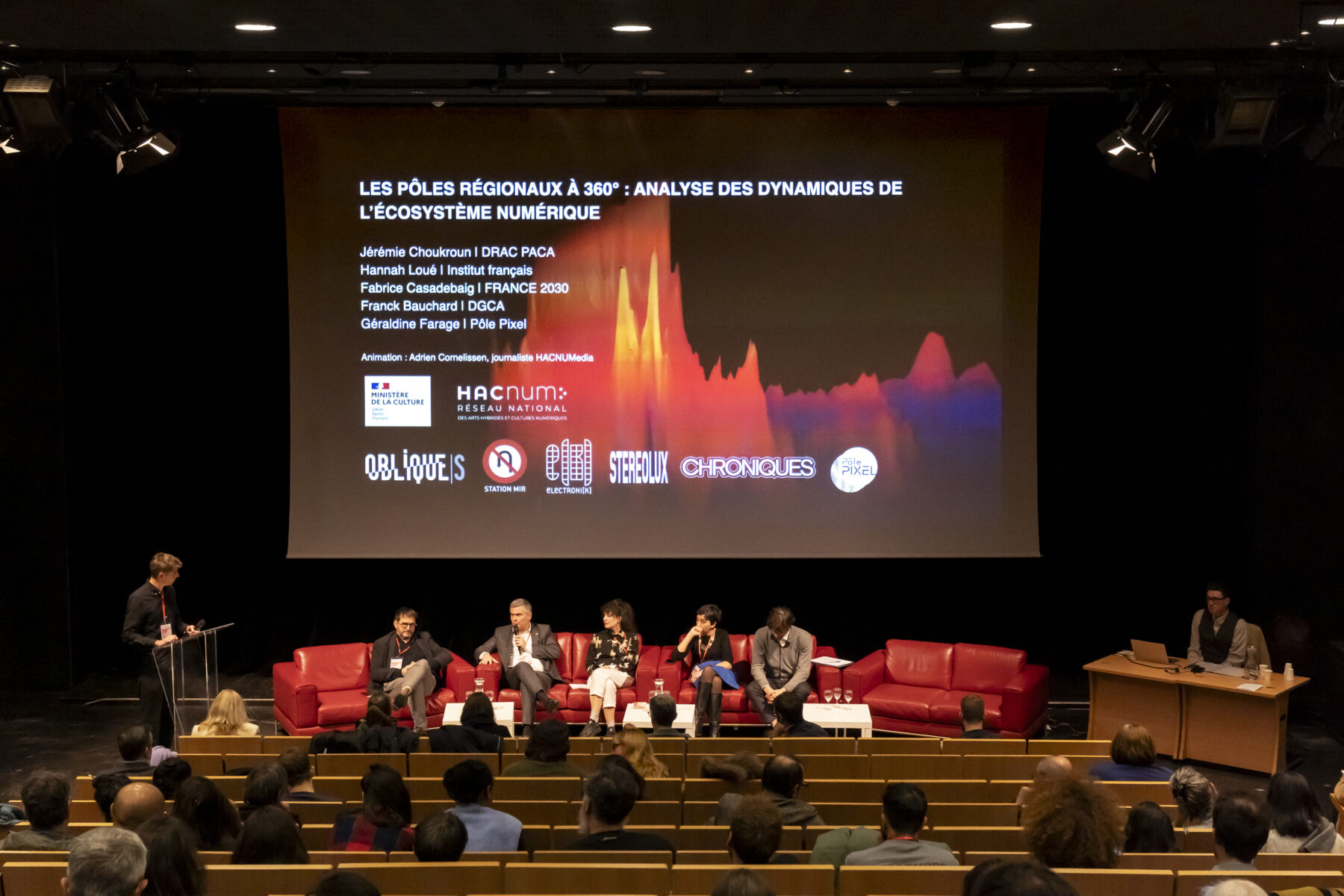
Photo Jeanne Dubois Pacquet
Article published on 9 January 2026
Reading time: 8 minutes
Launched just over a year ago by the DGCA (Directorate General for Artistic Creation), the program “regional hubs for artistic creation in digital environments” marks a new phase in the French Ministry of Culture’s strategy to support artists and digital professionals. The first national gathering of these hubs provided an initial assessment of this emerging policy—an opportunity to gauge its impact, identify its key challenges, and outline the contours of a scheme set to play an increasingly central role in the digital culture ecosystem.
The theatre world has its National Drama Centres (CDN), music its SMAC venues. So what about digital cultures and hybrid arts? Precisely in response to this question, in 2024 five pilot DRACs (Regional Directorates for Cultural Affairs) received support to structure regional hubs for artistic creation in digital environments, relying on designated lead organizations: Stereolux (Pays de la Loire), Electroni[k] (Brittany), Oblique/s and Station Mir (Normandy), Pôle Pixel (Auvergne–Rhône-Alpes), and Chroniques (Provence–Alpes–Côte d’Azur).
To fully grasp the challenges at stake, it is worth returning to the origins. As early as 2022, the Ministry of Culture launched a forward-looking, participatory process, drawing on thematic working groups and an online public consultation. HACNUM was invited to take part in the working groups and actively engaged in the online consultation. It was on the basis of this analysis that regional roadmaps were developed between the pilot DRACs and the designated lead organizations recognized for their expertise in artistic creation in digital environments.
On December 3, the DRACs, together with the hubs, reiterated the importance of this foundational work. In Brittany, the reflection was informed by a study on artistic creation in digital environments conducted in 2024. “Through this analysis, the DRAC Brittany sought to understand the specificities of digital creation, identify the actors active across the region, and establish a solid overview to guide its cultural policy,” explains Violaine Dano, Project Officer for Ecological, Digital, and Societal Transitions at DRAC Brittany.
While highlighting the dynamism of local stakeholders, the study also pointed to a lack of structuring resources. Its recommendations called for reinforced regional support, “in the form of a hub designed to deploy initiatives at both regional and national levels” (source). The conclusions of this Breton study are echoed by a similar study launched in the Pays de la Loire. Christophe Fenneteau, Head of Artistic Creation at DRAC Pays de la Loire, likewise underscores the need for a national-level tool capable of fostering a shared vision.
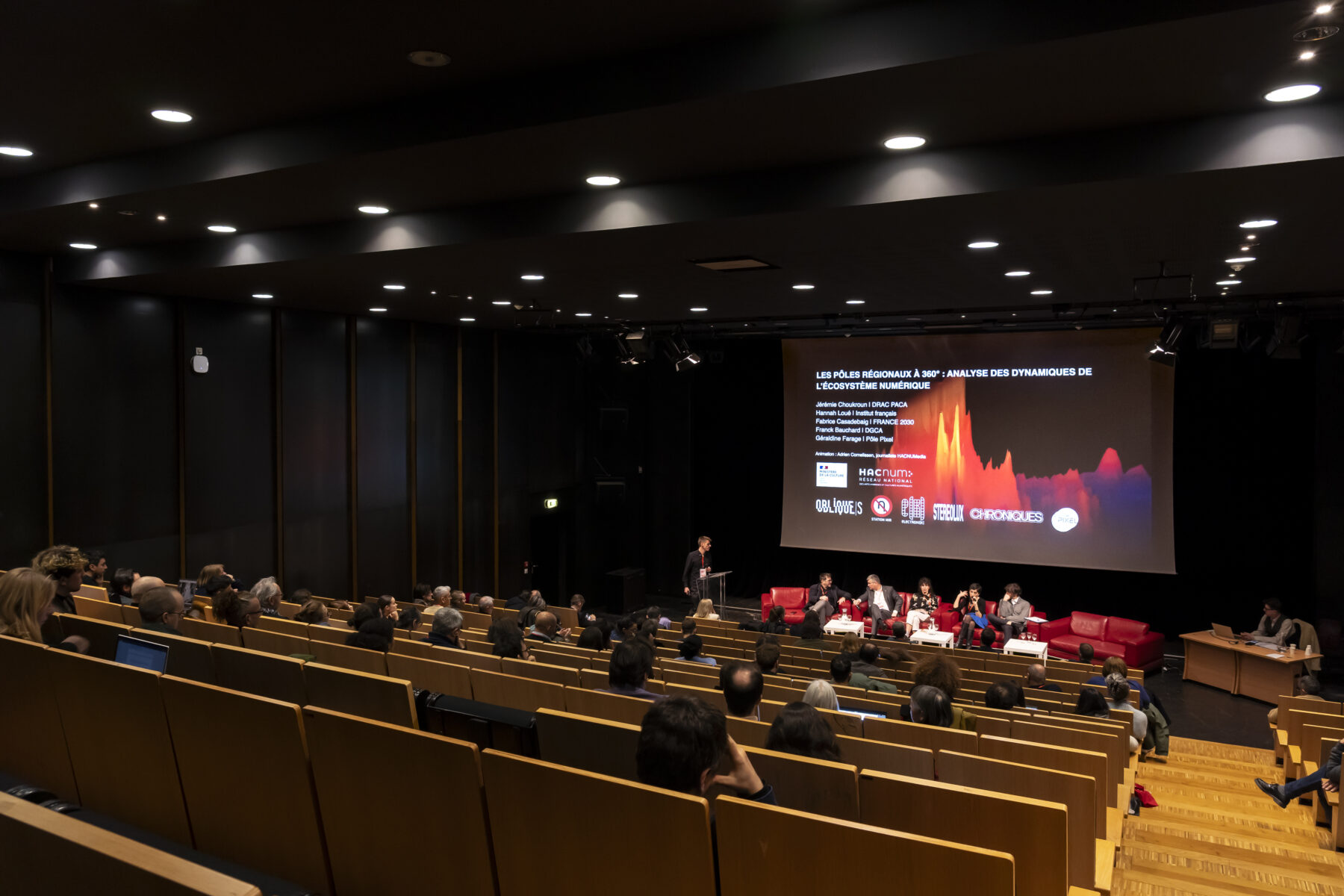
In practical terms, the “regional hub for artistic creation in digital environments” program enables organizations to bring together professional stakeholders ranging from research to production and dissemination. Ultimately, the goal is to support artists, increase the visibility of their work, and ensure they are clearly identified by local and regional authorities.
“Previously, we didn’t really know who to turn to when faced with requests for hybrid projects. Now, the hubs are our points of contact, and we’re able to redirect requests more effectively,” says Jérémie Choukroun, Coordinator of Cultural and Creative Industries Strategies at DRAC PACA.
Beyond their role in supporting artists, each of these hubs also aims to develop resources at the national level—such as Electroni[k], which has become a benchmark in professional training on digital transition issues, including digital mediation, cultural action, and creative techniques.
This recognition is naturally accompanied by financial support. How much are we talking about? “Around €400,000 for all five hubs combined. These are modest amounts, but they lay a first foundation,” notes Géraldine Farage, Director of Pôle Pixel.
One of the major challenges facing this emerging network will be to produce more detailed and comprehensive mappings of regional stakeholders, such as the survey currently being conducted by Pôle Pixel. This identification work can connect with other initiatives, particularly at the national level. Hannah Loué, Project Manager for Digital and Audiovisual Creation at the Institut français, points out that a mapping already exists through the IFDigital program: “We have already carried out groundwork, and we will be able to go even further in identifying the actors involved.”
Beyond analysis, she adds, “the question will be how the hubs might act as relays for our calls for projects.” This perspective echoes the concerns of Fabrice Casadebaig, Cultural Advisor at the SGPI and lead for the France 2030 calls for projects in the cultural and creative industries. In his view, another key challenge will be determining how the hubs can support project leaders in preparing their applications. “We can draw inspiration from initiatives such as the OIR in the Sud region, where we have seen better-prepared projects,” he explains.
In other words, the regional hubs are intended to become genuine transmission belts between grassroots actors and national funding schemes, helping to strengthen the maturity, clarity, and impact of digital creation projects at the territorial level. The national meetings of the hubs also offered an initial case study focused on artificial intelligence: how can the hubs foster the development of a shared strategy and coordinated actions in a rapidly evolving field?
Luc Brou, Director of Oblique/s, emphasizes that “the hubs could be involved in major lines of reflection, in a structuring program for the art world, similar to what our Quebec counterparts are doing with Sporobole or the SAT.” As AI has become central to creative practices—and represents a significant cost—the idea of a policy for pooling resources, tools, and skills emerges as a concrete and necessary avenue for the years ahead. Links with universities and research laboratories could also be developed in this direction.
Another avenue was raised by a participant from the audience: “It is often difficult to approach tech companies to negotiate partnerships around AI. The hubs would make it possible to have a more substantial interlocutor, able to speak collectively.” This remark illustrates the potential role of the hubs as strategic intermediaries, facilitating collaboration.
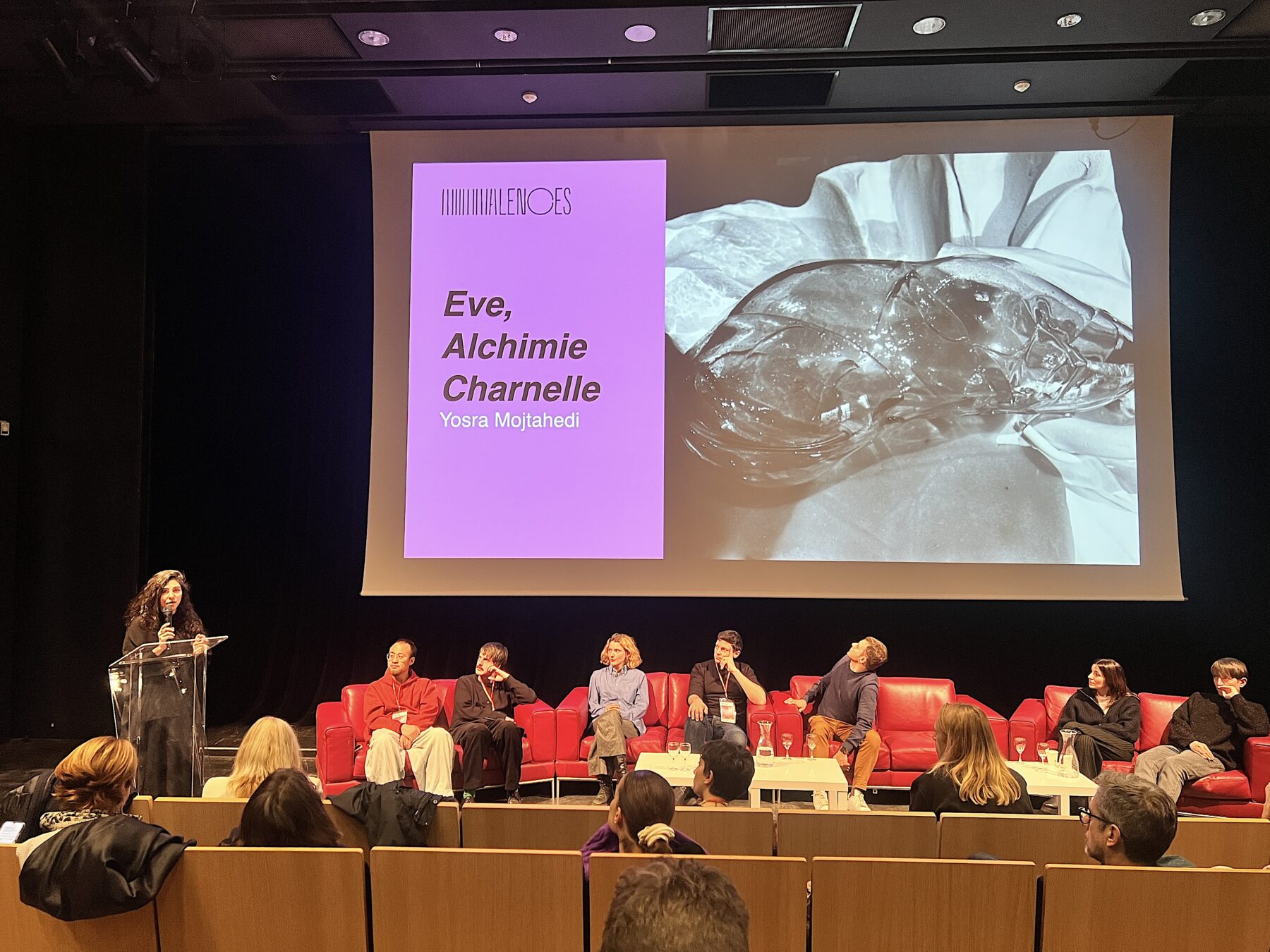
Already, the impact of the regional hubs is evident through distinctive support and production schemes. Chroniques Créations exemplifies this approach. Every two years, calls for projects are opened to artists. Their projects are selected collectively by a jury composed of producers, presenters, and managers of residency spaces from across the region. Once selected, they receive tailored support—production, guidance, networking, and visibility—as illustrated by Jeanne Susplugas, who was present on the day of the selection and expressed her appreciation for the support she has received over recent years. Chroniques Créations also served as a model for the interregional Ambivalences program, jointly run by the hubs in Brittany, Normandy, and Pays de la Loire. “This program supports both established and emerging artists, all selected collectively by a jury of producers and presenters,” explains Samuel Arnoux, Director of Electroni[k]. Among the projects presented are works by Adelin Schweitzer, Émilie Brout & Maxime Marion, Ismaël Joffroy Chandoutis, Yosra Mojtahedi, Lorène Plé, and Lukas Persyn, as well as a project by the young artist Jingqi Yuan. The latter reflects: “Beyond financial support, this program allowed me not to feel isolated in my practice, to exchange with other artists, and to structure my project.” This echoes the words of Etienne Guiol, who was supported by Pôle Pixel: “It concretely helped me structure my activity—not only my production, but also the business development side of my practice.”
These national meetings also highlighted several open questions. One recurring topic concerns the expansion of the network: will additional hubs for artistic creation in digital environments be announced soon, and if so, which ones? The Grand Est and Nouvelle-Aquitaine regions have been mentioned as potential candidates, actively supported by their respective DRACs, though constrained by the current economic context. “HACNUM hopes for this next phase to make the new policy as effective as possible, while avoiding territorial imbalances,” comments Céline Berthoumieux, Secretary General of the network.
Another question relates to support for dissemination. Véronique Evanno, Delegate for Multidisciplinary Distribution and Crosscutting Programs at the DGCA, emphasizes: “One of the next steps will be to address dissemination challenges and consider how the hubs can support the circulation of works at regional, national, and international levels.” This issue is particularly pertinent given the long-term support approach: “Today, we have seven artists who have benefited from the Ambivalences program. In a year, there will be fourteen. In five years, we will start supporting a large number of artists, so the network logic will become even more crucial,” notes Luc Brou.
Finally, the question of artists-authors’ role in the governance of these policies—designed specifically with them in mind—was also discussed. These are legitimate and necessary questions, which in no way diminish the exciting prospects offered by the structuring of the regional hubs. A gesture more than symbolic, which, according to Franck Bauchard, Coordinator for Digital Policies at the DGCA, represents “the culmination of twenty-five years of public policy and the structuring of hybrid and digital arts.” In a context of austerity, this achievement is all the more noteworthy.
Adrien Cornelissen