How can research support the cultural and creative industries in their digital transformation and in adapting to economic and social challenges? This is the central question of the ICCARE Cultural and Creative Industries research programme (PEPR-ICCARE), led by the CNRS and structured around seven research programmes. Among them, HARMONIE aims to experiment with new meeting spaces to rethink the creation, production and dissemination of immersive technologies and artificial intelligence. Its launch event, held in Marseille in March 2025, stood out for its singular approach, blending discussion with experiential exploration.
The gathering took place at the newly opened LaboFriche, in the heart of the Friche la Belle de Mai. Nearly one hundred researchers and ICC professionals responded to the invitation from PRISM (CNRS), the laboratory leading the HARMONIE project. “As part of France 2030, our mission is to support—through research—the ICC sector in its transformation and in adapting to tomorrow’s digital, economic and social challenges. We address academic actors in higher education and research, the Ministry of Culture, as well as cultural organisations, artists and creators”, explained Solveig Serre, CNRS research director and co-director of PEPR-ICCARE, in her opening remarks. “, explained Solveig Serre, CNRS research director and co-director of PEPR-ICCARE, in her opening remarks. With an ambitious six-year programme, the challenge lies in addressing the diversity of participants, the different scales of intervention and the differing temporalities between research and ICC. “We will have succeeded with the PEPR if we manage to create the conditions for a genuine encounter between scientific communities and cultural and creative actors,” added Solveig Serre. The same applies to immersive technologies and artificial intelligence, whose rapid rise has reshaped all creative sectors in a matter of months. “HARMONIE seeks to identify the obstacles and limiting beliefs surrounding these technologies when applied to creation, to develop new methodologies and to design new tools. The goal is to support ICC professionals through this transition, and research has an essential role to play,” explained Richard Kronland-Martinet, CNRS research director and head of PRISM.
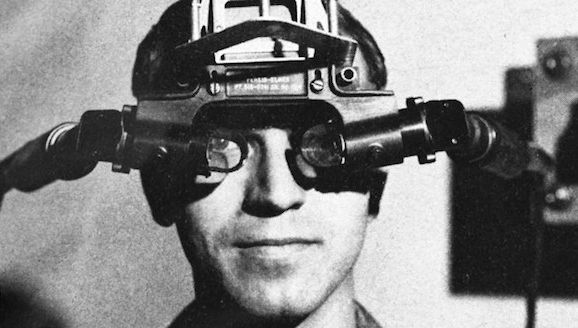
Digital technologies—AR/VR, spatialised sound, AI, real-time creation—are now fully embedded in a wide range of artistic practices and creative sectors (gaming, film, audiovisual, performing arts, visual arts, music), with growing interest in “immersive creation,” a term now central to the ICC. This phenomenon calls for critical analysis: What exactly are immersive technologies? What forms of creation do they enable? These questions were at the heart of the day’s programme, co-designed and organised by the deletere laboratories, based at the Couvent Levat in Marseille. “We wanted to go beyond the usual narratives around immersion by proposing a holistic experience: deconstructing the very notion of ‘immersion’ through reflection, then confronting it through sensory experience via performances and installations. A short-circuit approach where thought and perception feed each other, allowing audiences to experience immersion differently, beyond preconceived ideas,” explained Adelin Schweitzer, founder of the deletere laboratories and an artist known for his iconoclastic XR practice. The round table “Immersion… I Write Your Name” brought together Marie Point (co-president of PXN / Director of Dark Euphoria), Claire Chatelet (associate professor in audiovisual and new media at the University of Montpellier), Jean-Marie Dallet (artist, curator and professor at the École des Arts de la Sorbonne) and Charles Ayats (artist and designer), to examine the polysemy of the term “immersive.” “This word first appears in the 1970s, during the second wave of virtual reality. Since then, its use has intensified, especially as an adjective,” noted Claire Chatelet. Like “Metaverse” or “Artificial Intelligence,” “immersive” has become a generic, omnipresent term among artists, researchers and ICC professionals—yet it covers extremely diverse realities. “An immersive experience is not necessarily technological,” emphasised Marie Point, urging a more audience-centred approach: “Are audiences placed in a physical or virtual environment? Are they encouraged to interact? With avatars? With other spectators?”If the use of a technological device does not suffice to define an experience as immersive, should we instead speak of technologies that construct immersion? In this light, generative AI could be considered an immersive tool “by dynamically modifying narrative pathways, for instance in a film,” explained Jean-Marie Dallet. Immersion also forms the basis of a new market, embodied by infrastructures like The Sphere in Las Vegas or cultural venues such as the Atelier des Lumières in Paris, noted Charles Ayats.
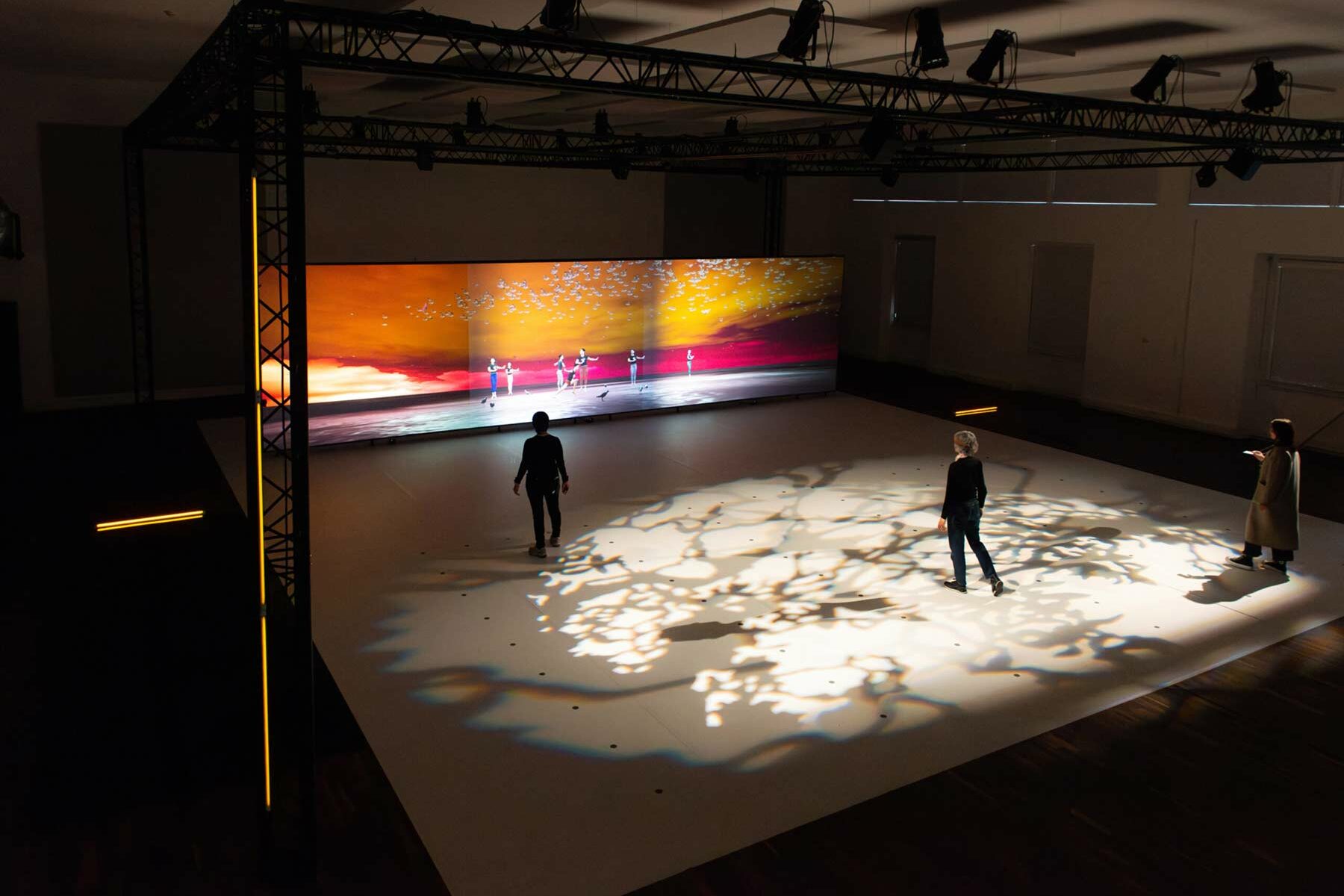
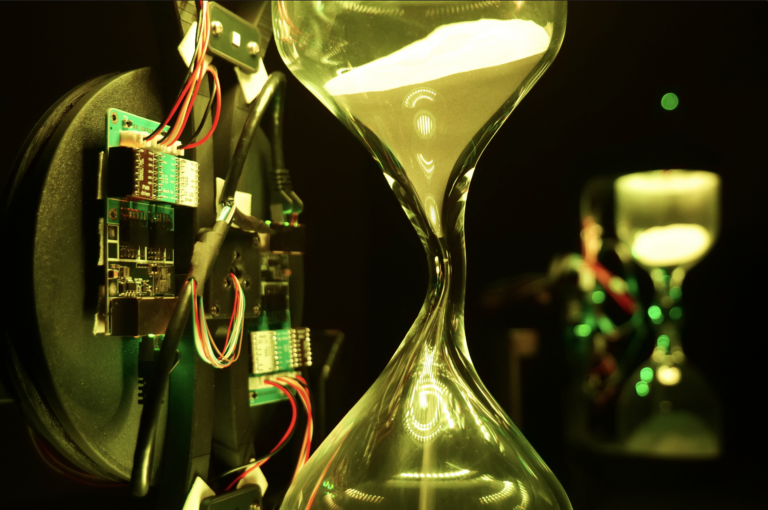
After the discussions, it was time for experience. The afternoon offered participants a physical, sensory and intimate immersion through a selection of performances and installations by Marseille-based artists and collectives: #ALPHALOOP by Adelin Schweitzer, Transvision by Lucien Gaudion and Gaëtan Parseihian, EVENT by ELEVEN (n+n Corsino), HITar by Andrea Martelloni and Wonderland by the deletere laboratories. These works explore a broad spectrum of immersive technologies: artificial intelligence, deep learning models, image generators, VR headsets, spatialised sound systems, and more. Each experience was paired with a mediation workshop designed to collect participants’ reactions and fuel collective reflection on immersion and its implications. Christine Esclapez, professor of Music and Musicology and member of PRISM’s board and scientific committee, along with PhD candidates Agathe Mangialomini and Mélanie Egger, compiled these insights into a reflection report:
“Faced with the diversity of technological devices explored today, one constant seems to emerge: the return to the body as a fundamental anchor point. These devices make us perceive by bringing us back to our own bodies; they force us to be, to experience an embodied perspective of the self that allows us to rethink established categories in the face of the novelty of what we feel. Regardless of the complexity or identification of the technologies involved, the first reception invariably passes through sensation—a body that feels before understanding—only then questioning what is happening with a return to the intellect. As one participant noted after experiencing Transvision: “It’s the first time I’ve felt sound as material. The bodily stimulation caused by the vibrations disrupted my sensitivity so much that sound itself seemed like a physical / bodily stimulus.”
Next, multimodal perception—where multiple senses are activated—invites an active reconstruction of the experience. One is no longer a passive receiver but situated in an in-between state: neither entirely spectator nor entirely oneself, but oscillating, with the body becoming mediator. This position requires a constant reframing of what is received, intellectually or sensorially. Our bodily landmarks renegotiate themselves when technology is added to our bodies, as expressed by a participant in #ALPHALOOP who felt both “out of phase and synchronised with” the work. This return to the body is all the stronger when the experience is disorienting. The more technology disrupts, the more it forces us to anchor ourselves in reality, to seek in our sensations a stable reference point, even if this means intellectualising them.
When discussing immersion, it is essential not to confuse the immersive experience with the experience of immersive technology. The former belongs to the realm of the sensorial—an engagement in which the relationships between perception and spatiality, between presence and representation, are reconfigured. The latter refers to the technical devices that frame and modulate the conditions of this experience. The mistake would be to reduce the immersive experience to its technological support, to believe that the mere sophistication of the device is enough to generate a sensorial experience.
Yet technologies proliferate with increasing intensity. Virtual experiences multiply, algorithmic architectures grow more complex, while understanding does not keep pace. Far from being fully mastered objects, these technologies reveal an irreducible opacity—even according to some engineers who admit that algorithmic behaviour sometimes eludes those who created them.
This calls for a reconfiguration of the role of the humanities and social sciences. Beyond providing commentary or critical accompaniment, they form part of an archaeology of knowledge, as defined by Michel Foucault (The Archaeology of Knowledge, 1969): not a quest for origins but an illumination of the conditions of emergence and structuring of discourse. Applied to contemporary technologies, this approach interrogates not only their technical structures, but also the rationalities they generate, the distributions of the visible and the expressible they institute.
We must therefore examine not only what these devices do but what they make us do: to thought, to perception, to modes of expression. Likewise, we must consider the transformations these technologies generate in aesthetic reception. This is not merely a technical issue, but a political one: the redistribution of forms of knowledge, the reconfiguration of regimes of visibility, and, more broadly, the inscription of the sensorial within the realm of the thinkable.”
This day—grounded in dialogue and experimentation—illustrates PEPR-ICCARE’s ambition to break down barriers between scientific research, innovation and artistic creation. To strengthen these bridges between scientific communities and cultural and creative actors, several initiatives have been designed: the PEPR-ICCARE “acceleration days” (the next HARMONIE meeting, “Music for Image and AI: Issues and Perspectives,” will take place on 27–28 March during the International Music & Cinema Festival), as well as ARIANE, a platform designed to facilitate encounters between research and professional communities. Its aim is to identify key contributors across France and foster synergies and joint projects.
Through his experiences, Adrien Cornelissen has developed expertise in issues related to innovation and digital creation. He has collaborated with a dozen French magazines, including Fisheye Immersive, XRMust, Usbek & Rica, Nectart, and Revue AS. He coordinates HACNUMedia, which explores the changes brought about by technology in contemporary creation. Adrien Cornelissen lectures at higher education institutions and creative organizations.