Hybridization, a space for the unbound?
Article published on 31 March 2025
Reading time: 6 min
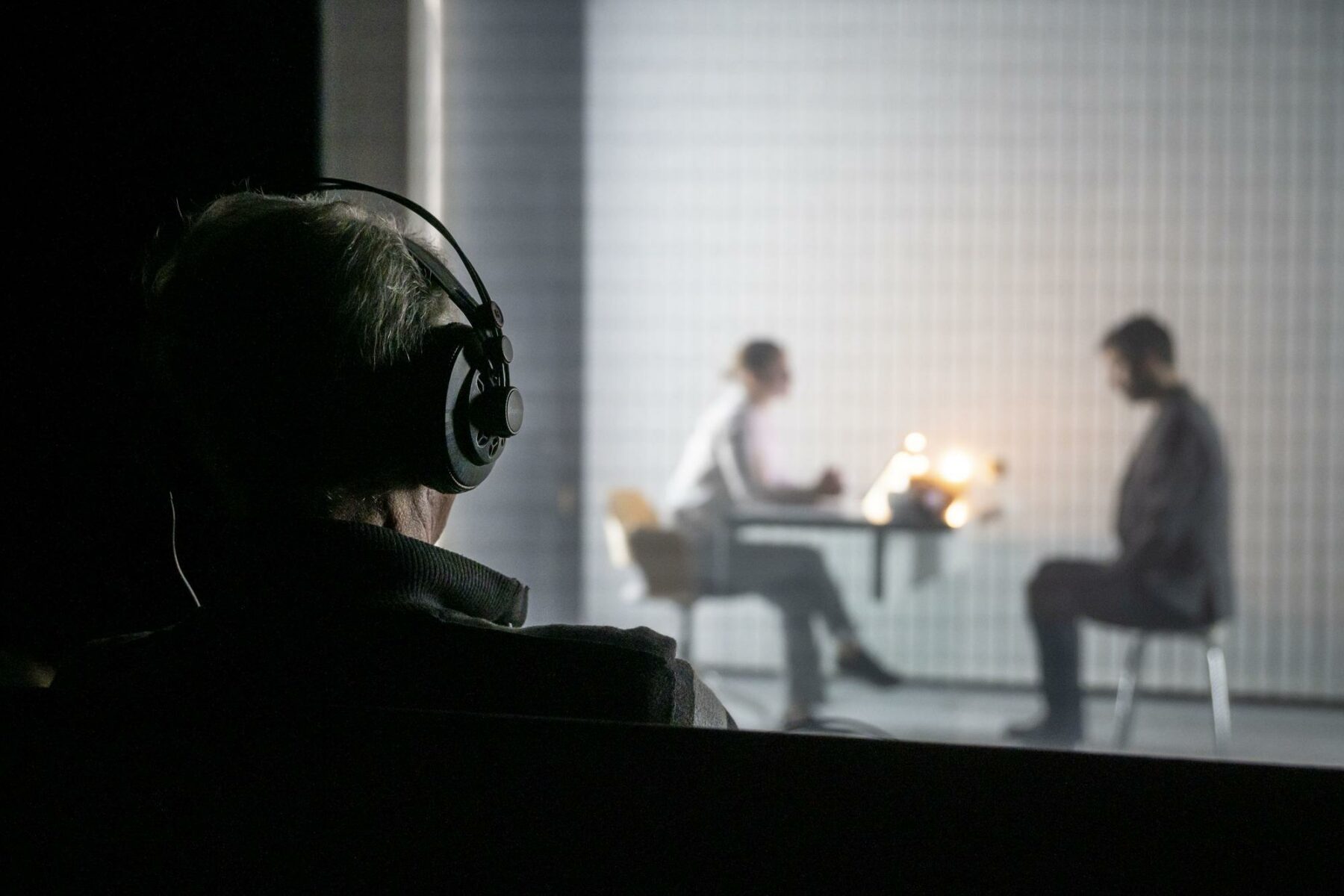
INVIVO 24.7 - © Nicolas Richard
Article published on 31 March 2025
Reading time: 6 min
Here and there, the term “hybridization” is used to describe performances, cultural experiences, and artistic approaches. The word is both clear and blurry, precisely because of the vast range of possibilities it implies. And perhaps that is exactly what artists and organizations are seeking when they refer to it. But what forms does this hybridization actually take?
More commonly, hybridization is a term from the life sciences—used in agriculture, botany, and zoology. In these fields, it refers to “the cross between two varieties or races of the same species, or even between two different species.” Going further, the Latin hybrida means “mixed blood,” a cross that leads to “the birth of specimens combining, to varying degrees, specific traits of both parents.” A process that ultimately “makes it possible to draw on certain qualities” belonging to different entities. In art, do these crossings also aim to extract the best from each space, discipline, or technique?
Without claiming to be exhaustive—given how constantly the topic evolves—we can identify several forms of hybridization within the artistic field.
The first brings together different artistic disciplines (theatre, dance, visual arts, music…) and sometimes different types of experiences—both real and virtual. In this regard, the INVIVO collective, which “creates hybrid performances at the intersection of theatre, immersive arts, and digital arts,” clearly affirms this stance. For Julien Dubuc, artistic director, the goal is above all to “explore new mediums to find the best form to tell a story.” He describes himself as a multidisciplinary artist—working with lighting design, video, and stage direction—and explains the collective’s early desire to break away from the divide, or even the hierarchy, between artistic and technical fields. Interestingly, the word “hybrid” only entered their description in 2021, with the creation of Les Aveugles, as a way to “invite audiences to imagine a form that’s somewhat unprecedented.” Before that, the term “immersive theatre” was used, “but then the word was co-opted by the field of virtual or mixed reality,” which, according to Julien Dubuc, erased its original meaning: “being at the heart of an experience.” Behind the term “hybrid,” INVIVO now presents works such as 24/7, which blends the real—through a theatrical staging with performers on stage—with a simultaneous virtual reality experience offered to spectators.
In 2026, the collective will explore another type of hybridization with Rabbit Hole, a project unfolding in two formats—an immersive performance and an interactive application—each blending real and virtual environments in its own way. Through these creations, Julien Dubuc promotes “the freedom to draw from a wide range of references, mediums, and artistic disciplines,” and to foster intersecting perspectives.
Another form of hybridization concerns spaces. In August 2024, Montréal’s SAT (Society for Arts and Technology) devoted a full feature to the topic as part of its collaboration with Moment Factory. Prompted by the COVID-19 pandemic and the drastic reduction of in-person cultural offerings, its first “connected spaces” projects developed into a new type of experience. And although the report acknowledges that “most online cultural offerings were not renewed” after a return to normal, it also notes that “the pandemic profoundly changed audiences’ cultural consumption habits, making public renewal more difficult.” Added to this were new constraints such as rising production costs and growing concern over the environmental impact of touring. In response, one of SAT’s main challenges today is “to imagine new compelling forms of performance that combine emerging practices with traditional approaches.” From the perspective of space, creating hybrid artistic experiences appears to be a way to ensure the global circulation of works while maintaining a certain physicality of performance—and to enable collaboration between creators located far from one another. One avenue explored is the hybridization of physical and virtual space in order to “reinvent spontaneous audience communities, without requiring spectators to be in the same physical space as the performers.” SAT is also experimenting with other hybrid configurations, such as Présence by Antoine Saint Maur, created within Satellite (its open WebXR platform): a live experiment where holographic performers meet their virtual audience.
The challenge for SAT is “to create a convincing sense of tele-copresence” so that “the reality resulting from the combination of different places [is perceived] as a new, unified reality.” This requires
giving performers the sensation of sharing the same space and the same performance, while simultaneously generating an emotional connection between the audience, the work, and the other spectators.
A third axis of hybridization lies in places—and therefore publics. Seeking greater permeability between social spheres, some organizations combine art with fields that are often far removed from it. The 3 bis f, located within the Montperrin Psychiatric Hospital in Aix-en-Provence, is a particularly innovative example. Artists are invited several times a year for residencies that include encounters with the hospital’s patients. Equipped with a performance hall and an exhibition space, the venue became in 2021 a nationally recognized Contemporary Art Center—the only one directly linked to a healthcare institution.
Another form of hybridization between spaces and publics emerges from the way “the ‘natural characteristics’ of territories tend to become sources of inspiration, creation, and dissemination.” An article from the Observatoire des politiques culturelles highlights Le Partage des eaux by David Moinard, a hundred-kilometer open-air artistic trail crossing the Monts d’Ardèche Regional Park. The project features artworks from multiple disciplines (sculpture, design, video, landscape art) woven into the area’s cultural and heritage sites. Aimed at local hikers as well as those who travel there intentionally, “the project makes it possible to meet walkers where they are, to literally ‘set the audience in motion.’ It also promotes a new connection to art, creation, and the environment by embedding them in a reflection on landscapes,” writes Claire Delfosse, geographer and director of the Rural Studies Laboratory and author of the article.
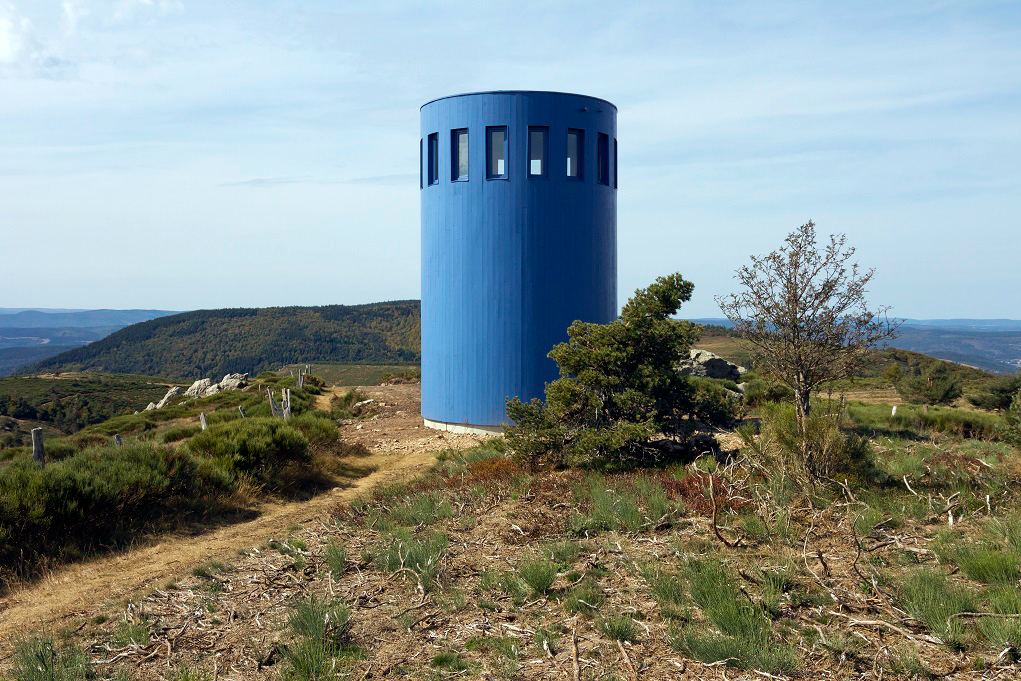
She cites additional examples of non-dedicated places repurposed as cultural venues, noting that “these spaces attract people who would not necessarily enter a traditional cultural institution, and they facilitate participation.” She views the rise of hybrid third places—combining libraries, community halls, cafés, bookstores, exhibition spaces, and venues for performance—as an opportunity to expand access to culture in rural areas. She also mentions a study conducted in Nouvelle-Aquitaine showing that “nearly all rural third places offer artistic and cultural programming: exhibitions, occasional cultural baskets, performances, artist residencies, or festivals.”
These various forms of hybridization can be seen as reflections of a contemporary desire to “break free from assigned categories,” as expressed by Céline Berthoumieux, Executive Director of HACNUM. The National Network for Hybrid Arts and Digital Cultures openly positions itself as a gathering place for unconventional entities. And while this approach still sometimes raises questions in France—where cultural policies remain highly sector-driven—it is received more easily abroad, “where concerns about the ‘purity’ of disciplines are less present,” she adds. Berthoumieux describes HACNUM as “a meeting place for artists and structures that did not recognize themselves in the existing frameworks, and who come here to nurture their singularity.” For Julien Dubuc, hybridization also encompasses a notion of “plasticity,” opening up a broad field of possibilities for imagining endlessly renewed crossings and collaborations. It is a space of freedom—one that, in his view, defines artistic practice more accurately than the term “digital arts,” which “still suffers from certain pitfalls and preconceptions.” Virtual reality, for instance, is often perceived—by both audiences and programmers—as off-putting due to the fear that “the technological tool distances the viewer from the work.” Combining terms and referring to a “hybrid performance” becomes a way to reassure.
As a witness to societal transformations “art is both a testament to the contributions made by civilizations brought into contact with one another, and a creator of new aesthetic and cultural visions.” Is it not inherent to artistic creation to result from hybridization, from multiple influences and intentions? Yet, “whatever their context of emergence, hybrids inevitably raise questions about their nature and their status, forcing us to interrogate their uncertain temporality and their position in relation to an initial entity with blurred contours,” writes Michael Werner in a conference entitled Art between Creation and Hybridization. Plenty to reflect on…