Eyes Wide Shut, Senses Wide Open… Immersion Beyond Screens
Article published on 12 February 2026
Reading time: 20 minutes
Immersion sonore - PRISM
Article published on 12 February 2026
Reading time: 20 minutes
Beyond screens and showy or spectacular audiovisual staging, immersion can also be experienced in a more subtle and sensory way—one in which sound, light, and tactile elements address the body and the psyche directly. This approach is guided less by technological escalation than by perceptual experience, leaving more room for emotion than for technical bravado. A closer look at these alternative artists.
As we know, immersion is having a major moment right now—both among economic and political decision-makers, since it sits at the heart of the Cultural and Creative Industries (CCI) agenda (as highlighted by the recent “Immersive Culture and Metaverse” call for projects launched under France 2030), and among large-scale cultural venues promoting ultra-visual, 360° audiovisual experiences as “a way to make art more appealing or to enhance the experience audiences have” (L’Atelier des Lumières) One might reasonably wonder, however, whether such a proliferation of technological effects—largely driven by the logic of screens and multi-screen environments—doesn’t ultimately become somewhat intrusive and overwhelming over time, offering little more than a purely spectacular take on the very idea of immersion. Might such an excess of images and information ultimately undermine what is most essential to an immersive experience—namely, the subtlety of perception and the depth of an intimate emotional response?
Originally, the principles of immersion were deeply intertwined with the interplay of sound, light, and architecture, as researcher Éric Monin—a specialist in lighting and the integration of sound and light within historic heritage sites—explains when he refers to the concept of the “spatial experience.” Twentieth-century contemporary artists who explored the first immersive audiovisual technologies naturally worked with these very elements—whether composers like La Monte Young with Dream House, conceived as a sound-and-light environment for the viewer, or Iannis Xenakis with Polytope de Cluny, an electroacoustic piece performed live with recorded sound and bursts of light. This approach—marked by a blend of intensity and subtlety, but above all by a sense of timelessness and the viewer’s physical disorientation—has continued through the chromatic environments developed by American artist James Turrell, whose recent exhibition at Gagosian’s At One space in Le Bourget offered a striking glimpse of the immersive power of his work.
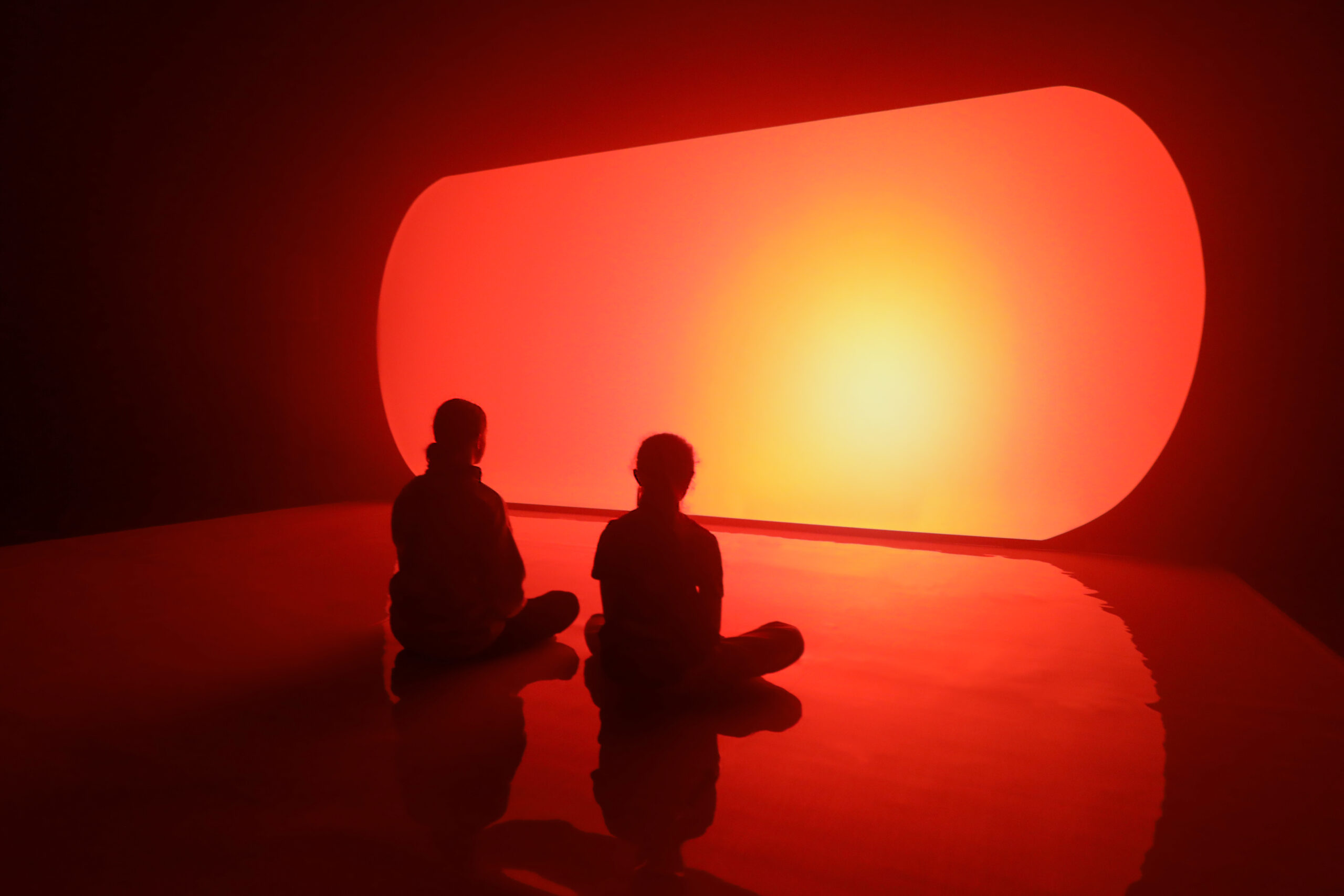
While the variations—particularly in the shifts of color within the rooms (both literally and metaphorically)—are often subtle, the intrusion of flickers and other psycho-sensory optical effects, inherited from the hypnotic principles of Dreamachine by Brion Gysin (developed in the late 1950s and experienced with eyes closed through pulsing light), in James Turrell’s work generates forms of physical destabilization—territory into which a more radical new generation of artists would plunge, drawing influence from the subversive culture of 1980s and 1990s electronic industrial music. The work of Austrian artist Kurt Hentschläger is particularly noteworthy in this regard. Whether in installations such as Feed, Zee, Karma, or the more recent Sub—presented just a year ago at the KIKK Festival in Namur—the former member of Granular Synthesis sets out to create immersive works built on principles of retinal persistence, requiring audiences to acclimate to the intense immersive experience generated by stroboscopic light effects that saturate the space. In his work, the screen is indeed used as a medium of projection, but the intensity it emits is such that its physical presence fades away, giving way to a kind of total mental immersion that often compels viewers to keep their eyes closed.
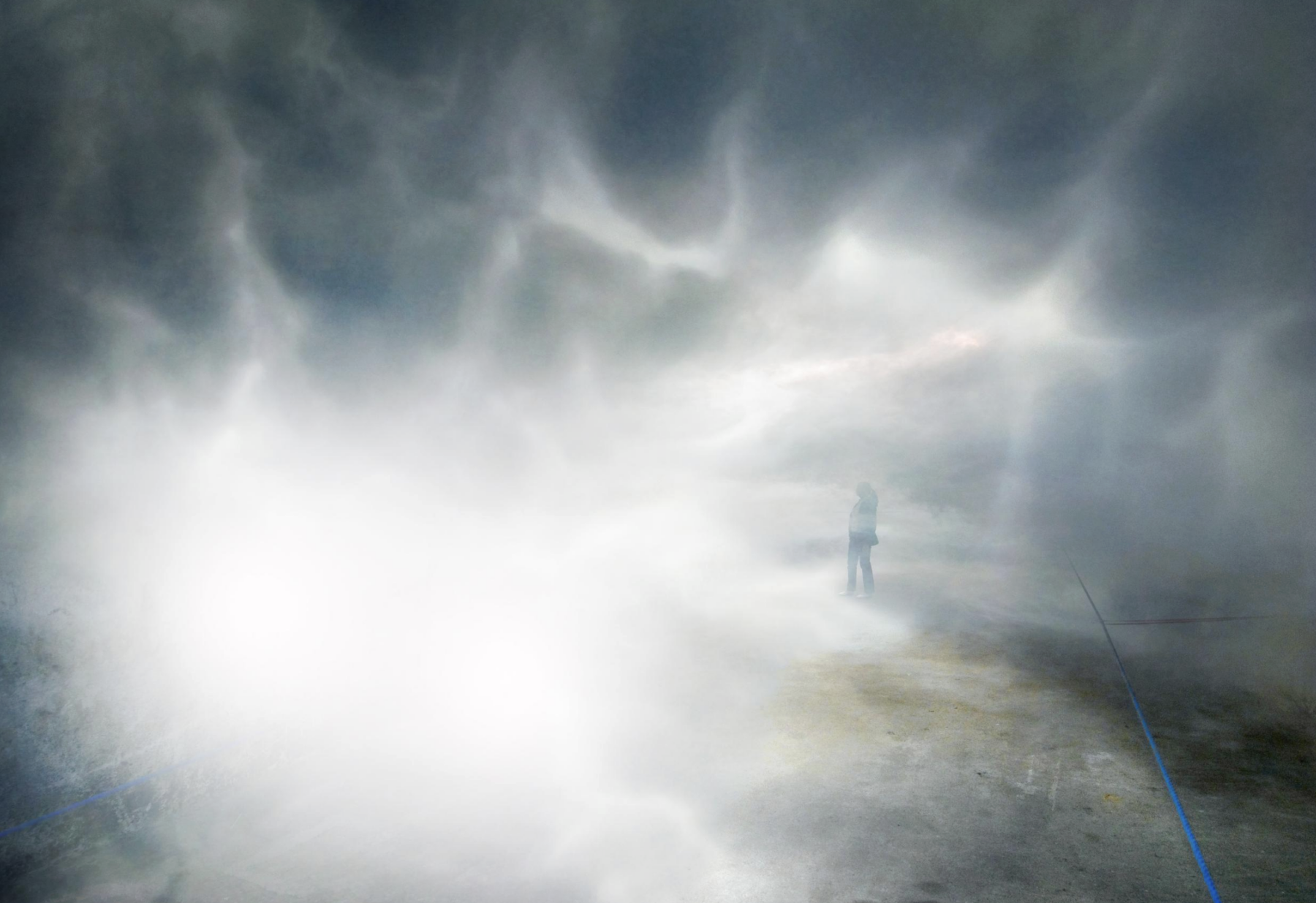
Among the next generation of artists, French artist Guillaume Marmin is also exploring striking sensory experiences through “moving environments,” which he relates to his long-held fantastical dream of “being able to step into the films (he) loved.” His installation Unseen, presented at the most recent Némo Biennale, explores the mechanisms of hallucinatory perception with a vivid sense of poetry, in a register that could be placed somewhere between Turrell’s colorful aesthetics and Hentschläger’s more physical dimension. Marmin’s work is based on hallucinatory phenomena called phosphenes—colored shapes perceived with eyes closed in response to light—although he emphasizes here a lineage more directly linked to Gysin’s Dreamachine, which can be experienced with eyes open. “Unseen is a project aimed at triggering hallucinatory visions from shimmering light sources, and thus at creating and transforming mental images that have no physical substrate in the strict sense,” he explains. “Neuroscience researchers such as Michael Rule have shown that by controlling the flicker frequency of light, it is possible to alter the shape and color of the visions (or phosphenes) perceived. We have therefore created various tools to precisely emit and program these light frequencies, offering a journey through three-dimensional tableaux. The audience is simultaneously both the medium and the observer of a work that exists somewhere on the threshold between the real and the virtual.”
Visual immersion is far from the only sensory gateway explored by artists. Immersion can also be bodily—often allowing spectators to rest their eyes while surrendering to tactile, almost massage-like experiences. French artist Julien Clauss has developed several works in which listening occurs directly through the body and vibration. In Isotropie de l’Ellipse Tore, participants press themselves against a hemispherical wooden structure to feel sound traveling from ceiling to floor, emitted by a suspended loudspeaker and set into centrifugal motion along the sculpture’s surface. In Pause, created with Lynn Pook, audiences lie in one of five hammocks, experiencing the oscillations of an autonomous audio-tactile machine powered by fourteen speakers transmitting vibrations through pulleys, arches, and springs.
In a similar vein, Marseille-based artist Gaëtan Parseihian, a member of the deletere laboratories, created—together with Lucien Gaudion—an equivalent installation called Transvision, but one in which the extension and tactile reception structure is collective: a canvas placed at the center of the space where the audience positions themselves and allows the main vectors of the experience—vibrations, frequencies, minimal light, and… absence of image—to guide them. Music thus becomes essential in what the creators describe as a “meta vehicle.”
“Music opens mental worlds to explore, but as soon as vision enters an experience of this kind, it narrows the space for imagination, it constrains it,” explains Lucien Gaudion. “The installation therefore engages tactile and auditory senses, which naturally generate images in our brains. The name Transvision comes from this: we seek to transcend the limits of vision.” This journey, at times approaching altered states of consciousness, is intended as a way to rethink immersion through a stripped-down, minimalist approach—“countering the current cult of performance” and aiming to be “a synesthetic experience of slowness down to its molecular level.” The project even aspires to extend beyond purely artistic realms: its creators have announced an upcoming research residency exploring potential links between the installation and therapeutic practices within the Culture and Health Program, in collaboration with the Solaris psychiatric unit of AP-HM.
The molecular relationship elicited by Transvision conveys an almost vital, organic dimension, a quality that is also present in the recent installation Je suis une Montagne by Éric Arnal-Burtschy, where the choreographic inspirations of its creator once again translate into a focus on the body as the primary site for experiencing immersion. Viewers, seated in deck chairs and suspended above the stage, are invited to keep their eyes closed, experiencing a sense of floating that allows them to focus on the various physical challenges awaiting them: rain, wind, intense heat, scents, and halos of bright light, among others. Like an ancient mountain subject to the rhythms of time and the seasons, they are invited to “feel that we are part of something much larger than ourselves, the flows of energy that make up our universe, our planet, and ourselves.” Sound remains essential here, yet it is accompanied by a strange, disorienting sense of movement. “The sound is deliberately highly spatialized around the audience, treated almost like a body moving around the people,” notes the creator. Many viewers indeed report feeling as if they are spinning, moving forward, or drifting during the performance. Even the perception of time is affected by these immersive sensations. “Je suis une Montagne lasts an hour, but most people feel it only lasts 20 or 30 minutes,” observes Éric Arnal-Burtschy. “It’s as if the body itself adjusts the perception of the duration of this cosmic immersion.” ”
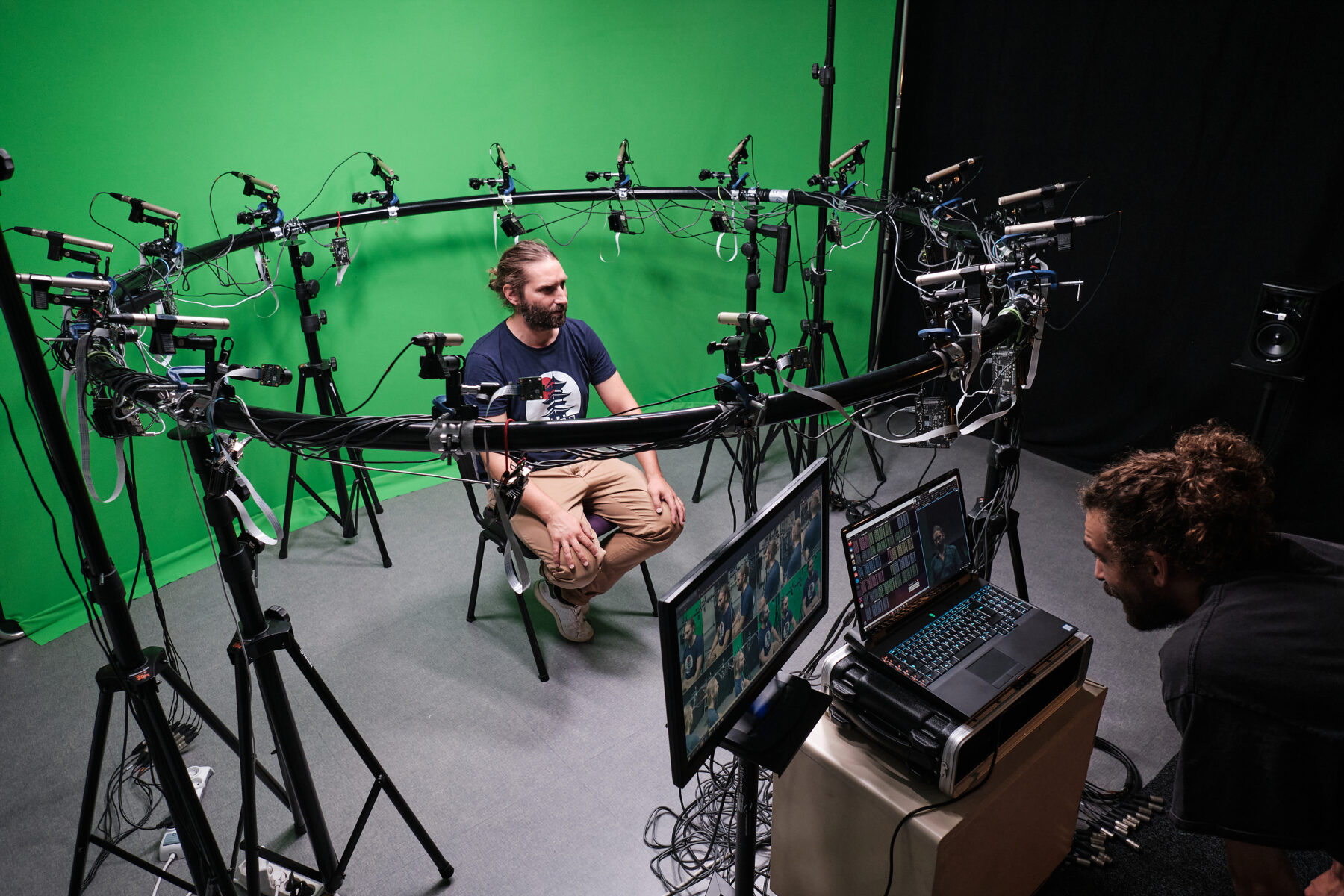
To create Je suis une Montagne, Arnal-Burtschy collaborated scientifically with a laboratory specializing in organic and molecular chemistry to design the work’s scents. This research-driven approach highlights how immersive sensory practices open pathways well beyond the art world. This is precisely the focus of PRISM, an interdisciplinary laboratory under the supervision of the CNRS, Aix-Marseille University, and the Ministry of Culture, bringing together researchers and artist-researchers specializing in image, sound, and music. “We’re interested in immersion for several reasons,” explains Sølvi Ystad, PRISM’s director and a PhD in acoustics. “Until now, we’ve focused on sound immersion, but with the multisensory immersion platform we’re developing, we want to study how humans perceive their natural environment.” One of PRISM’s goals is to better understand how environments influence behavior and perception—avoiding the sensory overload often experienced in overly spectacular immersive spaces. Short sounds, Ystad notes, can have powerful effects: “A sound shorter than 200 milliseconds—like a car door closing—can convey a whole narrative and influence perceptions of quality and safety.” As immersive and VR technologies proliferate, she warns, poorly designed experiences can have negative impacts. “It’s essential to adapt these systems to human sensory capacities.”
“Some studies show, for example, that an ultra-brief sound lasting less than 200 milliseconds can tell an entire story—such as the sound of a car door closing, which shapes perceptions of a vehicle’s quality and solidity and, as a result, can influence car sales,” explains Sølvi Ystad. “With the rise of new immersive technologies and virtual reality, we will be increasingly exposed to these virtual environments. And without careful attention to how we perceive them, such experiences can have negative effects on us. It is therefore essential to design these systems around humans and our sensory capacities, and to remain vigilant about how they are introduced into society.” Another key research focus of the lab is understanding how to reproduce the acoustics of a space as faithfully as possible, in order to identify which acoustic parameters are perceptually essential.
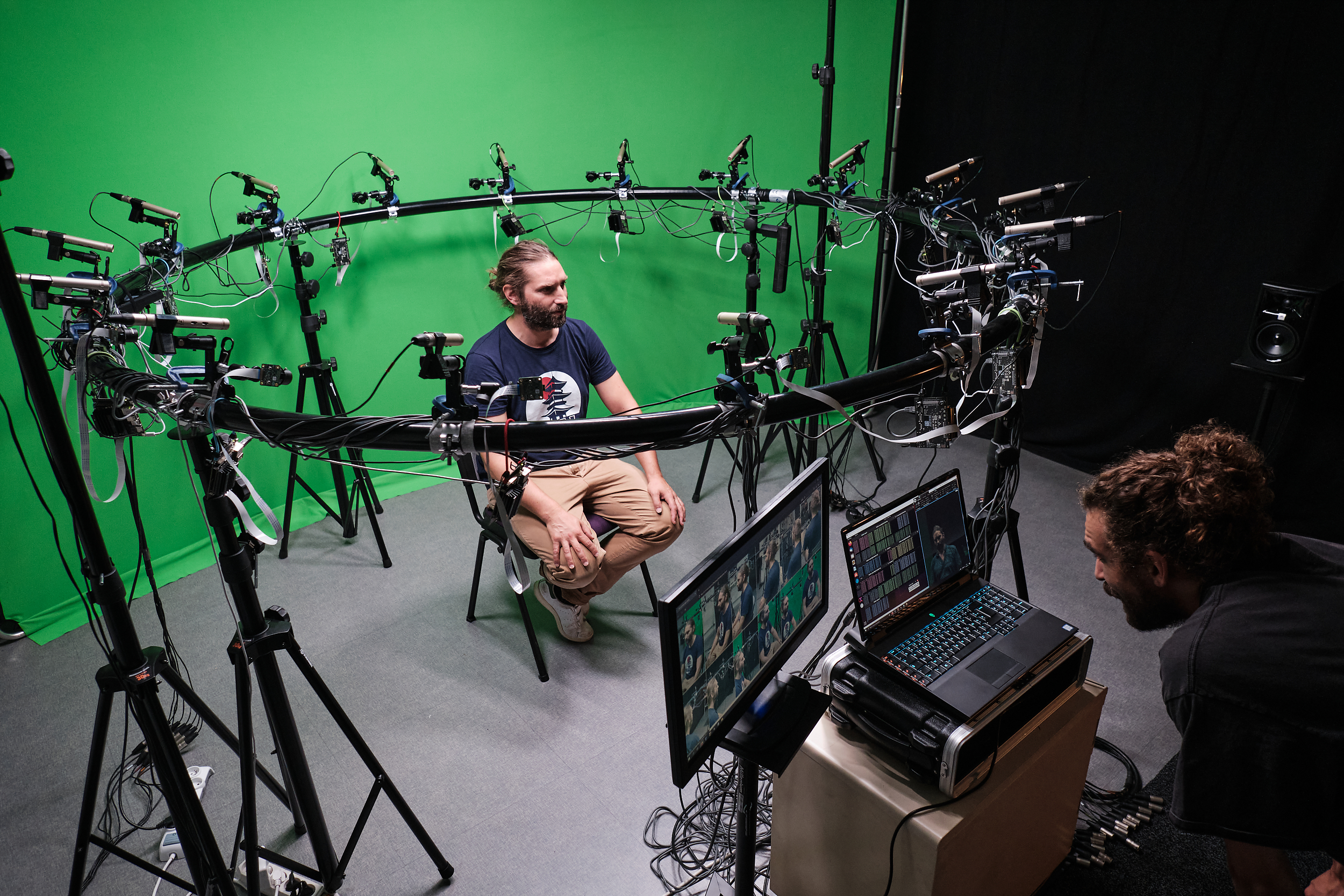
“Using various devices of our own design, we carried out multiple recordings in different locations as part of the ANR Sésames project, including at the Thoronet Abbey, famous for its exceptional acoustics,” continues Sølvi Ystad. “We then recreated the acoustics of these spaces in the laboratory to evaluate and compare them perceptually. Our setups also allow real-time interaction with the recreated spaces, which lets us observe how people behave in a given environment. For example, this is how we studied the influence of 3D soundscapes on cellists’ performance.”
As Gaëtan Parseihian—himself a collaborator with PRISM—suggested with the Transvision installation, sensory immersion can also be highly relevant in healthcare. PRISM notably worked on creating an immersive room equipped with speakers at the psychiatric hospital in Pierrefeu-du-Var. “Initial results show that immersive, multisensory sound helps calm patients,” notes Sølvi Ystad. “Virtual tours of spaces also attract the interest of physicians seeking alternative ways to soothe patients.”
To explore all of these potential areas of application, PRISM relies primarily on psychophysical approaches in its research. “That means we present participants with perfectly calibrated simulations and ask them to evaluate them. This allows us to establish links between acoustic parameters and the perceptions they generate,” summarizes Sølvi Ystad. “In the context of auditory immersion, we generally assess sensations such as envelopment, the perceived proximity of sound sources, timbre, and so on. The near field is also a key area of research at the lab. Our perception is altered within the peripersonal space, and we are particularly interested in understanding how perception changes depending on the distance from a sound source.”
Sensory immersion is therefore not a concern limited to the world of technological and digital art, as creators like Julien Poidevin, the Soundwalk Collective when designing their wandering listening devices, or the duo Félicie D’Estienne D’Orves and Julie Rousse when composing sound scores for geospatial readings of stars in their laser installation EXO, continue to explore. Sensory immersion is simply one of many ways to better understand and represent the life and environment around us, in order to more effectively serve the humans who inhabit it.
Laurent Catala