Digital Cultures: a driver for transmission to younger generations
Article published on 7 July 2025
Reading time: 4 MIN

© Le Safran
Article published on 7 July 2025
Reading time: 4 MIN
What mediation strategies make it possible to build a connection with younger generations, who are sometimes distant from the cultural offerings in their area? Can digital cultures become a driver of emancipation, participation and access to art? A closer look at several initiatives that do not hesitate to mobilise financial and human resources and offer an irrefutable demonstration: in the digital age, arts and cultural education cannot be relegated to the status of a mere adjustment variable.
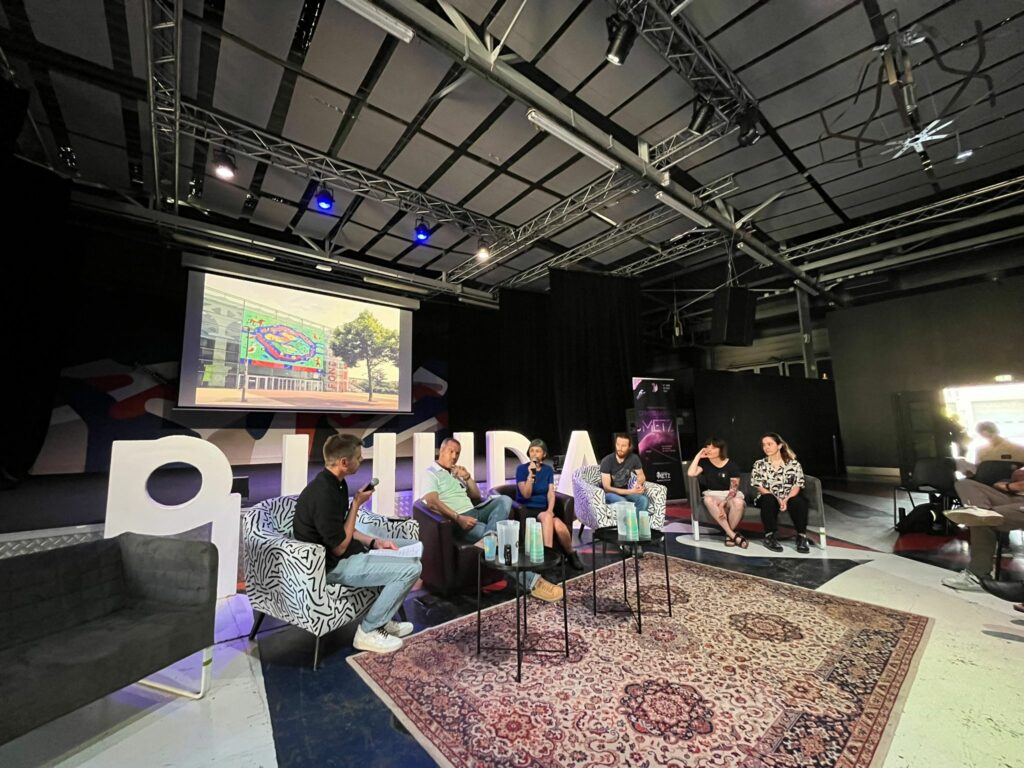
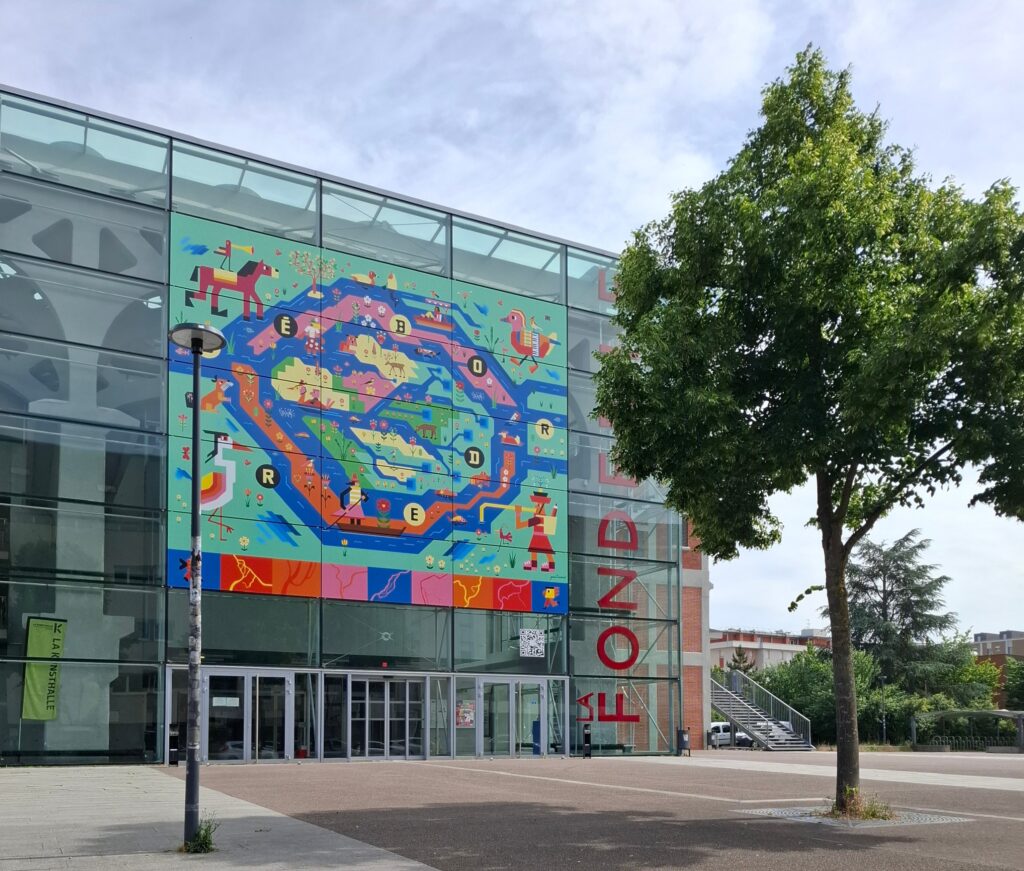
Around one hundred culture professionals gathered in June for the Constellations festival organised by the City of Metz and the third place BLIIIDA. On the programme, the main theme is clearly set out: CTRL + ART + EDUC, or how, in a digital world, to rethink arts and cultural education (EAC) for younger generations. The goal? Not to be content with a narrative about a supposedly “connecting” digital world, but to question real mediation needs and how cultural organisations adapt their approaches to the uses and expectations of new generations.
Several pilot projects place audiences at the heart of the transmission process. Valérie Perrin, head of the Service Universitaire de l’Action Culturelle (SUAC) at the Université de Haute-Alsace, presents the outlines of a new cultural project integrated into the university campus. Here, digital creation is meant to be a way of staying in touch with younger generations. “We chose to launch this project with augmented reality works, notably with the work of Guillaumit. Augmented reality allows us to get around several obstacles: it guarantees access to works at any time, in outdoor spaces and free of charge via a smartphone. On this basis we deploy our mediators, who are themselves students on the campus.”
This echoes the policy of Le Safran, a certified venue in Amiens that has organised Safra’Numériques (a festival dedicated to digital cultures) since 2016. Le Safran is distinctive in that it is located in a working-class neighbourhood undergoing change, particularly with the recent arrival of the university. Ikbal Ben Khalfallah, director of the venue, explains his desire “to bring young people from the neighbourhood towards other digital imaginaries and, in parallel, to ensure that the festival resonates with its territory”. On one side, a segment of the population that experiences the digital divide as a daily reality; on the other, the presence of higher-education institutions focused on digital fields (IUT, design school…); and between the two, young people who are already familiar with digital practices. Le Safran fully embraces its mission: to reach its audiences in a meaningful way through exhibitions and workshops, all supported by mediators. “We have nearly four permanent mediation staff year-round for Le Safran and 80 mediators during Safra’Numériques.” These are substantial resources for the scale of the organisation—“almost 25% of the festival’s budget,” notes Ikbal Ben Khalfallah—and they highlight a less visible issue: the need to work on mediation over the long term.
“In these conditions, mediation cannot be the budgetary adjustment variable. We need to think of the year-round activities and the festival as a continuum,” affirms Ikbal Ben Khalfallah. This desire to work over an extended period is shared by Tiphaine Huet and Lucie Olivier from the Transmission 360° unit at Ososphère in Strasbourg, who point out that “mediation schemes are not always transferable from one organisation to another.” Precisely for this reason, Transmission 360° has set up an original initiative: creating a year-round community of mediators that is entirely open to anyone who wishes to join. “Mediation is carried out by a community of 150 volunteers and therefore by the audiences themselves. This allows people to take ownership of the artistic project in a different way and to move beyond the expert–learner relationship,” explains Lucie Olivier. In other words: to receive, restitute, document and transmit rather than to “educate”.
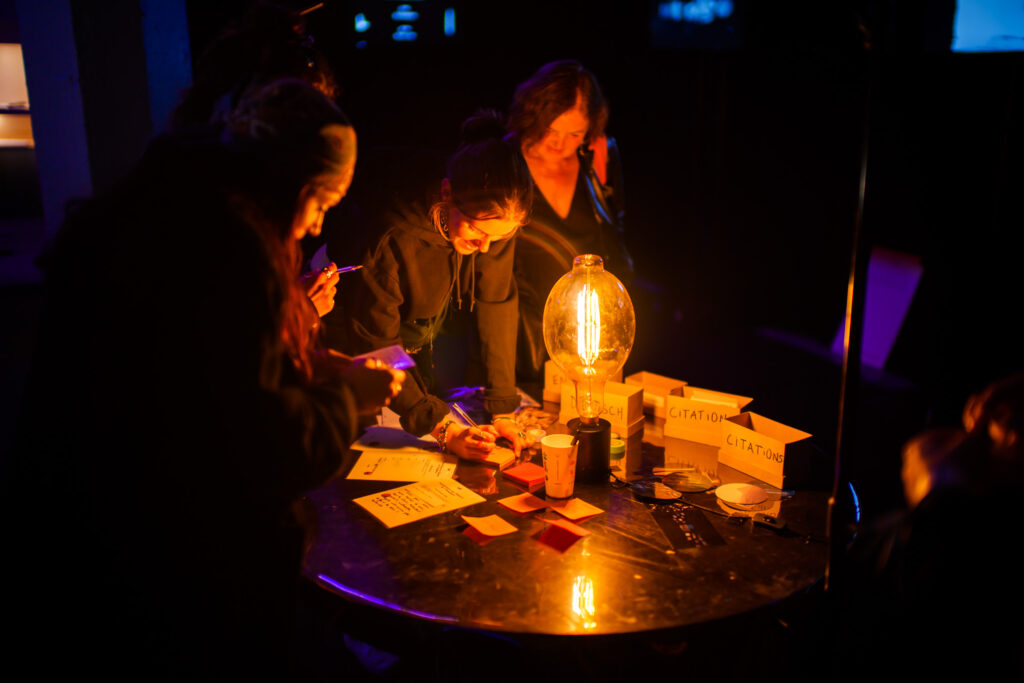
This philosophy also underpins the work of La Ligue de l’enseignement. Paul Oudin, cultural delegate for the Moselle federation, presents the digital workshops aimed at young audiences. These are small workshops in reduced groups where children take part in every stage of making a film—writing, sets, shooting, editing—such as in the Cinés Kraftés workshops (by Guillaume Leprévost and Sarah Poulain) and the film Julia n’aime pas lire. “To discover digital creation and feel invested in it, it is important to have your own creative practice. You become an actor, not just a spectator. What we enjoy is seeing how the child can then become autonomous,” says Paul Oudin, adding, “a child’s pride in presenting their work is a driving force in their appropriation of digital tools.”
While digital creation is a powerful lever for engaging young audiences, it often takes singular forms (immersive, participatory, interactive) and calls for specific technologies (VR headsets, smartphones, large-scale projections, etc.): these formats require renewed, tailor-made methods of mediation. Myriama Idir, co-founder of the Prix Utopi·e and an independent curator in urban and contemporary art, contributes to part of the Constellations festival programme. She emphasises the complexity of presenting digital works in public space, stressing “the need to accompany audiences as they move through the city, beyond the simple technological fascination sparked by a monumental projection, in order to bring out an artistic line of questioning.” It is therefore a matter of creating the conditions for sensitive, contextualised transmission without revealing or impoverishing the aesthetic experience—an equilibrium that can be difficult to achieve. This is also underlined by Antonin Jousse, visual artist, researcher and teacher at the École Supérieure d’Art de Lorraine in Metz: “The line between presenting a work and explaining it can be a fine one. The role of the artist is also to ensure that the invitation to experience an artwork is clear and intelligible. But that cannot replace a genuine mediation framework.” Finally, Jean Boillot, artistic director of the company La Spirale and of the Villa Mosellane (currently in prefiguration), sheds light on a characteristic specific to digital cultures: “Today, artistic forms that integrate digital technologies are multiple, almost infinite. This means that mediation and presentation must be rethought each time, tailored to each work and each context. It is a major challenge for presenting organisations.”
A challenge that fully deserves to be taken up: participation and access to art will not materialise without a close articulation between digital technologies and mediation. The two are now intrinsically linked.