Digital artworks to rediscover public spaces (Focus: Constellations)
Article published on 2 December 2024
Reading time: 4min
Un oiseau de passage - Luminariste
Article published on 2 December 2024
Reading time: 4min
A key event in the Grand Est region and beyond, the Constellations de Metz festival celebrated its 8th season this summer. With 35 mostly new artworks spread across around forty locations, this edition welcomed nearly one million visitors between mid-June and late August. In addition to a rich urban art programme featuring around ten works, two curatorial routes — Pierres Numériques and Arts et Jardins — invited the public to rediscover the Moselle’s public spaces and landscapes.
Espace(s) Libre(s): freedom as a driving force
Led by architect and visual artist Jérémie Bellot, these two routes, while distinct, share a common theme: Espace(s) Libre(s). They explore “the notions of freedom and oppression, appropriation and sharing, both individually and collectively.” Naturally, one thinks first of public space, as the festival unfolds across the city — from Fabert Garden to the majestic Saint-Étienne Cathedral, and even on the Moselle river itself with the namesake work Constellations.
Social spaces also take centre stage, notably with Masha, a work by Ukrainian artists Anton Dehtiarov, Marek Kvetán and Svitlana Reinish. Inspired by traditional matryoshka dolls, the figure appears abandoned on the pavement, left to her fate. Created in response to the war between Russia and Ukraine, this pop and playful project addresses notions of “territory and borders […], of freedom and social space [when] put to the test by various structures, whether those of power or those linked to questions of ownership.”
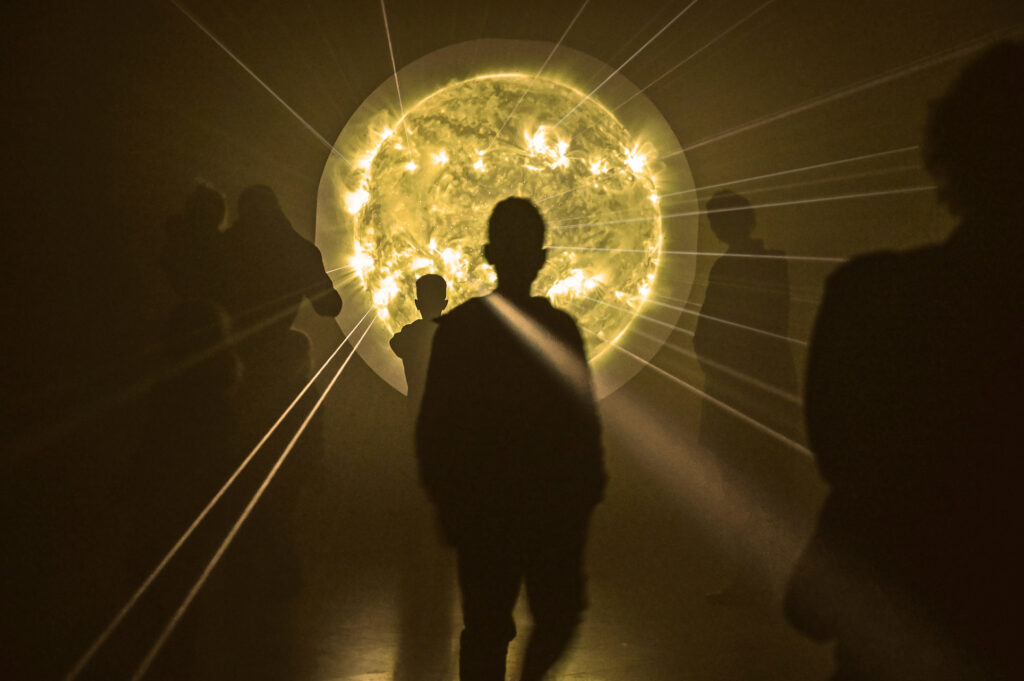
Metaphysical spaces emerge as well, with works such as Oh Lord! by Guillaume Marmin, which interrogates “concepts of infinity, of the divine […], and the mystical vision one can have toward the solar star.” Fed by various solar observation databases, the artwork impresses with its striking visual force, enhanced by the sobriety of the Trinitaires Church that houses it.
By inhabiting the city, the artworks of Constellations enable a renewed appropriation of urban environments, often perceived as purely functional, transforming them into spaces for contemplation and interaction. Far more than a backdrop, each space becomes an actor in an artistic dialogue between past and future. For the public, this interaction reframes the urban environment as a site for cultural encounter and reflection on contemporary issues, stimulating curiosity for their immediate surroundings.
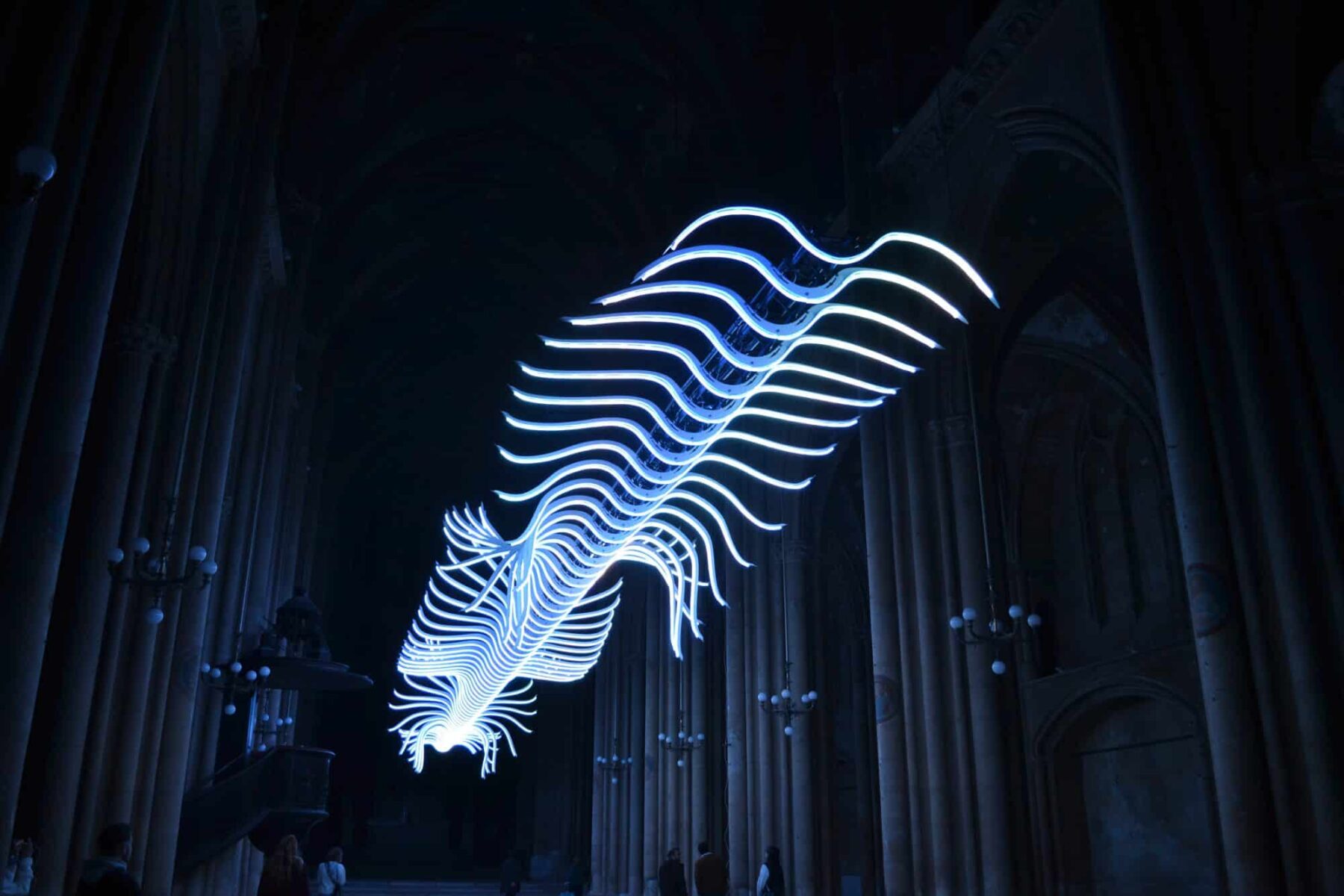
This interplay between artwork and location is evident in the two sequences of the cathedral’s video mapping, but it becomes particularly striking in the case of Saint-Vincent Basilica, desacralised in 2012. Suspended in the nave is Un oiseau de passage, by the duo Luminariste (Benjamin Nesme & Marc Sicard), a monumental light sculpture decomposing the flight of a bird — a technical feat made possible by the determination of the festival team.
“As an architect, I’m used to working with constraints and building a project from them. They shape my ideas, especially for the route,” explains Jérémie Bellot.
The result meets all expectations: the piece integrates seamlessly into the Basilica, appearing to float in the nave to the sound of delicate wings and birdsong. The duo is no stranger to the festival; the project echoes their earlier work L’envol, presented on the daytime route for the past three years.
A major new feature this year: Bellot curated the Arts et Jardins route for the first time, in addition to Pierres Numériques, which he has led for several years. This has strengthened the connection between the two, with the inclusion of works like Dream Mapping. showcasing the augmented reality creations of eight international women artists, including Canadian Sabrina Ratté and Algerian artist RankSSS also known as Sabrina Guechetouli. “We wanted to activate public space and push beyond the historic centre, expanding the territory and route for visitors.”
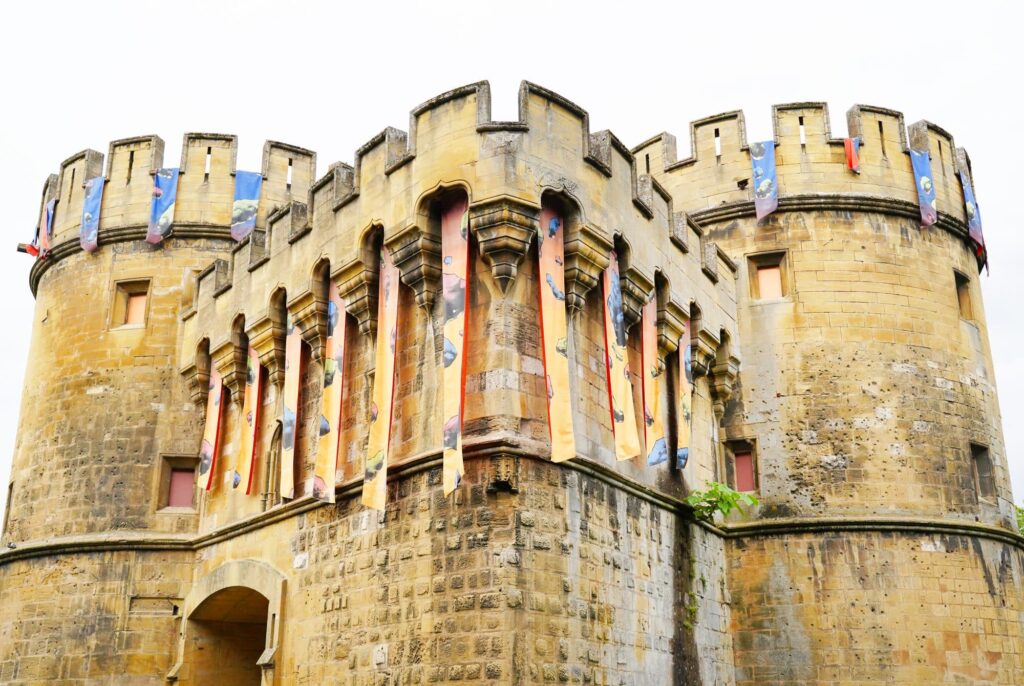
In the same spirit, Pierres Numériques opens spaces that were previously little or not at all accessible to the public — such as Saint-Vincent Basilica, the Récollets cloister, or Sainte-Blandine Chapel, which is central to an ambitious cultural project for the coming years. By investing in these emblematic sites, Constellations contributes to territorial revitalisation, stimulating the local economy through visitor influx while strengthening the cultural identity of Metz and the region.
Free and accessible throughout Metz, the event plays a key role in democratising digital art, reaching a far wider and more diverse audience than traditional cultural venues. Installed directly in public space, each project becomes a unique and playful entry point to culture, whether for seasoned audiences or complete newcomers.
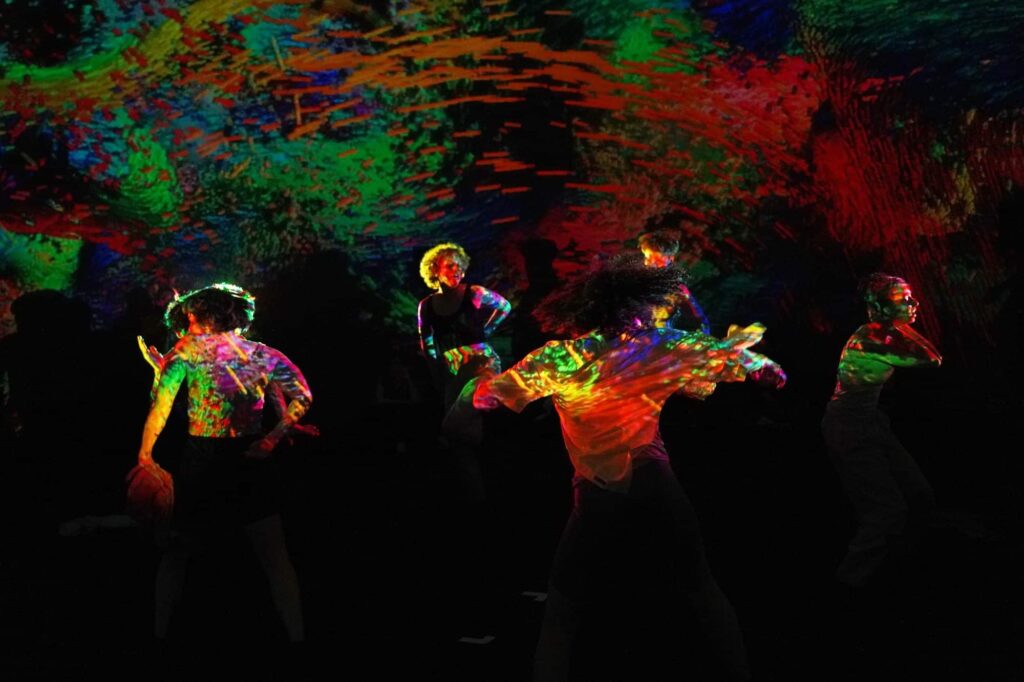
The festival is also a meeting place for artists. “We try to support artistic projects, especially through emerging collectives, giving them tools to develop their own artistic path and professionalise.” Black out in variation is a strong example: bringing together Collectif 804, Desaxismundi, Catmac and Romain Barthélémy, this spectacular dome-based installation was created during a residency at BLIIIDA, supported by major institutional partners.
Finally, across the Grand Est region, the festival contributes to a dynamic of acquiring and co-producing artworks. “Several projects are emerging in this direction, particularly those launched with the region […]. We are developing a catalogue of works acquired by the region — a real collection.”
This growing territorial cohesion anchors the festival in the regional cultural landscape. A powerful synergy, capable of elevating both local and national artistic scenes, and positioning Constellations as one of the major summer festivals dedicated to digital arts and cultures. On a national scale — and perhaps beyond?
To explore further, listen to the podcast interview between Romain Astouric and Jérémie Bellot.