BOOK CLUB #2
Article published on 17 December 2025
Reading time: 6 minutes
Article published on 17 December 2025
Reading time: 6 minutes
How does digital technology impact artistic creation? Answers can be found in recently published books. Our selection in brief: Painting & digital, Discoverability, Artificial Intelligence…
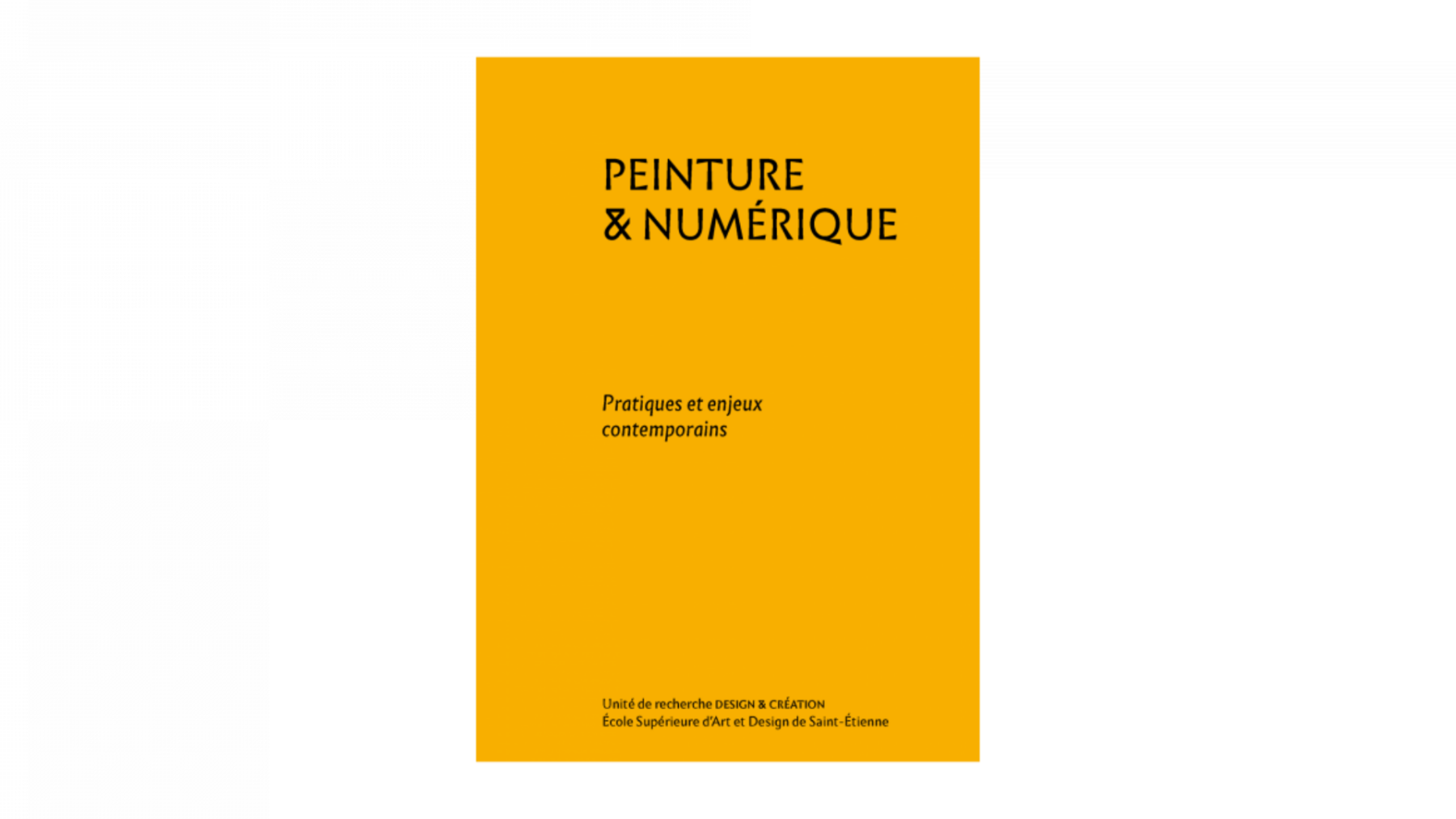
Ecole Supérieure d’Art et de Design de Saint-Etienne april, 2025
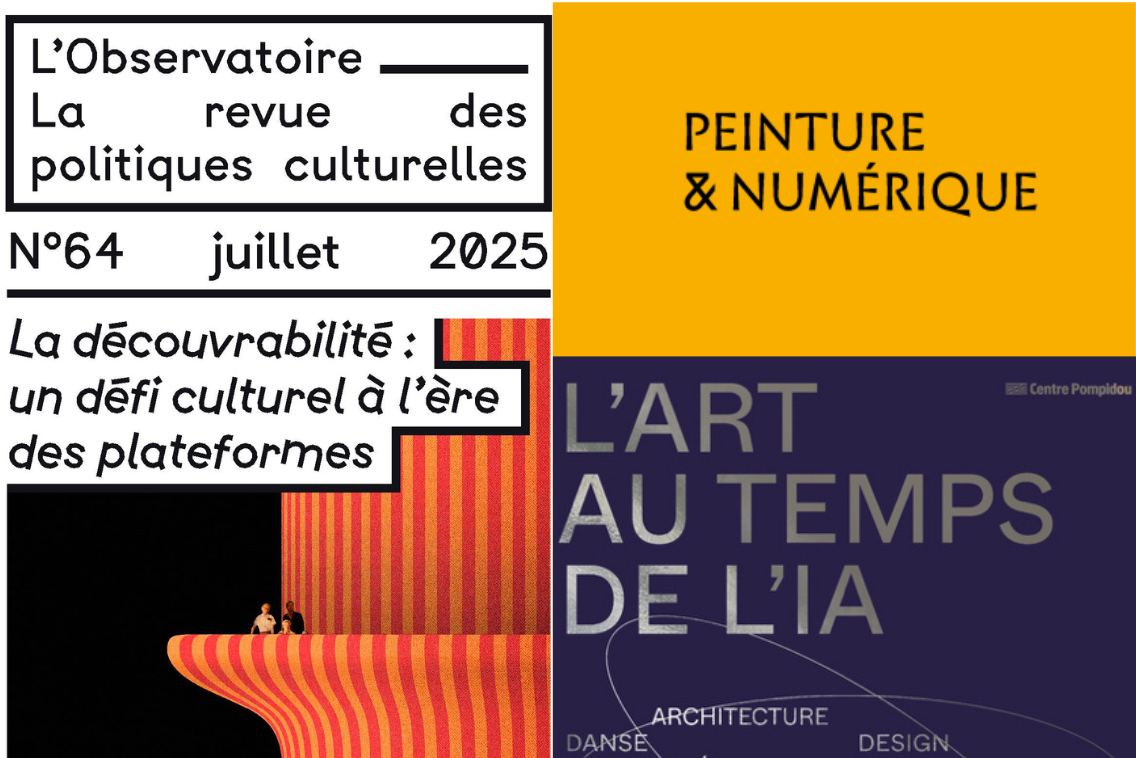
What becomes of painting in the era of infinite image production? This book reminds us that painting has never disappeared from artistic practice; on the contrary, it has continually reinvented itself, reappropriated by many artists. The work offers a compilation of cross-interviews between researchers and theorists (Noémie Cursoux, Didier Semin…) and a new generation of artists such as Jeremy Liron and Marine Wallon. These nine interviewed artists blend painting and photography, rooting their images in intimate and autobiographical relationships. They draw inspiration from internet culture, video documentaries, or screenshots—pauses on continuous streams of visual information. The book also examines how software has redefined modes of composition and painting (see the article François Boisrond et l’image numérique: Photoshop à l’épreuve de Goethe). Finally, several painters reflect on the role of painting in the face of AI’s emergence. As artist Thomas Lévy-Lasne summarizes, unlike photographs, “painting embraces its artificiality in its very nature, made of colored mud, crafted by hand.” A pointed reminder of painting’s (and art’s) role: less about seeking truth than confronting us with it.
AC
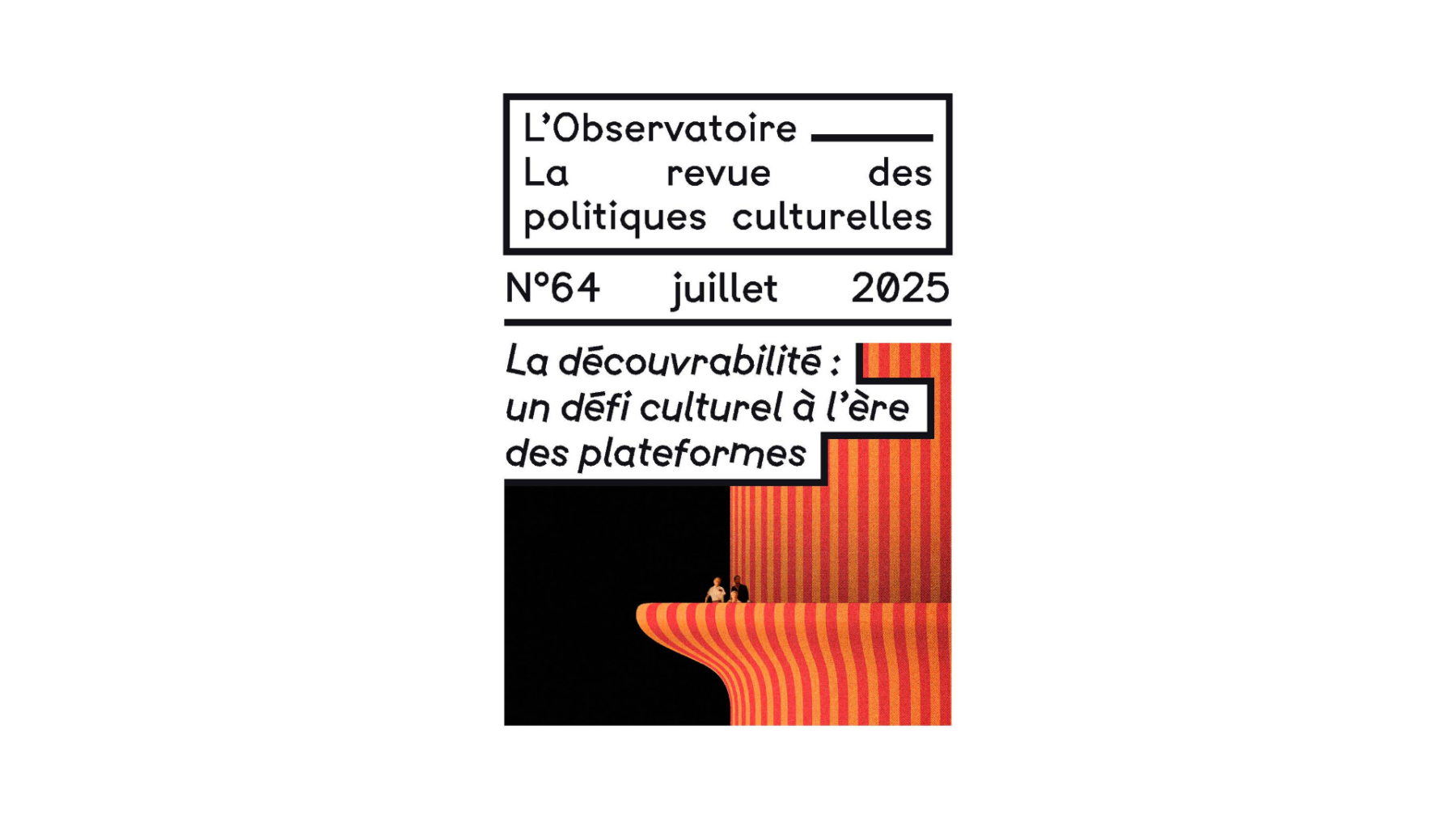
N°64 Observatoire des politiques culturelles
July, 2025
Discoverability! A term straight out of cultural policy jargon, to the point that it seems reserved for a few insiders. And yet, discoverability concerns us all. It refers to what makes content visible (or not) online in the age of AI-powered algorithms, filter bubbles, and audience metrics that shape our cultural lives… This 64th issue of the Observatoire des Politiques Culturelles journal tackles the topic brilliantly. It features around ten articles dissecting the mechanisms of discoverability on the Internet, the specific challenges for the cultural sector, and analyses of government orientations (see Anne Bellon’s study, “Le ministère face aux plateformes”). One of the most captivating sections explores subcultures. Special mention goes to researcher Delphine Chedaleux for her article, “Reading Romance on Platforms: Reading Experiences on Wattpad and AO3.” The same subject—romance and fan fiction—is examined through two digital lenses: Wattpad, gradually absorbed by commercial logics and algorithms promoting certain content; and AO3, a non-commercial platform where a filtering system restores freedom for readers to explore content. A clear illustration of existing tensions between business and independence, standardization and cultural diversity.
AC
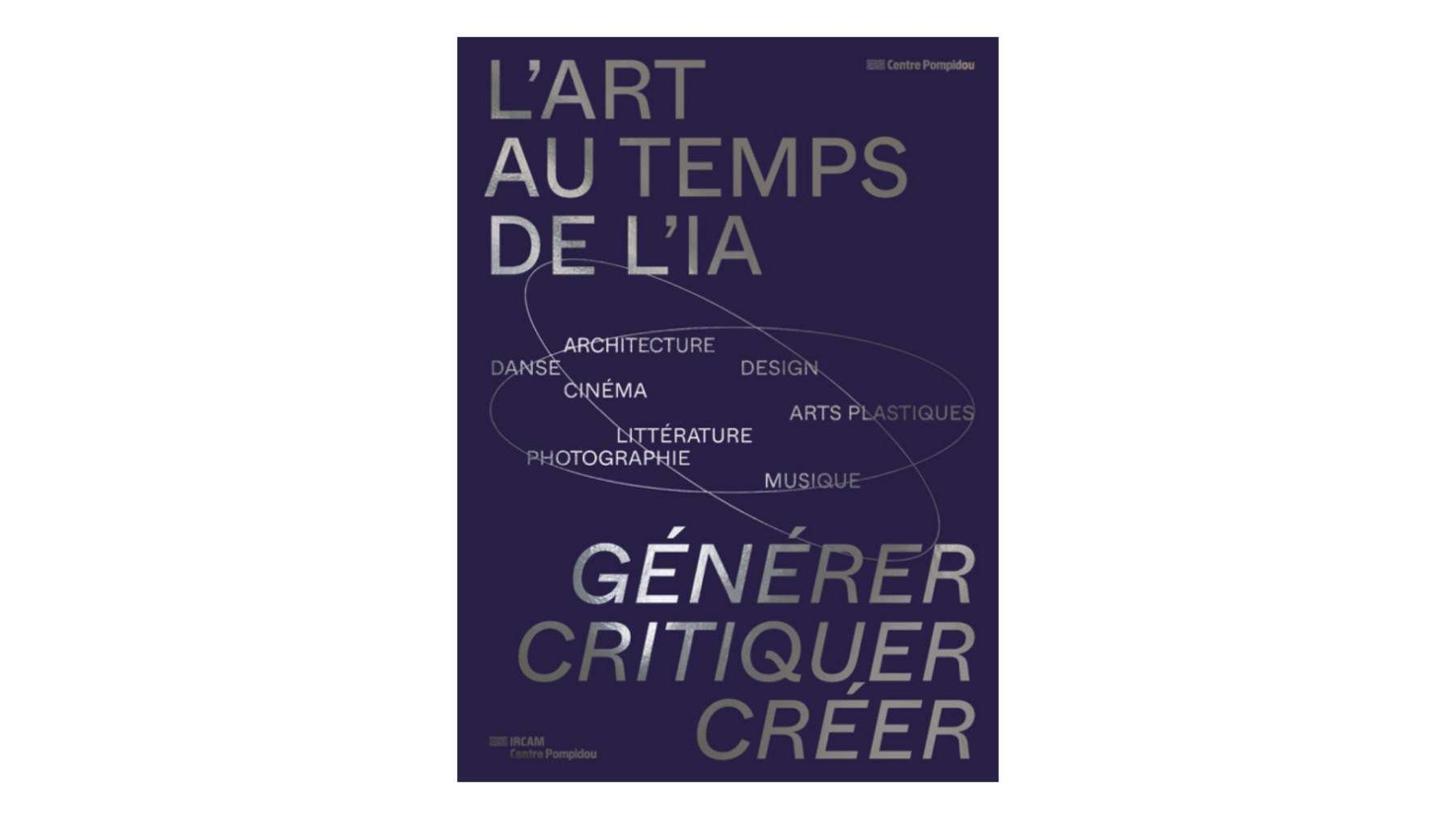
Centre Pompidou
June, 2025
art in the age of AI… generating, critiquing, creating: three words that resonate like promises. The verdict, once the book is closed? This compact volume of fewer than 200 pages (produced in partnership with the Centre Pompidou, IRCAM, and CNRS) cuts through the clichés that saturate debates about AI in art. After an introductory note and historical perspective, a constellation of artists and researchers—Philippe Esling, Baptiste Caramiaux, Gérard Assayag, Carmine-Emanuele Cella…—offers a panorama spanning music to literature, architecture to dance, cinema to visual arts. Here, AI is examined as a sensitive medium: it shifts the artist’s gaze, reconfigures creative processes, and opens new territories for experimentation. Well-referenced, rigorous, and generous in its analyses, the book serves as a compass for understanding the creative impacts of artificial intelligence, from machine learning to GenAI. Its final chapter, focused on political and cultural issues, directly addresses the disappearance of error, the weight of technical infrastructures, and the memory biases that shape our possible futures. The cherry on top: a conclusion that brings together a corpus of emblematic works by major voices such as Vera Molnar, Hito Steyerl, Holly Herndon and Mathew Dryhurst, and Trevor Paglen. A must-have for anyone seeking to understand what AI really does to art—and what art can do with AI.
AC
Are you an editor, author, or artist publishing a book aligned with our editorial line? Get in touch with us: we can feature it in our next Book Club article.