The Bibliothèque nationale de France (BnF), in partnership with several XR stakeholders, is piloting a legal deposit framework for extended reality works. But what is the real purpose of applying this system to immersive creations? From cataloging and preservation to discoverability, a closer look at the challenges behind this unprecedented initiative.
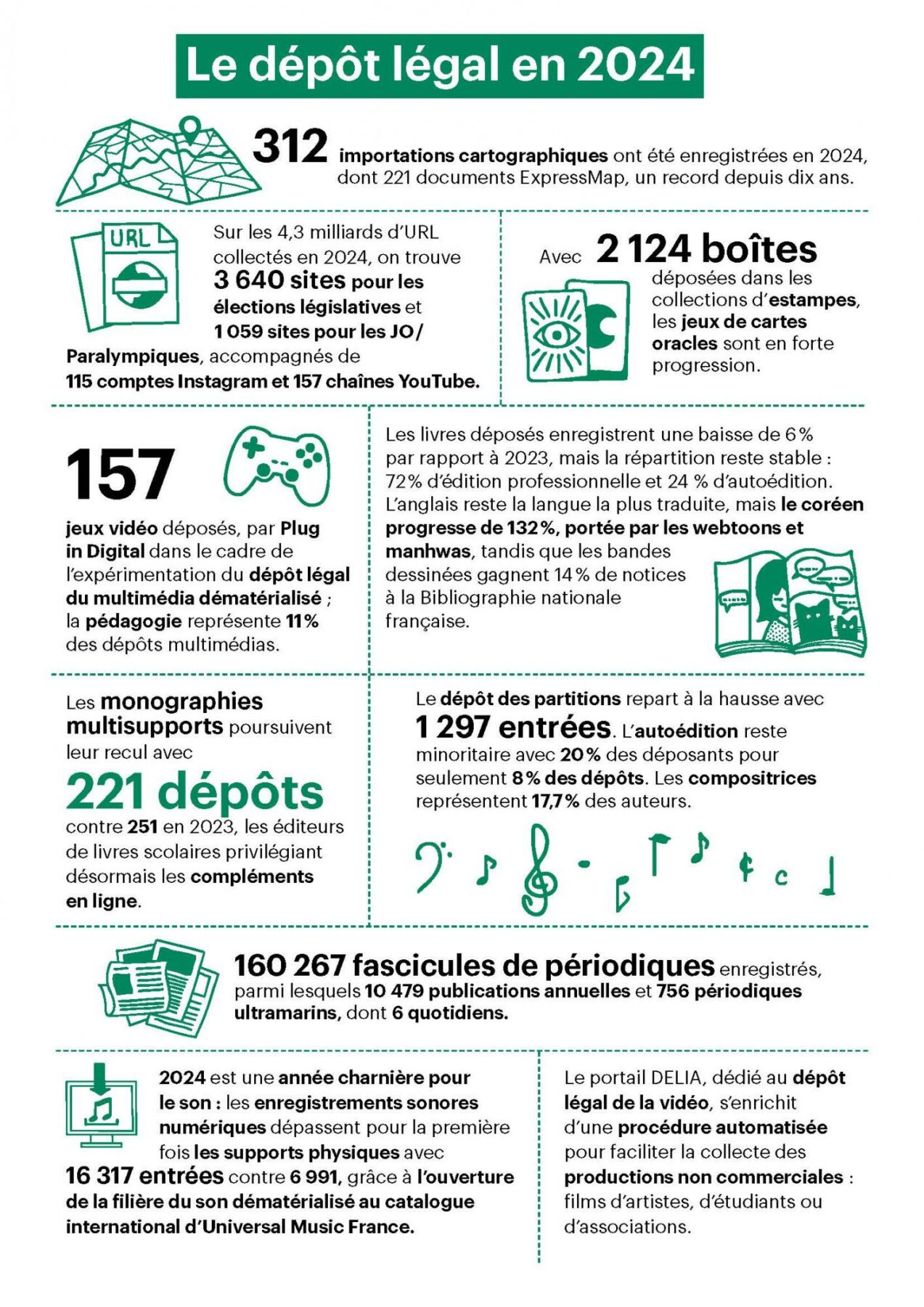
Within the walls of the BnF, out of public view, lie the collections gathered through legal deposit. Legal deposit is a statutory requirement imposed on all publishers. “Printed, graphic, photographic, sound, audiovisual, and multimedia documents, regardless of their technical process of production, publication, or distribution, are subject to mandatory deposit, known as legal deposit, once they are made available to the public,” states the French Heritage Code. Since 2021, the Darcos law has reinforced this definition, notably by explicitly including digital materials.
Collecting in a Moving Landscape
One of the primary objectives of legal deposit is preservation and cataloging. In the fast-shifting landscape of XR—where hardware platforms and technical standards evolve constantly—the task is particularly complex. “Preservation thrives on stability,” acknowledges Élodie Bertrand, coordinator of multimedia legal deposit at the BnF. “What is most challenging, but also most exciting, is that we are working in fields defined by constant innovation. There can be a gap between the formats for which we are beginning to establish deposit procedures and the reality on the ground. By the time we find solutions, new devices have already emerged. The challenge is to determine which formats we can accept, and for which we can guarantee long-term preservation and access.”
The institution is acutely aware of the importance of archiving these inherently fragile works. Bertrand points to the era of web documentaries as a cautionary tale. In the late 2000s and early 2010s, studios operated under tight production schedules and economic pressure, leaving little time to consider archiving. When Flash disappeared, the primary playback infrastructure for these hybrid formats collapsed. “Many of those works were lost,” Bertrand laments.
Toward Greater Granularity
For publishers, compliance with legal deposit requirements conditions access to certain forms of financial support from the Centre national du cinéma et de l’image animée (CNC). Yet fitting immersive works into existing categories is not always straightforward. One objective of the platform’s evolution is therefore to streamline procedures. As Bertrand explains, there is currently a single form covering all multimedia documents, originally designed with physical media in mind. Moreover, “some publishers produce several types of documents, so it made sense to create a single access portal,” she notes. The challenge is to strike a balance. “For some stakeholders, the form already feels burdensome, while others would like to go into much greater detail,” Bertrand observes. “We have to find a way to satisfy those who want more specificity without overwhelming those who already find the process too complex.” Adding to the difficulty, the mandatory information required in a legal deposit declaration is set by ministerial decree.
In consultation with industry representatives—including the PXN association of digital experience producers—the BnF chose to broaden the range of professional roles that can be credited, incorporating functions specific to multimedia creation that had not previously been recognized within the legal deposit framework: game narrative designer, 3D animator, and others. Pending the rollout of a new interface, depositors who wish to provide more detailed creative credits have been encouraged to use the comment field. The compromise aims “to move beyond the limited list of predefined roles without confronting depositors with an excessively long and potentially discouraging dropdown menu,” Bertrand explains. Publishers are also now allowed to submit supplementary materials that shed light on a work’s context: scripts, explanatory videos outlining the user journey, installation manuals, or accessibility specifications. For the most complex projects—those difficult to reconcile with the legal deposit framework—the BnF has worked with the CNC to provide certificates waiving the deposit obligation. The BnF’s platform, initially developed in the early 2010s, is expected to undergo further updates in the near future.
Archiving as a Strategic Imperative for the Creative Industries
If XR stakeholders are eager to document their works in detail at the time of deposit, it is because they see the process as an archival opportunity. “What can we pass on to researchers and digital art students that will help them understand and properly contextualize our work?” asks François Klein, co-founder and president of Digital Rise, an immersive content production company and member of PXN. “If, five years from now, a PhD candidate writes a dissertation on the evolution of audience engagement in digital experiences, how will they access our work in order to understand the authors’ creative approach and underlying mechanisms?” Marc Lopato, co-founder of Diversion, an agency specializing in immersive installations and events, shares this perspective. As service providers and distributors, Diversion’s teams encounter a wide range of immersive works. “It’s unfortunate that creators themselves don’t have access to these works—to understand the history of virtual reality, but also to know what has already been done, what worked, and what didn’t. There’s real value there for the future of the industry.” Diversion has built a database of several hundred works but has not yet found the time—or funding—to make it publicly accessible. “These are important initiatives we would like to pursue, but we are a small company operating within a very fragile business model.” ”
Bertrand echoes this archival imperative. “That is precisely the role of legal deposit, as stated in the very first article of the Heritage Code concerning legal deposit (Article L131-1): ‘legal deposit is organized in order to enable the collection and preservation of documents,’ as well as their ‘consultation.’ We are fully aware that these works are of interest not only to researchers but also to professionals, and we are striving to provide them with the means to write—and to understand—their history.”