A Charter to Define Conditions for Hosting Artists and Artworks
Article published on 28 January 2025
Reading time: 6 minutes
Article published on 28 January 2025
Reading time: 6 minutes
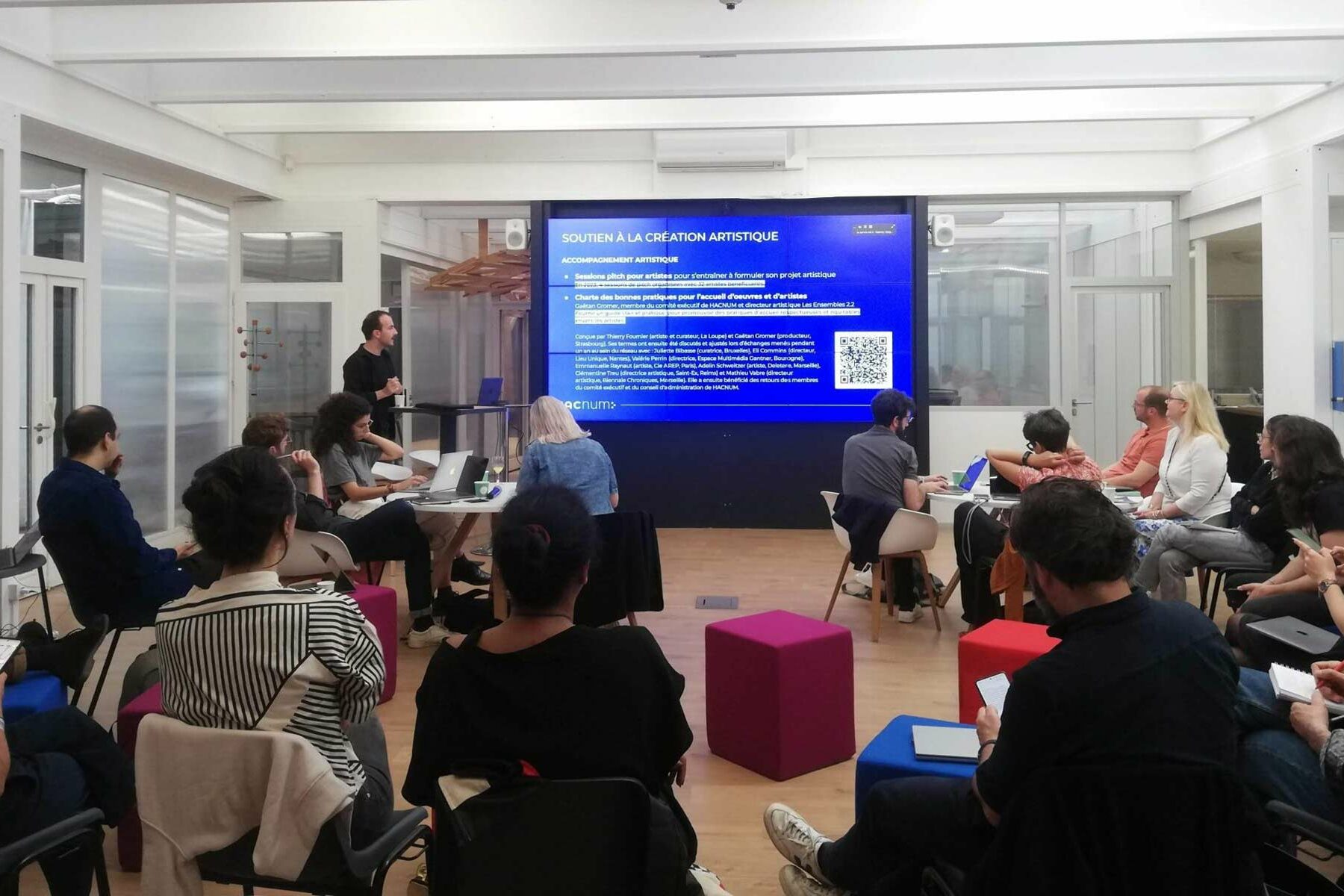
In 2024, following discussions within HACNUM, Thierry Fournier and Gaëtan Gromer drafted a charter of best practices for hosting artworks and artists “in digital environments.” The charter was then presented to a group of digital creation professionals* within HACNUM, whose governing bodies later voted to adopt it. Its purpose? To establish a remuneration scale, detail criteria for financial support, and specify conditions for exhibition and visibility. More than a declarative statement, the charter now commits HACNUM’s members to implementing dignified and respectful working practices and, by extension, helps artists speak more freely about their current working conditions in the cultural sector.
The issue of artists’ remuneration remains central across all cultural fields. As Thierry Fournier—artist, curator, and co-initiator of the charter—reminds us, “the eternal argument used to avoid paying artists is the visibility offered to their work. While this situation has improved in recent years thanks to actions led by multiple collectives and professional organizations, it is still common in major group exhibitions and certain festivals.” This paradox is striking, especially given that culture and the Cultural and Creative Industries (CCIs) make up the 4th-largest economic sector in France. While festivals, art centers, and museums cannot function without artists’ productions, some statistics remain alarming: according to the latest report from the Ministry of Culture’s Statistical Observatory (2021)*, the median annual income (all combined) of visual artists was only €9,120 gross (a little over €600 net per month). Likewise, fewer than 1.8% of SACEM members earn an income equal to or above the minimum wage, meaning 98.2% of composers and songwriters fall below this threshold (the study dates from 2012 but, according to experts, remains valid today). Most artists in France are therefore poorly paid—or not paid at all—aside from a handful of highly visible figures. “It’s time to move beyond this archaic model in which professional artistic practice is reserved for a wealthy elite who can afford to work without compensation, or a handful of committed individuals willing to sacrifice everything” says Gaëtan Gromer, artist, artistic director of Les Ensembles 2.2, and co-initiator of the charter. A genuine risk for the future of artistic creation, underscoring the urgency of establishing a clear framework to ensure decent working conditions. Especially paradoxical is the fact that France already has a legal system that is supposed to protect authors. Why, then, is precarity so widespread among artists?
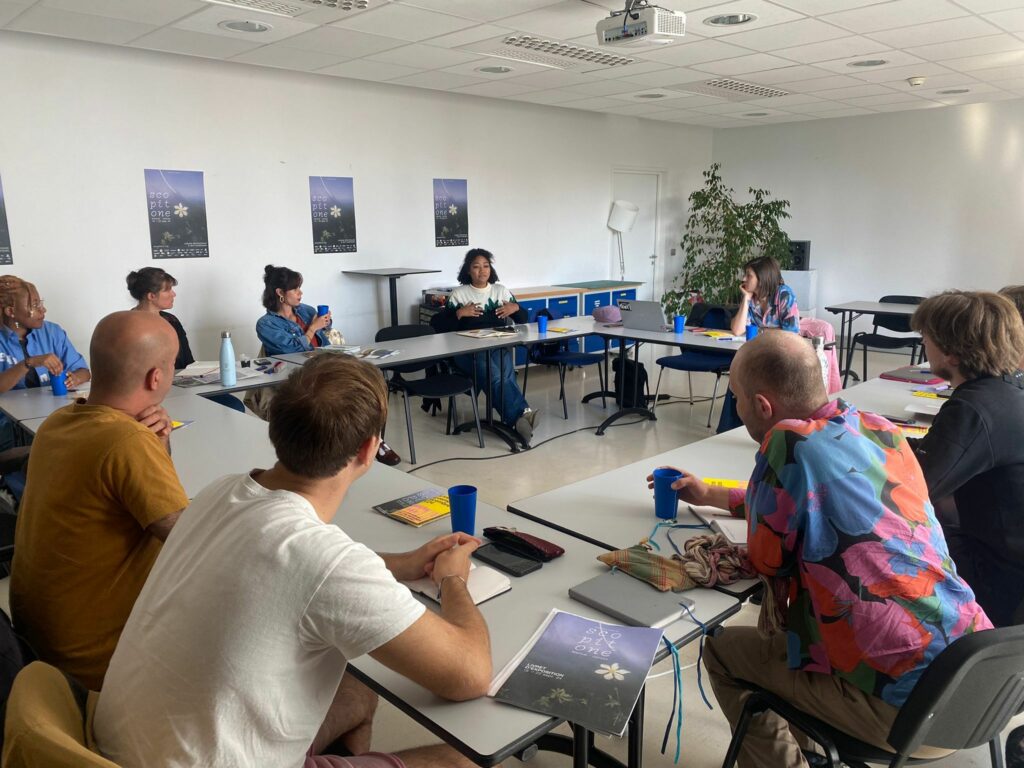
“The legislation already exists, but in reality, it is still barely applied,” states Thierry Fournier unequivocally. The goal of this initiative within HACNUM is to raise awareness among professionals involved in digital arts and equip them to address these crucial issues. “Artists, despite being central actors in the system, remain silent far too often. We believe that having a shared, explicit framework will shed light on these issues and encourage artists to assert their rights without fear,” he adds.
What does this charter contain, concretely? Designed as a practical, clear, and accessible tool, it is built around seven specific sections intended to regulate and improve artist remuneration while fostering true recognition of their work.
The charter’s first points establish a minimum fee scale—essential for ensuring fairness among artists and protecting the most vulnerable. Following the initiatives of the Solidarity Economy of Art charters (for which Thierry Fournier was one of the co-initiators), the CARFAC-RAAV guidelines in Canada, W.A.G.E. in the U.S., or Paying Artists in the U.K., this project also draws on existing work in France, such as that of the collective La Buse, the ASTRE network framework, the fee charters for playwrights and children’s book illustrators, and the research carried out by the Observatoire Participatif et Partagé des Arts Visuels in Pays de la Loire. The remuneration scale clearly distinguishes artistic fees, production costs, and per diem expenses—“elements too often merged into a single lump sum (particularly for residencies), which usually penalizes artists’ fees,” explains Fournier. “This charter aims to clarify these distinctions. It also stands out from earlier documents by proposing reasonable, viable rates designed to avoid social washing.” The goal is to set simple minimums, with few categories and easy-to-remember amounts, making the tool accessible and practical for all stakeholders.
Another central aspect concerns exhibition conditions and inclusivity. “There are places where artists are well paid, but where the hosting conditions are poor. We also need to integrate rules that reflect an ideal of an egalitarian society—especially since these venues are mostly funded with public money,” observes Gromer. Fournier adds: “Beyond remuneration, the goal is also to ensure fair visibility for artists’ work. This includes involving them fully in developing and validating the communication around their works, in accordance with their moral rights.” The overall objective is to guarantee dignified and respectful working conditions while embedding artistic practices within a framework of fairness and recognition.
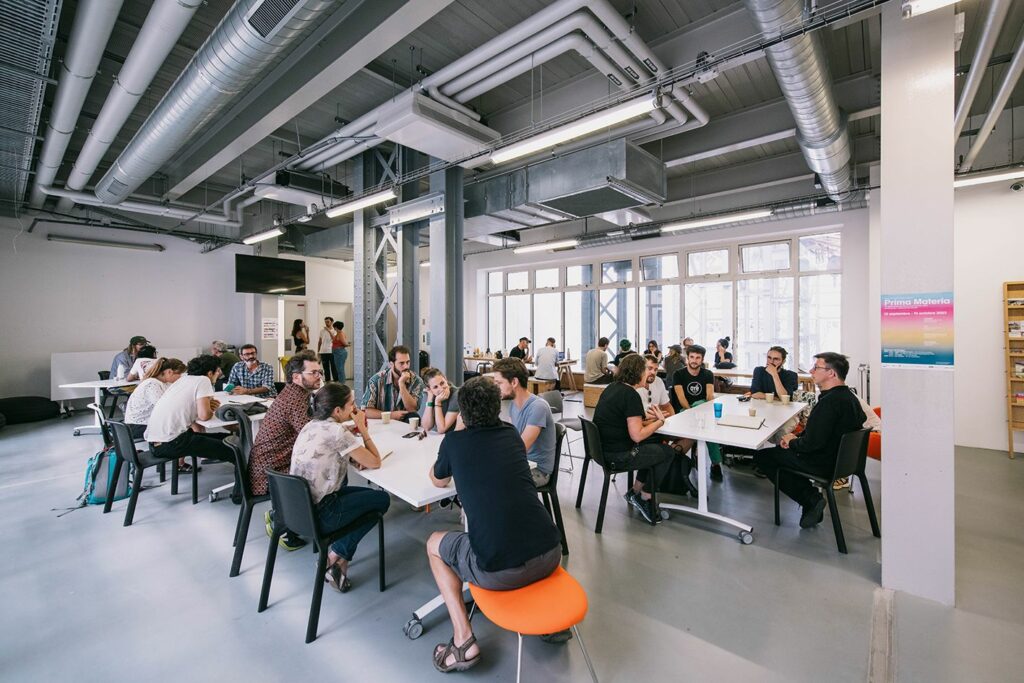
Applying the charter requires gradually integrating its commitments into professional practices. “The first implementation step within HACNUM will be to stop relaying or partnering with calls for projects that do not comply with the charter,” announces Gromer. Beyond this regulatory role, HACNUM is also taking on a pedagogical one, guiding its members toward better understanding and applying their commitments. “The goal is not to use stigmatizing communication, but to highlight the commitment of the signatory venues by encouraging them to explicitly endorse the charter,” adds Fournier.
This work in progress also allows new issues to be introduced. Among upcoming priorities, a working group will soon be set up to reflect on improving calls for projects. The objective is to simplify processes for applicants—particularly by removing unnecessary or unrealistic requirements—while standardizing certain elements to streamline work for both applicants and organizers. Regarding inclusivity, “this is a subject we need to deepen in order to integrate more specific aspects into the charter,” notes Gromer. Generative AI—which also raises crucial questions regarding copyright—could become another future area of focus. The evolving framework aims to build a collective and positive dynamic within the cultural sector.
In a context where budget cuts threaten the artistic ecosystem, this charter emerges as a crucial tool—especially to ensure that any “budgetary efforts,” if required, do not fall solely on artists’ shoulders. “HACNUM can become a laboratory for updating outdated remuneration scales and improving the well-being of artists in the cultural sector. We are also considering expanding the project and its signatories to reinitiate dialogue with the ministry,” says Fournier. Recognizing artists requires fair distribution of resources and fair compensation. This charter of best practices is not merely a technical reference—it stands as a genuine manifesto for placing artists back at the heart of creation. This is far from a minor detail.
This charter was designed by Thierry Fournier (artist and curator, La Loupe) and Gaëtan Gromer (artist and producer, Strasbourg). Its terms were then discussed and refined through exchanges conducted over the course of one year within the network, with: Juliette Bibasse (curator, Brussels), Eli Commins (director, Le Lieu Unique, Nantes), Valérie Perrin (director, Espace Multimédia Gantner, Bourogne), Emmanuelle Raynaut (artist, Cie AREP, Paris), Adelin Schweitzer (artist, Deletere, Marseille), Clémentine Treu (artistic director, Saint-Ex, Reims), and Mathieu Vabre (artistic director, Biennale Chroniques, Marseille). It subsequently benefited from feedback from the members of HACNUM’s Executive Committee and Board of Directors.